Screen Playing

Penny Wilson tells the story of how her innovative public space play project in London’s famous Kings Cross development has moved on-line … without losing any of its ‘crazy flavour’

Playkx was designed as a play offer in the Kings Cross development area that was not a built play environment. Instead of timber or steel structures there is a team of experienced and skilled playworkers, and a vast collection of loose parts; playthings to be used in any way that children need. There are dressing up clothes, masks  nets, ropes fabrics, blocks, animal creatures,  artificial plants and flowers, all of which can be used for dressing up, the construction of a den, sociodramatic playing of the creation of wild and wonderful fantasy worlds. Nothing is fixed. Everything is flexible. 

We were quite careful in those days of another age, to clean and wash and launder and disinfect on a regular basis. The whole-head pigeon mask could be worn by 20 or 30 people a day. Nobody batted an eyelid. The Imagination Playground blocks were chewed by many teething people, handled by hundreds of children and adults from families from all over the world who had never met before and never would again. We cuddled and tickled and tagged and lifted up and swung around children…. these are things of a faraway time. How unthinkable they seem now.

Visitors

We counted our visitors, adults and children alike. Each day our numbers increased. In the winter, when we had access to a large covered space, our highest head count was about 650 people a day.  Outdoors in the parks, numbers were harder to gauge. Families spent the day, often when they expected to visit for only 20 minutes or so. They would bring picnics and  birthday parties and meet up with friends and the grown-ups would behave as if they were beside the sea, lounging back, relaxing together and keeping an eye on the children as they got on with their own playing. 

We made a point of saying hello to the adults and making sure everyone had enough water, watching their playing children with them, listening to them, marvelling at the  unfolding play. Very often they hadn’t stepped back to watch this before.  It was an easy step, which they made themselves, to an understanding that what they were seeing was important and seemed magical and that if they as adults interfered with it, the spell could easily be broken. So yes. We counted both children and adults in our numbers. When we gave out stickers, we gave them also to grown ups … ‘after all the children wouldn’t be here without you!’

The adults became advocates for the free playing of their children … that’s how you build change.

Unlike a great many play projects, our funder agreed to pay us for our work to continue throughout the period of isolation. The deal was that we continue to provide a play experience and some online resource, which, just like our play sessions, would be free to use and ‘have the same crazy flavour as the PlayKX we have come to know.’ This was far from being a hardship to us. In fact, I suspect that it has proved to be not only a financial lifeline, but a sanity clause.

Going live

So within days of the closing of our solid world play provision PlayKX went live with a zoom presence. It was, I suppose, an obvious solution. We have 5000 Instagram supporters, most of whom are families who have used our playtimes. A fair percentage of those families are regular visitors, who live or work in the King’s Cross area. Most others visit us from around London. Some from much further afield.

 Somehow we ended up being slightly ahead of the game and had worked out that the changes that were coming were going to turn our play world upside down. We had also managed to work out a few ways to continue. Some of our plans fell by the wayside, some may be used in later phases of our life with isolation. However we spent a few days working out how to use this new Zoom thing, and were ready to start offering online play sessions without missing a single scheduled time slot for our project delivery. We were seamless. So we sat, like swans, trying to reinvent the way in which we delivered our playwork. Calm and carefree on the surface, head and shoulders serene and elegant, gliding like the proverbial swan, with the frantic panic and uncertainty out of the sight of the camera.

We have limited technology in our homes, working from iPads or lap tops; the bigger gatherings possible through Zoom and other platforms, were  beyond us at first, and to be honest, being limited to nine busy play-filled windows on a screen was challenging enough. It is surprisingly exhausting.

We agreed on some basic safeguarding measures. Participation to a play session is by parental request and booking through messages on our Instagram account. Then individual invitations are sent to those parents. No one can join a play session without an invitation, unless we are hacked. In case of this happening the host closes down the whole session immediately. We sometimes message parents to check in that everything is ok after session if the child seemed out of sorts, or to tell them how brilliant … or to say “thank you”.

Tips for parents

We hide anything in our homes that can identify our location or personal things we do not want to share. We advise parents to be mindful of this too. Parents are given a few hints about how to make it easier for the child to participate:

  • Put your child’s name in the tag in the bottom corner of the screen so we all know who we are playing alongside.
  • Don’t have private phone conversations during the Zoom call.
  • Don’t have music playing as it is distracting to the sound balance and priorities for quieter children’s play. 
  • Try not to urge the child to play – let them watch and they can grow into it if they choose. 

We make sure that we have a 10 minute, 5 minute and 2 minute countdown to the end of the session and a clear and deliberate greeting and leave taking wave. A small ritual, but it helps.

We agreed that the online work would be grounded in the Playwork Principles, of course. But children were bemused by seeing familiar faces stuttering and freezing in separate little boxes like so many Max Headrooms. So, in truth were we. We had to devise new ways of presenting play to enable us all to get beyond the screen. 

It was obvious that we needed to be more obvious, a more exaggerated version of our usual playing selves. Yet it was also clear that less is more. The cartoon exaggerations that are needed to communicate to children on screens that falter and sound that is delayed, can be overwhelming and crudely crafted, lending even the most accomplished and subtle of playwork practitioners the gaucherie of a 70s Saturday morning children’s TV host.

We thought about muting participant screens, but the ability to unmute by the children and the process that they would have to go through to recognise that they wanted to make a deliberate spoken contribution seemed untenable. Instead we prefer to play almost silently ourselves responding to cues.

Backdrop

We needed to think very carefully about our personal backdrop, about camera angles, how we used sound and movement, our scale close to and away from the screen, how we could use the loose parts we had at our disposal to respond to, and offer, play cues. Just as we would in our previous play settings we take a cue or part of the environment and incorporate it into play. When the screen stops moving we maybe follow this up by playing that we are frozen ourselves for a second or so, like ‘grandmothers footsteps’.  If a child wants to go into space, we can judder the screens during take-off and roll and twist them or turn upside down when we become weightless. 

One boy started a session by telling us he had invented a machine with two buttons, one makes things bigger and the other one makes things smaller. We found that this could be true if we moved away from our cameras or pushed our faces close to them. He could control this.

Sometimes it is easier for children to play when our faces are flat on to the screen like the traditional newsreader talking head. Sometimes it is easier to use an external camera and have a profile shot of playworker faces,  it can feel both intense and exhausting to have a huge face peering at you as you play.  

Agile

It may be fun for an agile playworker to do handstands or have their feet on view on-screen. Frequently this will be in response to an acrobatic display from a child.  Though sometimes it will not be. Animals (toys) objects and faces can turn sideways or dangle upside down. Again with an external camera playworkers and children can be upside down for an entire session.

Other children enjoy a camera turned on the screen so that all of the players can be seen at once repeating into infinity. You can log in from more than once device and have multiple versions of your playing self, turning the sound off prevents the sci-fi sound effects cause by the looping of microphones, or you can play with this eerie echoing.  Jake is a musician and can make lovely twangling noises on keyboards or guitar – the children sometimes just enjoy the sound but on other days we make beautiful music from many homes, it sounds randomly ethereal.  

We just discovered that hide-and-seek lends itself surprisingly well to this medium, (just make sure that one person is nominated to seek, otherwise, just as in the solid world, it can become tedious.)

Another playworker … will keep a quiet watch – being calm, and keeping a still, peaceful, window in the screen. This seems to help keep things grounded. 

Some play sessions are run with one playworker. These tend to be calmer quieter times and are great for children who don’t care to be too rambunctious. Most of our play times are run by a three person team. We have worked out that it is good to have one playworker in narrator mode, bringing in play cues and making links between the players verbally. Another playworker will do this same work visually and the third will keep a quiet watch being calm and keeping a still peaceful window in the screen which seems to help keep things grounded. 

Practical

From a practical point of view, we find it more important than ever to have a reflective practice time before and after the face-to-face work, in exactly the same way as would happen in an adventure play setting or a busy play session. Everyone sees different things and there is a huge need to compare notes and learn to hone our craft with the benefit of hindsight. 

Sessions run for 40 minutes, initially this was because it was the length of a free zoom meeting, but it turns out that this is just the right length of time for adults and children to be able to focus. Any shorter and the ending feels abrupt. And longer and it peters out uncomfortably. 

We are experimenting with themes at the moment, running fairly loose topics like Space, Magic and Pirates which can go almost anywhere that the children want, or can be ignored or abandoned easily.  It seems to be helpful to families preparing for these sessions to have props and ideas and stories to hand. These are frequently very improvised but could not be more successful if they had been the most expensive bespoke pieces of kit in the world.  The playwork team learned a lot from observing this. In our anxiety and performance nerviness we had had a tendency to over-prepare some quite lavish backdrops and supplies of loose parts. We soon decided that this was way too heavily interventionist and went back to things being a bit rubbish and homemade and delightfully improvised.

with the right support children quickly saw each other playing in their own homes and picked up on what the others were doing

It soon became obvious that with the right support children quickly saw each other playing in their own homes and picked up on what the others were doing, the things they were playing with, or the gist of their play using household objects, rushing away to find their translation of the loose part to join in the experience together.  So on our very first play session all of the children had found a blue block of some sort to show us. (Many of the families nickname the project as The Blue Blocks because of the Imagination Playground Blocks we use.) 

Dens spring out of nothing, rockets or boats transform from settees. Children crawl in and out of identical laundry baskets in homes miles away. They make each other laugh. We pour cups of tea from real or imagined empty tea pots in to real or imagined cups through our computers.  We throw pom-poms or balloons to each other, eat snacks and sumptuous invisible banquets. We fall asleep and wake each other up, scare each other or tickle, blow kisses, find butterfly wings to wear, research what a gekko looks like from our bookshelves for someone who absolutely needs to know it at that very moment. We can all be rabbits. We can talk about cheering together on Thursday evenings. We can listen as a soft toy whispers into the screen that they wish that they could go out to the playground.

Taking control

My cat comes and sits in front of the screen, and within seconds children are holding their own cats, usually soft toys … but not always. 

Whilst some of the play we see is concerned with demonstrating an inventory of possessions or taking control by becoming Elsa from Frozen or becoming a creature with magical powers, most of the play narratives are about escaping, into space, onto a ship or a train, about children making their own worlds so that they can make it all right again. Miniature townscapes, dens or houses that can be as they should be, or as they were before. They are making their own Narnian gateways for us all to travel into other worlds where we can play together again.

At the end of a long days boat building and fishing on another planet we had travelled to on a spaceship,  we all rested our oars and sails and admired the fishes we had caught and with a minute to go until  the end of the session, one child wistfully sang ‘Row Row Row your boat’ to us all. It is probably the only time I have ever found that song heart wrenchingly beautiful. 

We have noticed that the older children who have used our Kings Cross sessions have been far more comfortable in playing with their friends across screens than the younger ones.  They are able to process the screen image of a play mate and work out the logistics of this play medium to get to the nub of the matter. With littler children it is a more confusing and rather more tenuous process. Our Zoom users are by and large from this younger age group of our community.  This in itself is strange territory to us. 

It is our responsibility as playworkers to catch these nuances, as fragile as wisps of smoke, and hold them tenderly for an extra second or two. Treasure them and keep them safe, precious, and attended to.

However it is obvious that the 3-5 year olds frequently have younger siblings or are only children. They are not experiencing play with other children, their contact coming largely through structured on line classes and spotting rainbows in windows during their permitted daily ‘exercise’ to remind them that other children exist. 

We feel that this isolation may  have a dramatic impact on them both now, and afterwards  but we cannot anticipate how it will manifest itself. Similarly we have had children explain the Coronavirus to us. They talk about germs on other people, on things and on themselves. What will this intrusion of this invisible danger alive on bodies, in the air between people, on food and front door handles and toys have upon them? How will this knowledge and the behaviours it necessitates affect the growing of their growing brains?

Psychological effects

As a team we have thought a lot about what sort of psychological effects this may have for children. Will they be able to Rough and Tumble together in future, playing with all feelings of pretend and real conflict and resolution that this has always carried in the past and ignore the real fear of the touch of skin on skin?

One major drawback of playing on Zoom is that children do not get to choose the time that they are ready to play.  We have been very aware that until recently most children only used screens to star in a conversation to grandparents or far flung family and friends. Now, in our shared play times, they are expected to move through the screen and into the imagined world within the real world of another home. The intellectual leap is huge and we as playworkers find it challenging. However if they can have the luxury of support through a reticent start, they will be able to figure it out and get down to the business of play, somehow. The draw of it is so very strong, it seems to override most other agendas. Skilling up parents is vital if children are to reach that goal.

We know that many of the families we play with are in flats with no outdoor space or even balconies. The poor soundproofing of those flats is an issue that crops up time and time again. Jumping with enthusiasm is charming for us to see but can unleash a torrent of abuse from Mr Heckles (F.R.I.E.N.D.S.) downstairs. This eventually gets passed on to the child in some way or another, either from furious and frustrated parents or sweet kindly requests for the child to step lightly. Imagine, you are locked up in your flat in isolation, your world is confusing and the outside is somehow dangerous and you have to keep quiet on top of everything else. We have to be aware of these agendas too.  We avoid games that include jumping about or setting up saucepan percussions.

The children have made all of us cry with laughter. They are witty and clever and funny, and considerate of all of us. They seem to know that by being funny they are making things better. It is within their power to do this when they play.

We have played with children and families we have got to know very well from the solid world of Kings Cross. Other families have built a play relationship with us for the first time. Some of them settled into our oddness immediately, some take a little while to acclimatise and others find it doesn’t  suit them.  That’s all ok.

We have played with families in South Africa, Hong Kong, Turkey and California. All of them are facing the same frustrations. We have drawn pictures and maps together, told each other stories. We have caught together the wisps of important moments.

Oh, and the children have made all of us cry with laughter. They are witty and clever and funny and considerate of all of us. They seem to know that by being funny they are making things better. It is within their power to do this when they play.

Today, in a quiet moment, T showed me what he had built from his wooden building blocks. He has, of course, prepared a den, but it was the small wooden palace that he wanted to show me.

“I live high up in the roof. Here are Mummy and Baby and Daddy has a work room down here. There is a garden with a playground right outside and here is Penny’s House, Jake’s House and Sioned’s house. Of course we don’t all really live together in the same place but we do here.”

“T” I said, “You have just built my Mind Palace.”

Then the others arrived and things got busy.

Penny Wilson

Penny is a playworker, writer, and artist.


Foundation seminars remember Sturrock and Else

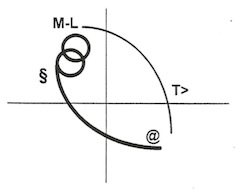
Early this year The Playwork Foundation launched a new series of seminars around the UK, about the Play Cycle, taken from Gordon Sturrock and Perry Else’s now-famous Colorado Paper – The playground as Therapeutic Space: Playwork as Healing.

The Play Cycle helps us better understand children’s playing and the ways in which they communicate and behave when they are playing.  In turn this understanding also informs our own reflective response and helps us gauge whether or not any intervention from us  – and at what level – might be needed.  Play cues, play returns, play frames, and adulteration are now part of the everyday language of most playworkers and there is always room for further reflection on how these affect our practice.

Sturrock and Else’s iconic Play Cycle

Opportunity

The seminars were also designed as an opportunity to meet with more playwork members and potential members and talk through the issues affecting them where they are. And then coronavirus began to rapidly spread across the world and our lives have all changed…

BUT, we did manage to run one of these seminars in early March, before the UK went into lockdown. We had a great day in Leicester, at Goldhill Adventure Playground, with 33 playworkers, from other adventure playgrounds, play centres, and play organisations all over Leicester.

We spent the morning looking at the Play Cycle in action, and at risk-benefit assessment. We also shared lots of anecdotes and stories, and after a plentiful lunch provided by Goldhill, we worked together in the afternoon doing SWOT analyses on play provision in Leicester – unpacking what the strengths, weaknesses, opportunities, and threats were for different organisations and what we could, therefore, learn from each other; what we might do to capitalise on the identified opportunities; and how we might support each other across the sector, as well as in Leicester itself. 

Mutual commitment

It was wonderful to meet so many playworkers we didn’t know and feel that instant rapport, recognition of a mutual commitment to children’s rights, and shared appreciation of the power of play. 

Thank you Leicester for your enthusiasm and participation and thank you Goldhill (who recently were shortlisted for the Front-line Playwork Award at the National Playwork Conference in Eastbourne) for hosting such a valuable day. More of these seminars have been planned and as soon as we are able, we will be rolling them out in Torbay, Sheffield, Wrexham, Evesham, and more. Watch this space!

Ali Wood and Karen Benjamin


If you would like to host a Playwork Foundation seminar, and publicise it locally where you are, please contact: aliwood@blueyonder.co.uk

Politics, playwork and neo-liberalism

NO. 1 IN AN ORIGINAL SERIES OF PAMPHLETS BY GORDON STURROCK

In this first of an original series of pamphlets, the UK playwork scholar Gordon Sturrock argues that avoiding the political implications of playwork practice will lead to its continuing, inevitable demise. Nor should we water our politics down to accommodate more dominant discourses. Instead, he argues, the field must vigorously embrace its true ethos, and so offer a vital alternative to the neo-liberal colonisation of education – and the wider public realm – to the rapacious capitalist project.

READ THE FULL PAMPHLET HERE

Gordon Sturrock is a playwork theorist and writer. He is co-author, with the late Perry Else, of The Play Cycle: An Introduction to Psycholudics (The Colorado Paper), and The Therapeutic Playwork Reader.

Photo: Meriden Adventure Playground

How youth workers can go the extra mile for play

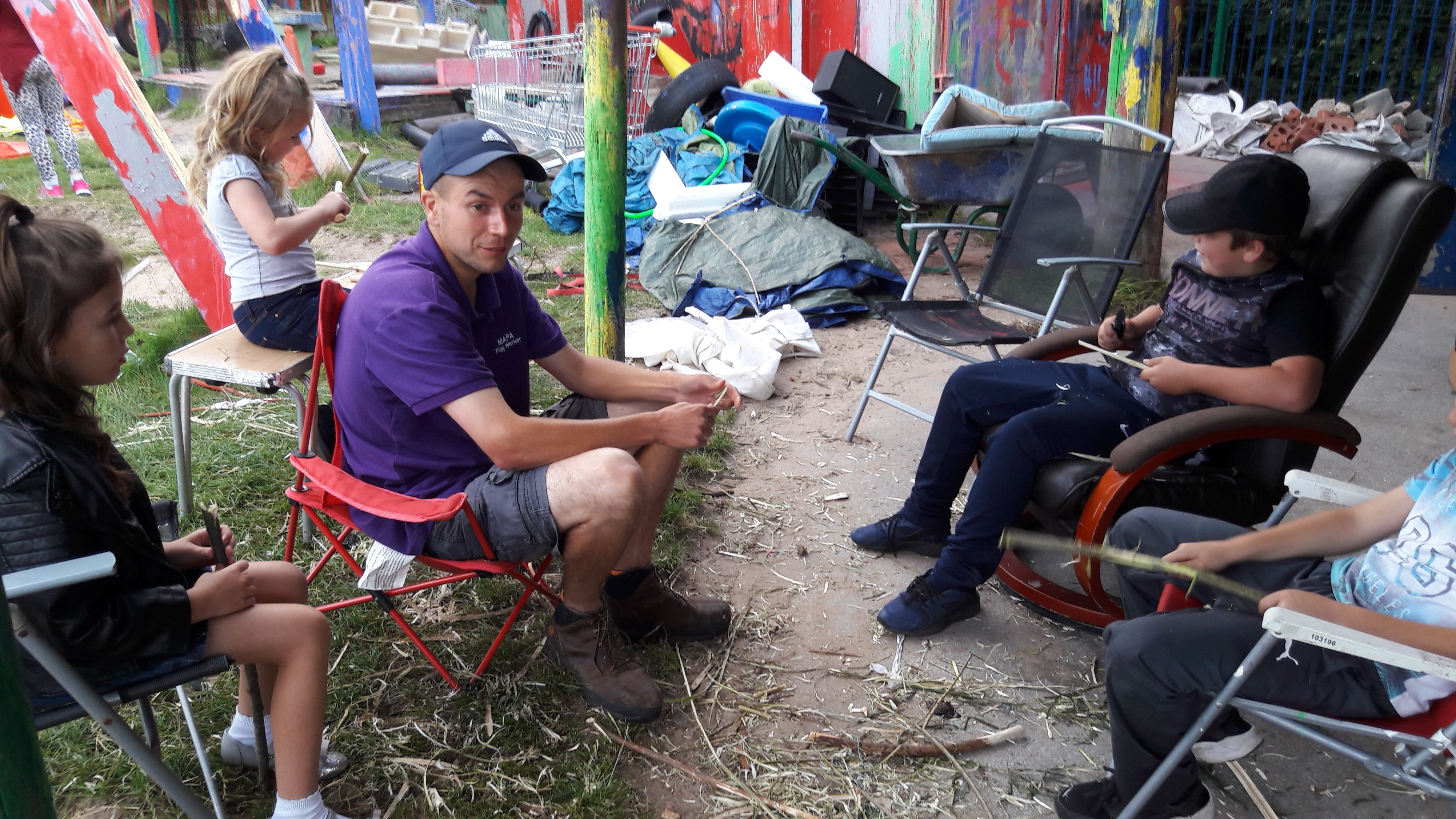
whittling
When Ali Wood enrolled for an event, ‘In Defence of Youth Work’, in Birmingham, she saw that the agenda featured discussions on youth work in different settings and situations. Never being shy about speaking out for play, Ali asked if youth work in adventure playgrounds could be added to the programme. This is a synopsis of her resulting workshop, and Ali’s rationale for it.

I qualified as a youth and community worker in 1985 and worked in a whole range of centres and clubs in Birmingham for a number of years.  Things were changing though –both in the local authority and across the country and it wasn’t hard to see the writing on the wall.  Funding for community work was dwindling fast and youth work as it had been was changing and becoming more issue-based, but somehow in that process we ended up losing numbers of young people – partly due to focussing more on discussion work than recreational activities and young people’s choices.  I ‘defected’ to playwork, which had begun with the introduction of adventure playgrounds in London in the 70’s and over the ensuing decades built up its own theory base, research evidence for play and qualifications for playworkers. I have been there ever since.

Adventure playgrounds

So for those of you who don’t know and have never been to one – what’s an adventure playground?  There aren’t that many left around since all the recent local authority cuts, so you’d be forgiven if you hadn’t come across one.¹  Basically an adventure playground is a community-rooted self-built site for both children and young people, where kids can come and be themselves and do their thing – which often includes the stuff that they can’t do elsewhere like lighting fires, using tools and building, making food, digging, climbing, swinging, jumping off high platforms, managing risk for themselves, playing with water and mud. It’s also a space where they know they’ll feel heard and valued and where spontaneous conversations will likely yield support or information they need.

they know they’ll feel heard and valued and spontaneous conversations will likely yield support or information they need. 

So what’s the difference between playwork and youthwork – or doing youth work on such a site?  In some ways – when you get youth workers who have a real sense of vocation – not a lot necessarily in practice.  But there are givens here that may not be automatically understood or recognised.

First principles

Firstly there is the understanding of the fundamental importance of play in children and young people’s lives. And by play, we mean that as it is expressed in the first two Playwork Principles² – which provide a professional and ethical framework for playwork.

  1. All children and young people need to play. The impulse to play is innate. Play is a biological, psychological and social necessity, and is fundamental to the healthy development and wellbeing of individuals and communities.
  2. Play is a process that is freely chosen, personally directed and intrinsically motivated. That is, children and young people determine and control the content and intent of their play, by following their own instincts, ideas and interests, in their own way for their own reasons.

If you recall some of your own memories of playing (and do this now before you read on!), I can pretty much guarantee that these will consist of being outside, taking risks and being away from adults – and the older you are, the more that will be the case.  Am I right?  And why do those three things feature so widely in people’s memories? Because children naturally long for freedom and independence as they grow; and if adults are around, those adults are likely to try and control, supervise, guide, direct, organise, stop or take over whatever kids are doing. Start watching yourself, and how much you do this when you’re with kids!

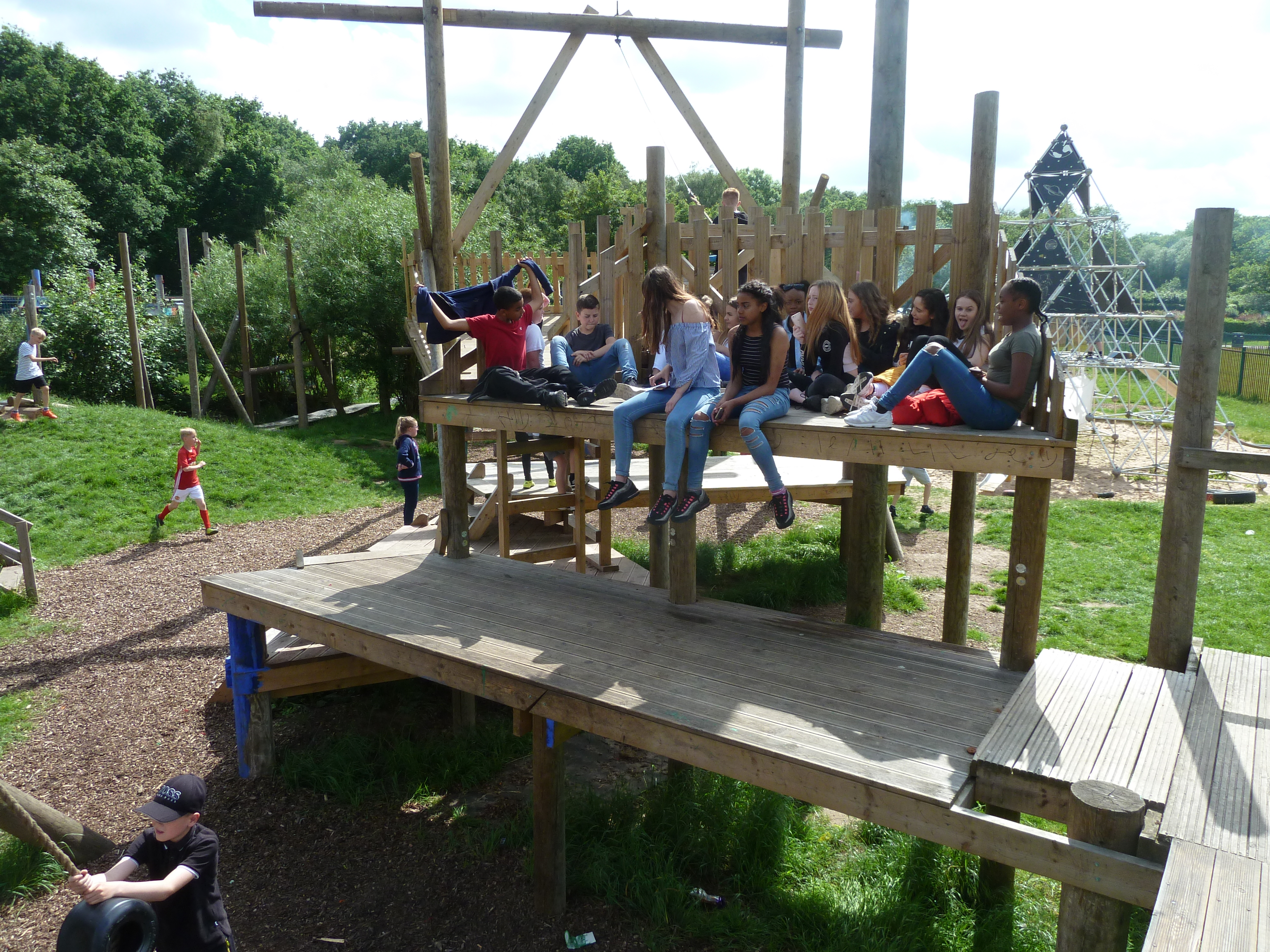
gathering on platform 2

So, children seek out time and space away from adult eyes in order to play. However, over the last few decades, kids have had less and less free time away from adults when they can make their own mistakes, be daft, work stuff out and try things out for themselves, be responsible for themselves and each other. Yet it is play as described above that is the natural medium for these things to happen, but opportunities for play have been squeezed, banned, or diluted – often with the supposed best of adult intentions – because we have forgotten how vital free play is and we are bewitched by the spirit of the age of over-protection and structured education of our children and young people. In playwork we call this play deprivation³ and it is a concept that other professions are also recognising as really damaging.

So, youth work really needs to understand what play is, why kids crave it and how to support it and respect it without getting in the way (and that honestly isn’t easy and takes a lot of reflective practice!) instead of planning a load of other stuff that we think is more important and riding rough-shod over young people in the process.  More than ever – because of being more play deprived in their own childhoods – young people need to play⁴.

Understanding risk

Secondly, in playwork there is a different understanding about risk, it’s necessity in young lives and how we can manage it. We use an approach that has been recognised and is promoted by the Health and Safety Executive⁵ for anyone working with children and young people and yet somehow youth work has not taken this on. It is the process of constant risk:benefit assessment⁶, whereby instead of automatically intervening to ‘make something safe’, playworkers observe children and young people in whatever they are doing and dynamically assess the risks of this, but also the benefits –i.e. what kids will gain from doing whatever it is, and also to think through ways of minimising the risks if this is necessary, without taking over and ‘doing it for them’.

Young people don’t have a death wish, they have an inbuilt sense of self-protection and survival that too often we have crushed by not allowing them to use it. 

It takes courage and practice, but it works. Young people don’t have a death wish, they have an inbuilt sense of self-protection and survival that too often we have crushed by not allowing them to use it.  When they know they are responsible for themselves, they really take that on and their skills and confidence flourish. On the adventure playground where I work and where we have unaccompanied children from 7-18 years on site,  we’ve had about half a dozen accidents that have entailed a visit to A & E in ten years, and yet our kids regularly use axes and mallets, hammers and saws, throw themselves off platforms and cook on the open fire.  Youth work really needs to better understand risk-benefit assessment in practice.

Differences

So, the main differences when doing youth work on an adventure playground (and we have youth only sessions at our playground as well as open sessions for all ages), entail youth workers:-

  1. developing a deep understanding of play in all its forms and how to support it;
  2. a profound respect for children and young people that recognises their capabilities and competencies first;
  3. a richer kind of reflective practice⁷ that puts us adults – with all our feelings and motives – under the microscope to examine how our interventions are too often colonial and patronising; and
  4. a commitment to risk:benefit assessment observation and recording.

This takes passion and courage, lots of supportive teamwork and the willingness to regularly go the extra mile. But in many ways, although I have called myself a playworker for the last twenty years, it is much more akin to the youth work I first felt so drawn to in the 80s.

Ali Wood

Ali Wood is a playwork writer, researcher and trainer. She is chair of Meriden Adventure Playground in the West Midlands, and a founding board member of the Playwork Foundation.

Photos: Meriden Adventure Playground

References

  1. http://www.playengland.org.uk/resources-list/adventure-playgrounds/
  2. http://issuu.com/playwales/docs/the_playwork_principles_-_an_overvi?e=5305098/11658290
  3. http://www.playwales.org.uk/login/uploaded/documents/INFORMATION%20SHEETS/play%20deprivation%20impact%20consequences%20and%20potential%20of%20playwork.pdf
  4. http://issuu.com/playwales/docs/building_resilience_?e=5305098/31468341
  5. http://www.hse.gov.uk/entertainment/childrens-play-july-2012.pdf
  6. http://issuu.com/playwales/docs/play_and_risk?mode=window
  7. https://issuu.com/playwales/docs/reflective_practice?e=5305098/62475902


2nd ‘Playwork Campference’ announced for Houston, Texas, February 2019

A Second “Playwork Campference” has been announced for 15th-18th February 2019 in Houston. The organisers, Pop-Up Adventure Play, say it will  bring together “international experts on children’s play to discuss unconventional approaches to risk and inclusion”

Full details here

Photo: Calgary Community Services


Symbiotic homeostatic disequilibrium in playworking interaction

A new paper by Joel Seath and Gordon Sturrock, derived from and following communications at the PlayEd conference in Cambridge, May 2018.

Abstract

Playwork’s key claim is its unique manner of working for and with children. It currently suffers, however, from a lack of consensus regarding the benefits of its application. This paper challenges the dilution of playwork practice in acknowledging the art, grace and wisdom in connectivity of playworking. Drawing primarily on Antonio Damasio’s neurobiological analysis, the homeostatic disequilibrium operation at the core of body/neural intra-action is detected as reflected in the interaction of organisms.

In consideration of some key concepts of social ecology – consociation, mutual aid, co-operativity rather than competition, rhizomatic rather than hierarchical structures – and  the neurobiological study of individuals’ feelings, emotive responses, affect and culture, this paper discusses the evolving phenomenon of the playworking adult and child at play in terms of a symbiotic being and becoming.

Joel Seath and Gordon Sturrock

Download the full paper here

Image: ‘Rhizomatic tree of life’ by jef Safi

The Play Cycle 20 Years On

In 1998, Gordon Sturrock and the late Perry Else presented a paper at the IPA International Play Conference in Colorado, USA.  The paper was titled ‘The playground as therapeutic space: playwork as healing’, later referred to as The Colorado Paper and introduced the Play Cycle to play  theory.

In the last twenty years, elements of the Play Cycle (such as ‘play cues’, ‘play return’, ‘play frame’ and ‘annihilation’’) have entered into common use within the childcare sector.  The aim of this exploratory study is to investigate understandings and applications of the Play Cycle within childcare over the last 20 years.

This study is open to anybody who is currently involved in childcare but must be aged 18 years or over.  The research will be undertaken by Dr Pete King from Swansea University and Dr Shelly Newstead.  For more details about the study, please contact Pete at p.f.king@swansea.ac.uk or 01792 602 314.

To take part in this study please click on the link here

The questionnaire can be completed online using a computer, tablet or phone.

The study is open to Friday 21 December 2018.

Thanks

Dr Pete King

Colleagues, community and commons – our vital triumverate

In this critique of Voce and Sturrock’s A Situated Ethos of Playwork, Simon Rix suggests that community should be integral to playwork practice, and the central focus of the field’s fightback.

Thanks are due to Gordon Sturrock and and Adrian Voce for their recent paper, A Situated Ethos of Playwork. It rightly acknowledges that the internal debate, about what playwork is, should at present be laid aside in the face of the urgent issue of what playwork should do. This is not to say that what playwork is is not important; it is to say that what playwork may be is being shaped, and in such circumstances, to do is to be. Doo-be-doo-be-doo!

In this response, I will first discuss some of the paper’s main points; then I will add some comments that I think are relevant. I won’t comment on the preliminary descriptions of playwork in the first section, because I cannot argue with what’s written there. Nor do I dispute the principle that playwork is, at present, a necessary part of the ludic ecology – an ecology that is inevitably linked with, overlapped by and overlapping into other parts of the totality. Currently, this is dominated by an economic hegemony under the control of very narrow interests, only aware of their own needs and assumptions. This can be described as both the ‘integrated spectacle’, and the ‘no alternative’ dialogue, favoured by crisis capitalism.

A story of recuperation?

The historical section of the paper reads as both a story of development, response and endorsement; and a story of recuperation. As Voce and Sturrock rightly point out, the elements with the greatest capacity (wealth) and / or affinity with the current hegemony, tend to have the greatest sway; and also tend to harvest those elements of and from playwork that suit their agenda. So, we find landscape architects presenting projects designed by playworkers as their own, and bit players from our field taking selected elements of the playwork approach into other, more lucrative fields.

Mutual aid and class

So, to resist recuperation and to develop itself as a discreet discipline, it is proposed that playwork should return to the totality, which was at its genesis (in a critique of the totality). The paper pronounces: “where the subordination of children is no longer accepted, everything can change”, The critique of social Darwinism, rightly identified as a way of justifying and promoting practices of domination – from race to class to gender – in fact goes back to 1902 and the publication of ‘Mutual Aid’ by Kropotkin. It’s not new; it is a longstanding heresy, which playwork has been allied to explicitly and implicitly, to varying degrees, forever.

I feel that here is a call for a period of more explicit aligning with that critique, an alignment which, in my opinion, is long overdue. Playwork has been cowed since the beginning of the neo-liberal assault on the critics of social Darwinism, an assault which has had the effect of altering the totality for most, even playwork, into the ‘no alternative’ narrative – of placing all value into the market and so forcing participation in the market at the expense of everything the critique stands for.

Marxian critique still holds sway

In support of that call, we are introduced to the precariat class as an ally. In the context of the critique of the totality, the Marxian critique based on class division still holds sway and hasn’t been superseded; but this critique is also of the totality. While the emergence, (or discovery) of the precariat class is appropriate in the face of the effects of the current neo-liberal crisis, in terms of the totality, how different is being a member of the precariat class any different from any other way of being a landless peasant?

I also wonder how different the discovery of the precariat is to the discovery of the ‘underclass’ in the 1980’s, and how successful any hopes pinned on this section of landless peasantry will be? The pinning of hopes on the underclass – which, for similar reasons, was forced to make a life outside the norms of capitalism and develop ‘post-work’ social structures – didn’t produce change. It didn’t make a significant contribution to playwork, other than providing playwork with a number of volunteers from ‘outside the system’ (a significant number of whom then dropped out of playwork too!).

This is not to denigrate those who find themselves identifying with the precariat as a class, and share playwork’s analysis. I would caution, however, that a significant part of the gig economy is made up of aspirant, slightly arty entrepreneurs whose wish is to find fame, be discovered and float on the stock market. The role of playwork is not to develop class consciousness among the precariat, nor to facilitate the advancement its aspirant element, nor to develop class consciousness among children.

‘The dialectic process demands the negation of oppositions, the creation of something new, not a mere realignment of the forces it contains’.

As Anslem Jappe points out in his recent book of essays, capitalism, class structure and its ideology – currently called neo-liberalism – reproduces itself as a social relationship, as well as reproducing countless throwaway consumer items. It’s the social relationship which is at the hub of the arrangement. How far, then, Jappe asks, is basing change, as well as our critique, on this social relationship, likely to be successful? Is not change, as a departure, dependent on the formation of new social relationships, yet to be decided, but based in other qualities: human ones. This echoes the paper’s point “The struggle we need to commit to, then, is not between different alignments of people, but between people and non-human entities”, but I wish to escape from relying on the existing social relationship as a basis for that. The dialectic process demands the negation of oppositions, the creation of something new, not a mere realignment of the forces it contains.

This is alluded to in discussion of a situated practice. I can’t disagree with the utopian picture painted. I can’t fault the likelihood that a playful approach seems a route towards it, and that playful environments will be a contributing crucible.

New organisations and methods

In pursuit of the establishment and maintenance of crucibles, the paper seems to go into two points. The first is the unification of playwork and the escape of its story from the recuperated, possibly watered down alliances that it’s had. I am a trustee of the Playwork Foundation along with Adrian (declared, though as a burden, not an interest: trusteeship has no personal benefit) and I do see this as a developing vehicle for a playworker controlled, and owned, narrative and solidarity.

There are a number of other, more local, initiatives developing as well – a coping mechanism in the face of neo-liberal denial of any but its own social system. These initiatives are about delivery through new sororal groupings, and new relationships with the state and other funders. There is an opportunity there to develop solidarity and mutual aid among playworkers and our organisations. There is opportunity through this to build local, regional and national networks of playwork delivery. Whether this is additional to, affiliated with, supported by, or any other relationship with the Foundation remains to be seen, as appropriate, but whichever route is taken, care must be taken at this development stage to have due regard to maximising direct democracy in the structure which is set up.

In both cases, Foundation and delivery, the membership is the critical mass, and the source of strength. There has been much written on organisational structure, group dynamics, meetings, consultation and decision-making. In this case, I think the choice to be be made is one which emphasises the human relationship, and tries as hard as possible to enshrine that in the structure. That means a principle of grass roots localism and autonomy, under the auspice of the agreed narrative and structure, which will, as far as possible reflect those principles and narrative. At all costs, the fallacy of democratic centralism must be avoided; as must elitism (another class issue), a tendency which the precariat seems to be susceptible to.

Policy of relationships

Secondly, we have a discussion on rights and policy. I have the greatest admiration for those who are able to sit down with the suits, jackals and other creatures that inhabit the corridors of power; and are able to both endure it, and be understood. I’m certainly not that person, but I have seen the impact it can make, and I appreciate it. The paper goes into, as I have above, the dangers of recuperation, and that any honey pot attracts flies. But, in addition to the corporate squatters and ideological heathens who gathered around the Play Strategy, I feel that the social relationship I criticised above also raised its head here. This was in the decision that the roll out should be by a managerial, and not a playwork organisation.

The idea that management is a generic skillset, and that managers need not know anything about what they are managing was a problem, both for the strategy and for playwork. Skilled and experienced playworkers found themselves leading astonished managers around events and projects; managers who in some cases had no idea of the magic that playwork can unleash. Some playworkers, whose influence had apparently been crucial, didn’t even find out their influence had been there until years after the strategy had been rolled out, never mind have a conscious input.

This is a caution to the Foundation, to the imagined delivery federation and to the field. If it is to be the Foundation that makes the policy approach to Government, if it is to be a delivery federation, if either have a role in a new phase of growth, then the medium is the message. The human relationships, enshrined by the principles of localism, autonomy and direct democracy, must be held dear by these organisations, and their structures must reflect that.

It’s the community, innit?

This leads me on to the glaring omission, the third point.

The paper contains several mentions of the word ‘community’, it talks of a community of practice, and it makes mention of the communities playworkers serve. But, in human terms, I consider community to be the most important constituency in every way. The paper speaks of a national campaign that will “listen to the voices of those on the front line, and in their communities.” Although this speaks of consultation, it doesn’t speak so strongly of participation. It speaks of building support, as traditional politics does, towards a particular goal, which can and may be forgotten as the campaigning mode subsides and the programme lost in recuperation, but it doesn’t speak of love. Love is what sustains the communities that gather around good playwork provision, retains them and facilitates their participation. Playworkers have a service role in this community, but they are not its leaders or its voice. If anything, playworkers should be a conduit based on shared skills, given freely.

‘to build a community around provision and to mobilise that community in times of threat, means everyday playworking in campaign mode’.

This is both relevant to campaigning and to everyday playwork, because to build a community around provision and to mobilise that community in times of threat, means everyday playworking in campaign mode. This shouldn’t sound extraordinary. Observation, knowledge, response, relationships, attention to detail and sometimes individuals, large affective interventions, and small effective facilitations – these should be common to both.

Everyday playworking should be able to concern itself with issues that impact on children’s lives, and affect their ability to play, just as much as it should be able to concern itself with the play environment. It should be able to make a connection with the totality of the community and respond to that, both as an acknowledgement that these issues have an impact on children’s ability to play, and because the play environment has a place in that totality. To attempt to campaign in the face of threat without having the groundwork of a position in the totality of the community renders the community an afterthought, a position nobody will respond to.

I consider this to be a more valuable mode, in the local context, than playwork organisations regarding themselves as managerial and relying on relationships with power, which have already proved fickle. I consider that mode to be as much to do with playworkers positioning themselves in the redundant social relationship that is class society, a symptom of the aspirant precariat, and we will see them by the number and strength of the communities around them and how quickly they accept their recuperation, or die.

Colleagues, community and commons – a vital triumverate

The question of how to develop this element of the triumvirate of playwork defence and development is a little more problematic, given that playwork is about relationships. If I may quote myself, “The adventure playground is not a physical thing. It’s a community. The physical appearance of the site is the hook, if you like, but it’s the social and emotional that gets people to remain”. Community should come as second nature to playworkers, but evidence shows that this is not always the case. Why? Are some tired, some resting on their laurels, some not recognising the connection, some subsumed in the status that policy mistakes of the past have dubbed them with?

Should playwork training have more emphasis on community and relationships, should it contain a unit on campaigning? Should emergent playwork organisations take it upon themselves to take this training out, as a separate piece of work? Who should it be delivered to? Should a model be devised on the hoof, as organisations develop, with due regard to the principles of localism, autonomy and direct democracy at its core? Who is going to join in?

These are questions for debate, and prompt the prequel question of, how and by whom is this debate to be organised? In that spirit, I call upon the field to engage with the Foundation and with the policy roadshows currently underway; and I call upon the roadshows and those debating at them to consider the triumvirate of colleagues, community and commons as an adage:

Colleagues – a unified workforce, building solidarity among us;
Community -meaning both those we serve, whose totality we are a part of, ­­and a community of practice; and
Commons – meaning the wider social and political environment and institutions that we need to have an oversight of, and facilitate in that environment.

If we lose sight of any part of this triumvirate, we will miss the mark.

Simon Rix

Image: Jacqueliine Pallesen

Simon Rix is a practising playworker and a trustee of The Playwork Foundation


A situated ethos of playwork

Turning the playwork story into a narrative for change.

In this new collaboration, Adrian Voce and Gordon Sturrock cast their collective eye over the recent history of playwork in the UK to draw out some lessons for the field on how it might regroup and take a leading role in making the case for a comprehensive national play policy: one consistent with its distinct ethos and approach. 

Abstract

Playwork is a distinct approach to working with children, and a particular set of perspectives on the nature of children’s play in a broader context. We concur with others (e.g. Brown, 2017) that its theory and practice – on play and development, constructs of childhood, the role of adults with children, the allocation and use of space, and children’s rights – are unique among the children’s professions.

This paper attempts to describe some of these perspectives, the practice tenets that arise from them, and the distinct ethos we suggest they comprise. We then propose a broad rationale for playwork advocacy, ­congruent with this ethos and its political dimension.

Vision

We also attempt to set out a long-term vision for the place of playwork practice within a renewed, reimagined public realm; and we suggest some specific shorter-term, more tangible objectives, towards the aim of formulating a sustained government policy framework that recognises and supports playwork without compromising it: achievable milestones on a roadmap to the longer-term vision.

Through a critical appraisal of the field’s recent history, the paper considers how organisational structures for playwork advocacy and professional development have, until now, with the odd exception, been ultimately run not by practitioners but by various branches of government, its agents, employer bodies or established children’s charities – generally more aligned with the current hegemony than with anything approximating to the playwork ethos. We argue that, in the absence of a cohesive and authoritative playwork representative body, this has led to near fatal compromises in the development and dissemination of the playwork approach.

Conundrum

The paper addresses the perennial conundrum of a community of practice that profoundly challenges the status quo; yet which, nevertheless, needs to find sufficient leverage in the mainstream policy discourse to secure the resources it needs to sustain its work. As the professional playwork fraternity attempts to regroup after eight years of austerity and UK government policy reversals, we suggest there is an urgent need for the field to coalesce around a binding narrative – accommodating the plurality of perspectives and approaches that have evolved – to explicitly articulate its ethos in a way that can both speak to a wide public audience and impact on the policymaking process.

The paper concludes that the framework for this narrative should be children’s rights, refracted through the prism of the playwork ethos, which is a bulwark against instrumentalist agendas. We suggest that the playwork field, though greatly incapacitated by the dismantling of its infrastructure and the closure of many of its services and courses, has a legitimate claim to be the practice community best qualified to interpret General Comment 17 of the UNCRC (CRC, 2013) for the UK context. We propose that fully engaging with the rights discourse is the logical strategy for playwork advocates; aligning our ethos to an authoritative, coherent policy case that also resonates with a wider political narrative of social and spatial justice, universal human rights and full citizenship for all.

Adrian Voce and Gordon Sturrock
June 2018

Download the full paper here

Adrian Voce is a founding trustee of the Playwork Foundation. His contribution to this paper is in his personal capacity and does not represent the collective view of the charity.

Photo: Adrian Voce (Tiverton adventure playground, Devon).

What is unique about playwork?

eran-marshmallow-e1513346778660.jpg

At the launch of the Playwork Foundation in November 2017, Professor Fraser Brown described the elements of playwork practice that he identifies as unique within the children’s workforce, using playwork stories to illustrate each point.

He has now followed up his presentation with an expanded paper, which can be downloaded below, while the list of unique elements is set out here:

The Unique Elements of Playwork

A conceptualisation of the child that actively resists dominant and subordinating narratives and practices.

A belief that, while playing, the ‘being’ child is far more important than the ‘becoming’ child.

An adherence to the principle that the vital outcomes of playing are derived by children in inverse proportion to the degree of adult involvement in the process.

A non-judgemental acceptance of the children as they really are, running hand in hand with an attitude, when relating to the children, of ‘unconditional positive regard’.

An approach to practice that involves a willingness to relinquish adult power, suspend any preconceptions, and work to the children’s agenda.

The provision of environments that are characterised by flexibility, so that the children are able to create (and possibly destroy and recreate) their own play environments according to their own needs.

A general acceptance that risky play can be beneficial, and that intervention is not necessary unless a safety or safeguarding issue arises.

A continuous commitment to deep personal reflection that manages the internal relationship between the playworker’s present and former child-self, and the effects of that relationship on their current practice.

Fraser Brown

Read Professor Brown’s full paper: What Is Unique About Playwork

Photo: Adrian Voce


fraser-brown Inaugural

Fraser Brown is the world’s first Professor of Playwork and the author of numerous papers, chapters and books on play and playwork.

He and the playwork team at Leeds Beckett University have contributed a chapter to the forthcoming Cambridge Handbook of Play (Roopnarine & Smith 2018), which will include  a discussion of these unique elements of playwork.