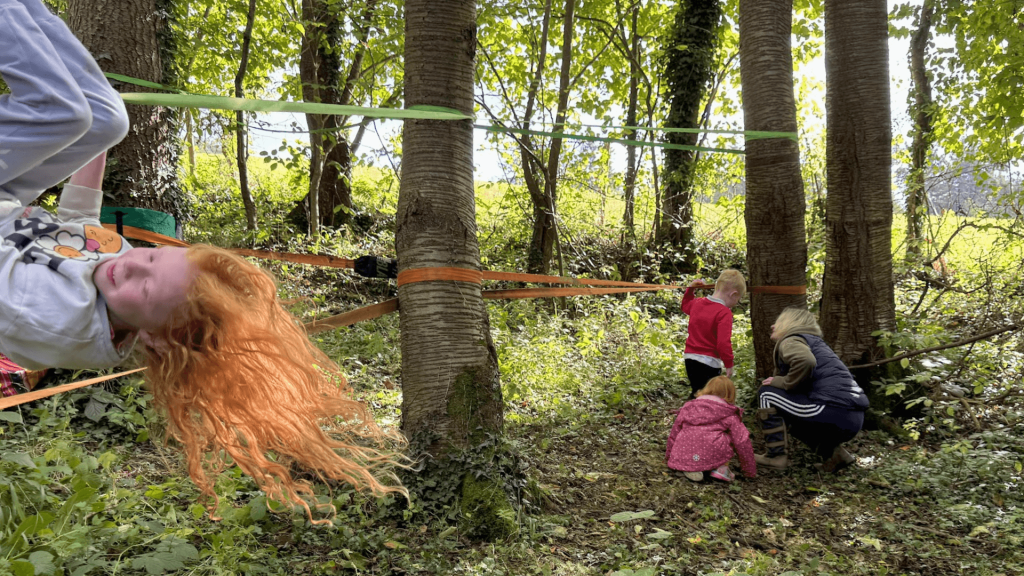
Today, on the International Day of Play, we are reminded that play is not an optional extra but a fundamental right. Today is a global moment to insist that children everywhere should have safe, inclusive places to play. This year’s theme – Protect play, protect childhood – asks us to centre play as a public good and to use the language of safety and belonging when talking about the right to play.
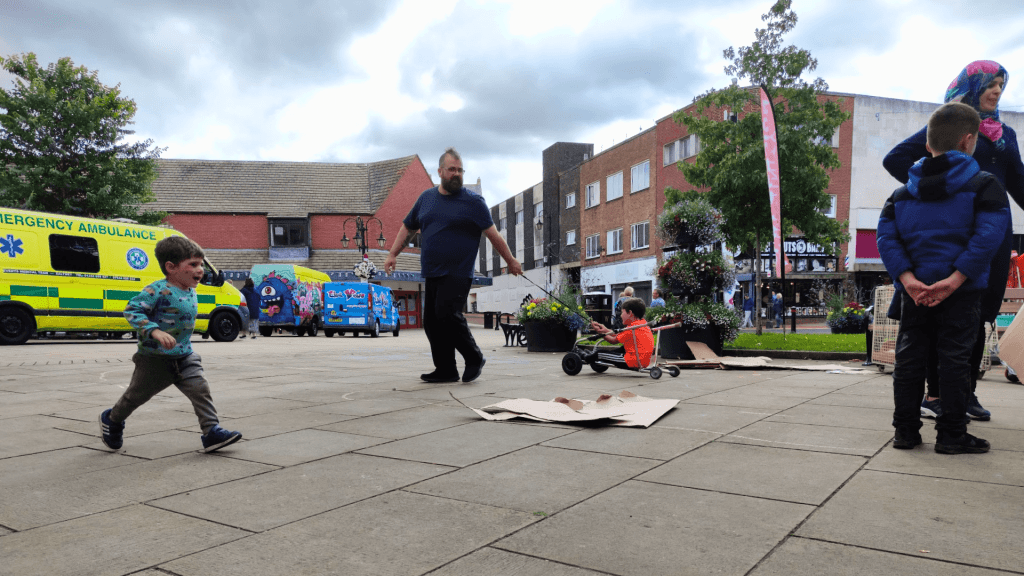
However, on this, the third International Day of Play, it is impossible not to reflect on the many acts and circumstances around the world that undermine any sense of safety and belonging – not just for children, but entire communities or even countries. In pondering what I might write today, I found myself referring to an unexpected document.
The International Play Association’s Play in Crisis guidance was written for parents and carers in a pandemic, but reading it afresh today, I wonder if it might also guide playworkers too, in these turbulent times. The booklet states plainly that “Playing helps children stay physically and mental well. It is an everyday part of a healthy and happy childhood”. It also reminds us that “Playing is one way children deal with stress and cope with the situation they’re in” – the professional reasons we protect play when the world around us feels fractured.
The IPA document asks adults to give children space and time, to observe before intervening, to accept difficult themes in play, and to use play as a way of making sense of frightening events. In our practice, we’re reminded to: protect uninterrupted playtime; offer materials that invite all types of symbolic and messy play; listen and reflect before intervening if necessary; and hold children’s enactments or expressions of fear, loss or anger as meaningful work rather than behaviour to be suppressed or corrected.
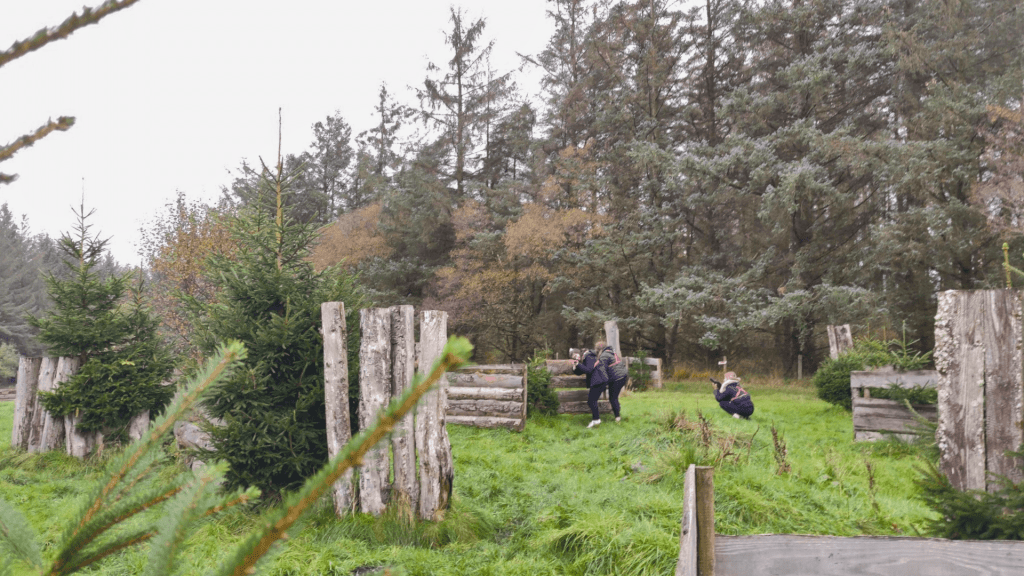
We know that when children stage battles, build barricades, or create worlds divided into “us” and “them”, they are not being deliberately provocative, necessarily. They may be trying to understand what they cannot yet name. The IPA guidance normalises this: it tells us that acting out themes of loss, illness, loneliness or conflict is part of how children process upheaval. In practice, our response must be to hold that play with curiosity and steadiness – to protect the conditions in which it can be explored safely, and to use it as a bridge to reassurance and repair.
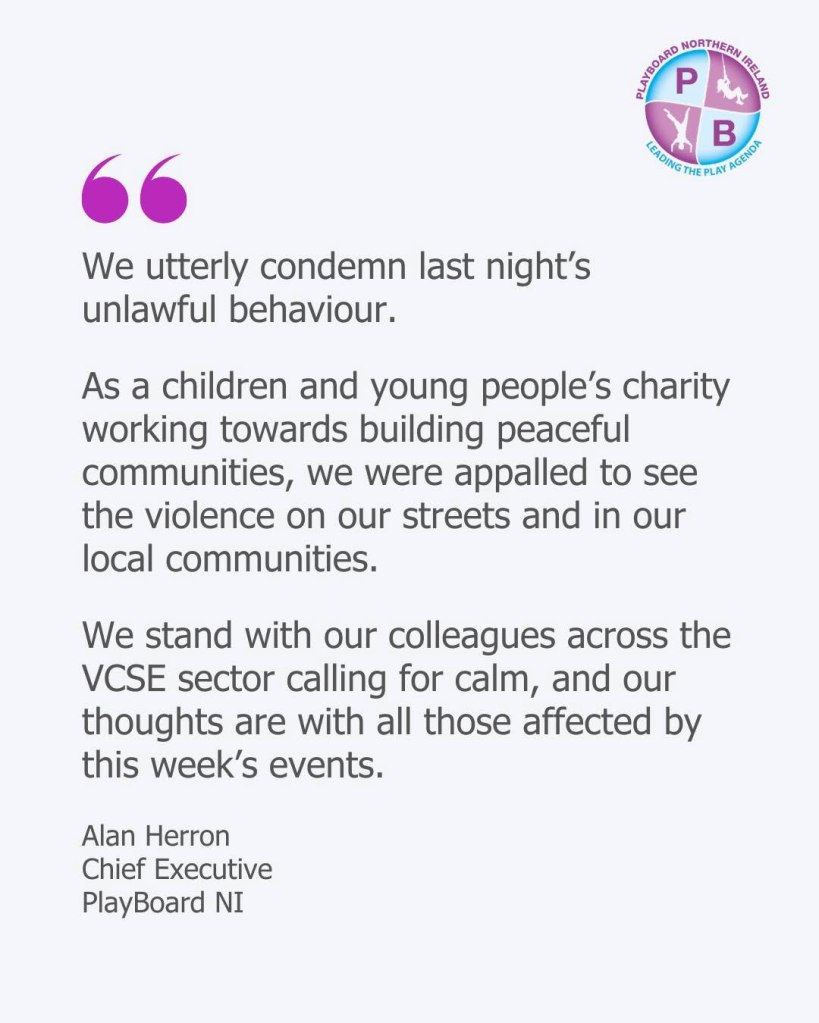
This year, the play we see in our settings will carry the marks of local and global pressures: the violence in Belfast; the tensions stirred by the ‘Raise the Flags’ movement; the war in Gaza; a rise in antisemitism; the far-right mobilisation following the tragic death of Henry Nowak; and the increase in anti-LGBTQ+ hostility during Pride Month. These are all different in scale and history, but they share an effect: they make children feel less secure in their communities and more anxious about their future and where they belong.
Playworkers are not outside this. We are part of the same communities; we carry the same histories and the same wounds. The IPA booklet’s honesty about adults – that our feelings influence how we respond to children’s play – is a timely reminder of the Playwork Principles:
7. Playworkers recognise their own impact on the play space and also the impact of children and young people’s play on the playworker.
We must acknowledge our own fatigue, fear and anger, because only by recognising them can we prevent those feelings from adulterating children’s play or from colouring our interventions in ways that curtail the therapeutic nature of play.
I’m sure many of you, like me, feel quite helpless in knowing what “to do”. I have heard wonderful accounts of playwork colleagues right on the frontline, helping families in crisis in real practical ways. But that is not always possible. So, what can we do today just through our practice?
If we take the IPA toolkit as our frame, the work of playworkers becomes a set of everyday acts of peace. These acts are practical and small, but they are cumulative and powerful. They include keeping routines where possible; protecting time and space for play; offering materials that invite repair and transformation; listening to children’s stories and questions; modelling inclusive language and behaviour; and intervening to stop harassment or exclusion when it appears.
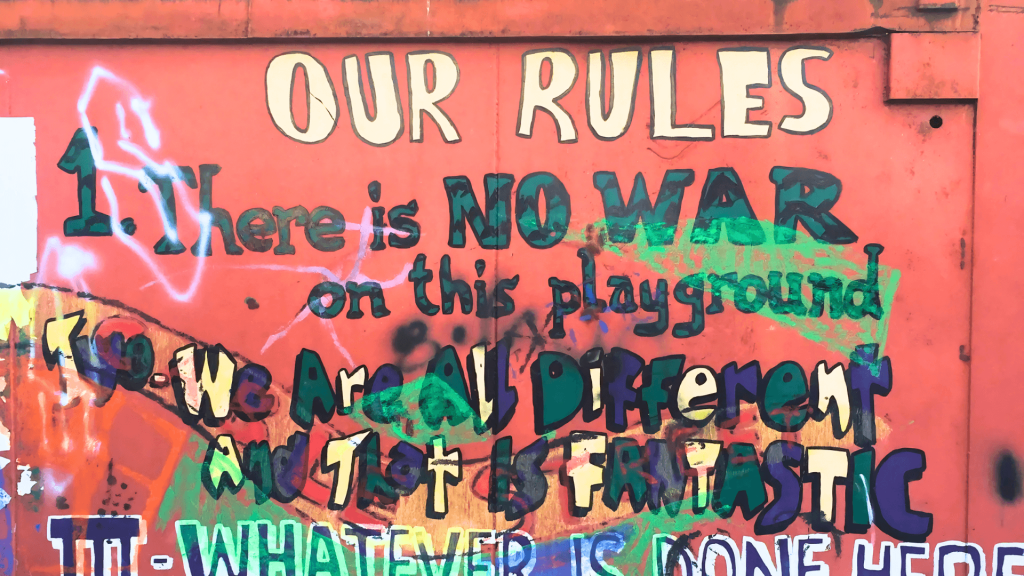
There is a line painted on a shipping container at Glamis Adventure Playground that reads, “These are our Rules. There is no war here. We are all different, and that is fantastic”. We create micro-worlds where difference is welcomed and where children can practise being together without the hierarchies and hostilities they may see elsewhere. That is peace-building in the most literal sense.
International Day of Play gives us a public opportunity to amplify these practices. Use today to share simple, rights-based messages with families: explain why play matters in crisis, offer a few practical tips from the IPA toolkit about observing before intervening, and signpost resources for families who need extra support. Share images and short reflections that show play as a place of belonging rather than a place of division.
To pick my Top 3 messages for today: play is a right; play helps children make sense of fear; playwork is a practice of inclusion.
Penny Wilson’s original call for Playworkers for Peace asked for a banner under which playworkers could gather – not to solve geopolitics, but to declare a shared commitment. Today, on International Day of Play, that call feels urgent again. We cannot resolve every conflict, nor should we pretend that play alone will heal structural injustice. But we can do what we do best: create spaces where children can be children, where difference is treated as a resource, and where safety and dignity are non-negotiable.
Let us protect play, protect childhood, and in doing so practise peace in the places where it matters most.
Playworkers for Peace. Anyone in?