Julia Sexton reflects on an extraordinary period for staff and children at Pitsmoor Adventure Playground, where she is a trustee.
In Rising to the Covid Challenge I described how staff at Pitsmoor Adventure Playground had responded to the challenge of keeping the relational space of the adventure playground alive and well whilst the physical space was closed to children, young people and families.
The playground’s physical space reopened this summer, in July. There was some understandable initial apprehension from staff, children, young people and their families about what the reality of reopening during the pandemic would be like. A main strength of the playground is its diversity; the staff team reflect the cultural diversity of the children, young people and families who use the playground. With research indicating that BAME people have a higher risk of contracting covid 19 (Public Health England, 2020) there were worries about what the impact of meeting regulations to keep everyone safe would be on keeping play at the heart of the playground when it reopened. As one playworker reflected ‘I was worried at the beginning; would we be able to build dens, build a swimming pool, play with water and just get close to the children?’
Pirates and zombies
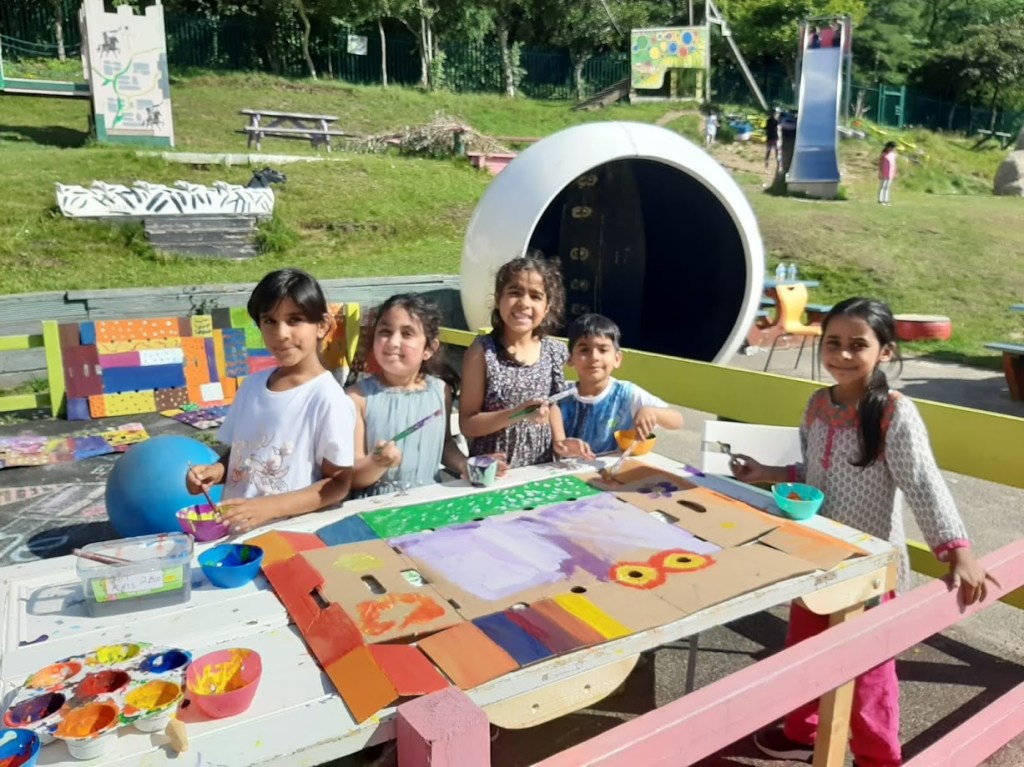
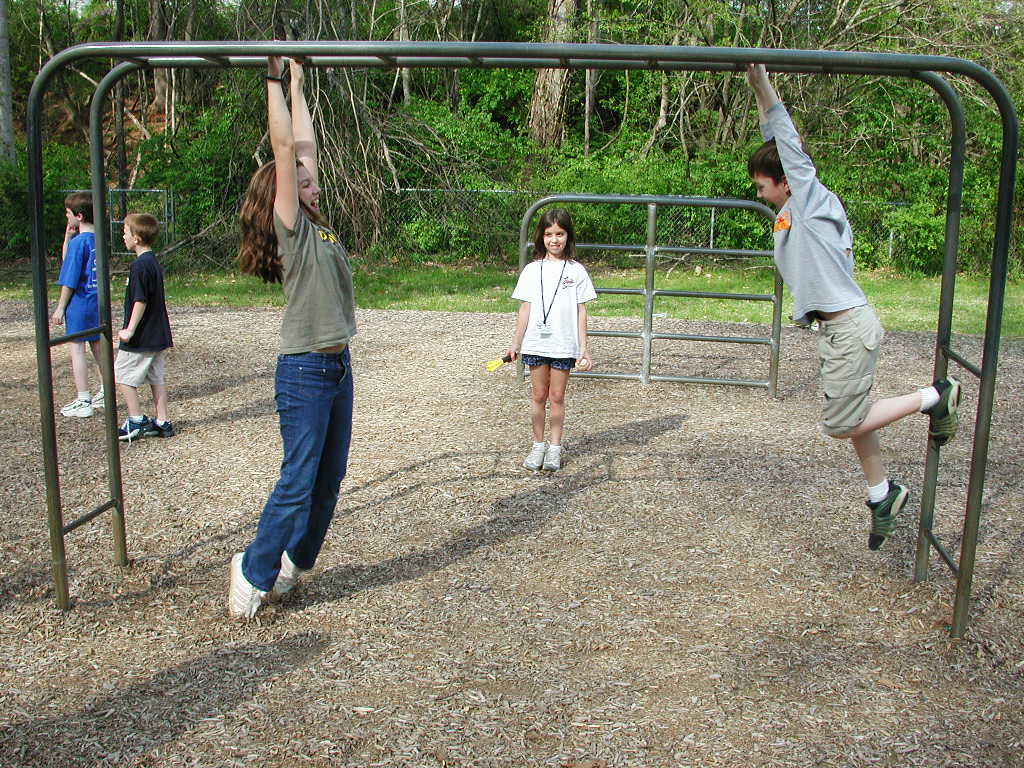
Once the playground was reopened, there have been children running around, playing games of ‘pirates’ and ‘zombies’, football, cricket, basketball, hopscotch, hoola hooping, whizzing down the slide, hanging off the ‘witch’s hat’ roundabout and shrieking with joy as it spins around, making music with frying pans and saucepans, digging and planting, playing hide and seek, painting and drawing and constant shrieks of laughter and smiling faces and much more besides; much more than was anticipated to be possible before reopening.
Reading this you could be forgiven for thinking that the covid restrictions have had little impact on what is on offer at the playground, but you would be wrong. It has been a slow and steady process to be able to confidently offer most of the familiar play opportunities and resources although with some changes. For example, sand, water and the zip wire have not been available in line with risk assessment guidelines and art materials have been available for individual use only. Ever resourceful, the staff continually found alternative ways of doing the familiar things that were affected by the restrictions. Birthdays, always popular celebrations on the playground have continued to be celebrated with cake but involved clapping as an alternative to singing and blowing out candles. A playground favourite game, ‘tiggy’ played by children and playworkers has continued but as ‘tiggy no tiggy’ to enable abiding by social distancing guidance.
relational space
Keeping the relational space of the playground alive and well, whilst physically closed through socially distanced face to face outreach work, the press and other media, helped to keep the playground in people’s minds. Prior to reopening it was important to brief children, young people and families on the changes to expect on returning to the playground to prepare and reassure them that the playground was a safe place for them to play. Running a pilot session was crucial to enable ironing out any glitches and identifying any operational adjustments needed.
Regaining as much as possible of the co-created ‘everydayness’ of the playground required planning, preparation and reflection with all the team members; paid and volunteers. Effective teamwork has been crucial to ensure that the transition to reopening went smoothly and safely. Clear guidance that all of the team understood has been key to this, ensuring staff felt informed and supported. To effectively manage the changes to the playground systems and practice required having sufficient staff so that staff felt confident in their roles and not overwhelmed. Staff found that parents/carers often sought out opportunities to chat with them about their experiences and fears and having enough staff to accommodate this comfortably was essential for the health and wellbeing of the families.
Implications for our ethos
Some of the required changes have had implications for the ethos of the playground and playwork practice, needing careful ongoing reflection, discussion and planning to implement, manage and review. The playground previously aimed to offer the ‘three frees’ (Conway, 2009, p.4); being free of charge, open access and children and young people being free to choose how they play (Lester and Russell, 2013). It remains free of charge but currently cannot be open access. At the entrance to the playground there are now social distancing markers and a registration table. Here all visitors are greeted, welcomed and checked that they have been booked in, as the numbers of visitors on site has been limited, initially to 20 a session; generally 15 children and young people and up to 5 parents/carers in social bubbles.
To accommodate as many children as possible on-site during the day whilst also complying with social distancing and cleaning guidelines, the playground offered two, 2-hour pre-bookable sessions a day, Monday to Friday. All visitors are required to sanitise their hands prior to entering (hand sanitisers are also located throughout the playground) and temperature checks are taken and recorded as part of checking no one has any symptoms of covid 19. Whilst the children and young people are free to play there are some restrictions as to what and how equipment and resources can be accessed.
Feedback from the children, young people and parents/carers about the reopening of the playground has been very positive.
‘We couldn’t wait to be able to play on the playground, it was like every special day coming together when we were allowed back on to play again’ M aged 10
‘It was horrible being stuck in the house all the time. It’s been great being back with my friends and the playworkers’ A aged 11
‘There’s some bits changed but it is still great’ A aged 12
‘The Covids changed everything and made it hard for everyone but it is good we’ve still got Pitsmoor Adventure Playground and that it’s not shut down. We can come here to play, we can’t play anywhere else, it’s not safe’ E aged 13
‘I’ve been struggling with feeding my kids. I lost my job you see when the covid came. I was on a zero hour contract and they got rid of me. It’s been really hard but the playground were there for us all the time and now its opened to play, it’s made a real difference to my kids. They’re smiling again’ – Mother of 4 children
‘A huge difference’
‘Just being able to take my kids somewhere to play and have quality time is vital to me as a lone father. I was climbing the walls at home with them during lockdown not knowing what else to do. There’s only so many walks you can take them on before they get bored. They couldn’t wait for the playground to reopen and it’s made a huge difference to all our lives. They love every minute of the sessions they’ve gone to and are complaining they can’t go every day and having to learn the new covid way means taking turns, which isn’t a bad life lesson for them to learn either. Staff have been brilliant. They are really up on safety and it gives us confidence’ – Father of 3 children
This summer at the playground has been an exceptional one for multiple reasons. The reality of reopening during a pandemic has been that changes have been made to how the playground operates and to playwork practice to keep everyone safe. However, it is possible to keep play at the heart of the work by offering time and space for children and young people to play in challenging times. Whilst initially children, young people and their families along with the staff, were apprehensive about the reopening of the playground, they have found the adjustment smooth and safe.
Julia Sexton
References Conway, M. (2009). Developing an adventure playground: the essential elements. Practice Briefing 1. London: NCB.
Lester, S. and Russell, W. (2013). ‘Utopian visions of childhood and play in English social policy’ In Parker, A. and Vinson, D. (eds.) Youth Sport, Physical Activity and Play: Policy, Intervention and Participation. Abingdon: Routledge, pp. 40-52.
Public Health England (2020). Disparities in the risk and outcomes of
Following the success of the first Playwork in Progress online reflective practice session, we’re back with the 2nd session on Monday 31st August, 2 – 3pm.
This is a chance for playworkers from across the UK (and, who knows, beyond!) to come together and share their experiences of playwork in this “new normal”, the barriers you face, and your plans for the future.
(Spaces are limited so please make sure you let us know if you book a place and are subsequently unable to attend).
We recognise that this may not be the most convenient day and time for everyone so we’re planning for future sessions already. To have your say, please complete one of the following surveys:
If you attended the first session please complete this survey.
If you’ve not been able to join us but would like to in the future, please complete this survey.
To keep up with the conversation, please like the public Facebook Page (and follow ‘Playwork in Progress’ on Instagram and Twitter.
This is open to both members and non-members of The Playwork Foundation, so please feel free to share this post with any of your playwork colleagues who may be interested in taking part.
Wendy Russell and Alison Stenning are today launching a survey to explore experiences of playfulness on streets during the Covid-19 lockdown in the UK.
If you have something to say about play, or playful acts, on your street and in your neighbourhood, please have a look here:
The Play Safety Forum and the UK’s four national play bodies have jointly published a report by risk and play specialists Professor David Ball, Tim Gill, and Andy Yates, about Covid-19 and children’s play.
After surveying the current evidence, the report concludes that current UK policy ‘is much more harmful to children than beneficial’ and ‘should be urgently reviewed, because:
the benefits to children of playing outside bring a host of social, emotional, and physical rewards. These have long been undervalued and at this time appear to have been completely ignored. Consequently, children are suffering harm;
the evidence is that the risks posed by COVID-19 to children playing in outdoor spaces is very low;
proportionate decisionmaking requires that trade-offs between the risks and benefits of safety interventions are part of the decision process’.
The cautious optimism among play advocates in recent weeks, that the Covid-19 pandemic may lead to a fundamental re-evaluation of what is most important for children, their families, and communities, was given a cold reality check on Sunday, when the UK’s most progressive mainstream newspaper, the Guardian/Observer, dedicated its entire editorial to an 8-point ‘manifesto for children’ without once mentioning their need to play. It is an illustration (again) of how lowly children’s own priorities are within the national debate about what is best for them.
At the start of the lockdown nobody was too surprised, in the circumstances, that the government’s response to an open letter from more than 40 play researchers, practitioners, and advocates asking for ‘clear advice’ about outdoor play, merely reiterated that we all must ‘focus on preventing the spread of Covid-19 (and) protecting the most vulnerable in society’. When the government’s only other stated priority was ‘offering support to those impacted by social-distancing, including companies and employees’, it was clear that the sudden constraints on space and opportunity for children to play was not going to be even a secondary issue for ministers.
‘There is little evidence that children’s profound need to play has received any more consideration. How lowly their own priorities are within the national debate about what is best for them’.
Now, as we move towards a substantial easing of the lockdown, these fears are born out. Children’s profound need to play has received little or no consideration from the government.
Researchers concerned
Some eminent researchers, including the ‘Play First’ alliance, have expressed serious concerns about the effect that a lack of play opportunities is having on children’s mental health, and called on the government to ease lockdown ‘in a way that provides all children with the time and opportunity to play with peers, in and outside of school … even while social distancing measures remain in place’. Others have specifically called for a nationwide plan to repurpose residential streets for play during lockdown and beyond.
The four national UK play organisations have endorsed a report from the Play Safety Forum calling for the government’s approach to be ‘urgently reviewed’ on the basis that the current policy ‘completely ignores’ the benefits of outdoor play to children (especially at a time of stress and uncertainty), while the risks of infection are ‘very low’.
Strong words
These are strong words, and necessarily so. The government in Westminster has indeed ignored children’s play as a policy issue ever since it first came to power on 2010, in spite of long recognising it as such. Having abandoned the Play Strategy for England, it believes local authorities should make their own policies for play, but has starved them of the cash that most of them would need to do anything meaningful, at the same time as deregulating both planning and childcare in ways that relegate children’s play to the status of an optional extra.
‘For children the overwhelming priority is playing with their friends’.
Now, however, would be the moment to think again. Millions of parents, teachers and children are stressed, tired and seriously unhappy after a full term-and-a-half trying to keep up with the curriculum via variable on-line platforms and ad hoc home-schooling, without receiving any of the ‘softer’ benefits of being part of the school community. For children this overwhelmingly means playing with their friends.
The government has announced a ‘Covid catch-up’ package for primary and secondary schools to support children returning to school in September to recover lost ground, and has also said that providers running holiday clubs and activities for children over the summer holiday will be able to open ‘if the science allows’ (although the guidance on this seems to be delayed). The relative importance attached to these two measures? £1 billion is allocated to the former, zero to the latter, which is conceived primarily as a service to parents – who will no doubt have to cover the cost themselves. For many, many children – the same children for whom the £1b catch-up fund is designed – this will mean summer play schemes are unaffordable. In turn, many independent providers will be unable to operate – which puts an additional pressure on schools, just as they need the mother of all breaks.
A play recovery fund
The answer is obvious. A discreet ‘play recovery’ fund should be established, in consultation with the play and playwork sectors, to enable non-school based holiday play schemes to be offered free of charge in the areas that will need them most. And the government should also talk to Playing Out, its network of street play activators, and the growing number of local authorities who now support temporary street closures for play, to consider an expanded national programme of street play sessions over the summer.
Some will think such an idea cavalier: that children’s outdoor play is simply too random and chaotic to observe any kind of public health protocols, even with the distancing requirements relaxed. But even if the Play Safety Forum’s persuasive risk-benefit assessment is disregarded, the government should know that the playwork field is highly professional, and always resourceful. Whatever the safety measures might need to be, no one will be better at engaging with children to follow them than playworkers.
Playwork responds to the crisis
For a field seriously depleted after 10 years of austerity, deregulation, and (in England) policy neglect, the field rallied well to respond to the crisis – in spite of some of its fundamental tenets seeming completely untenable in a public health emergency that demands distance, isolation, and regimentation. Playwork practitioners and advocates have offered timely guidance on how to sustain play opportunities through the lockdown, including playing at home. Adventure playgrounds have reached out to offer relational space and support to communities whose physical playgrounds were closed, and some practitioners have given new meaning to the term face-to-face playwork by taking it to the online platforms with which we are all now so familiar.
Play England and the great playwork theorist, Bob Hughes, have set out some wise words and good practical advice on ‘Play after Lockdown’. But first, in this time of national crisis, with families desperately needing a break before a return to the new normal – many of them unable to go away because of increased job insecurity or unemployment – the country needs the play sector to step up and do what it does best: give our kids space and support to have a good time. From within the billions that this terrible pandemic has cost the economy, is a few million for a well-deserved and badly needed Summer of Play, too much to expect? At the very least, the Observer should include it in its manifesto.
Playworker Sîon Edwards describes how the adventure playgrounds in Wales are responding to the Covid-19 crisis with their customary playfulness and innovation.
All four playgrounds in Wales are in the northeast, with three in Wrexham and one in Rhyl. Fortunately, this close proximity means I’m able to give a bit of an update on the majority (with the exception of our friends on the north coast). In short, like all other playgrounds in Wales (adventure or otherwise) … they’re closed! However, we have been doing different things to keep in touch with our communities and stay playful.
Food distribution
At The Venture, we initially responded by providing food packages. This was spurred on by the fact that only around 10% of daily Free School Meals (FSM) were being collected from local estate offices, likely due to a fear of going to a central collection point. Our desire was to emulate the success of the Welsh Government ‘Holiday Hunger Playwork Pilot’, where a FSM alternative is distributed through play provision, indiscriminately (i.e. irrespective of eligibility for FSM) during school holidays.
A consortium of local community organisations was quickly established and a small number of volunteers engaged to prepare and distribute food packages that could last a number of days, rather than daily (whilst of course maintaining social-distancing). Eventually, Wrexham County Borough Council (WCBC) moved to a direct payment system (equivalent to £19.50 per week) and the food distribution had to be ceased due to mounting costs.
“So far, I’ve had my own disco in the living room, practiced handstands, made a hammock, built a den, made collages, and played bowling with my empty Actimel bottles!”
On the more playful side, we’ve been going live for ‘Amser Story’ (storytime) in the early evening and producing a daily ‘On This Day’ (OTD) video. OTD features historic facts related to each day, to complement independent home-learning but also, more importantly, to provide a platform to share information with and from the local community.
Improvised bowling using old Actimel cartons
One key feature of OTD has been the ‘Playful Timetable’ from the WCBC Play & Youth Support Team which gives playful activity ideas that can be child-led, both indoors and outdoors. To name a few, so far, I’ve had my own disco in the living room, practiced handstands, made a hammock, built a den, made collages, and played bowling with my empty Actimel bottles!
Just over the field on the Caia Park estate, at Gwenfro Valley Adventure Playground, the steering group of volunteer community members have been meeting during lockdown via Facebook Messenger and focussing on fundraising via social media.
Further south, in the village of Plas Madoc, The Land is closed but playworkers there have been coming up with ways of encouraging children outside at home. Using reclaimed wood from local businesses, the playworkers are building bespoke benches, with designs inspired by the individuals who will eventually use them. Their latest design is the ‘Kiddo Lounger’!
“The planters mean they can bring a little bit of The Land into their own back garden”
They’ve also been creating trough planters, to encourage interaction with the natural world. On The Land, children will play with the elements: digging, gardening, and eating herbs and strawberries that have been grown on-site. The planters mean they can bring a little bit of The Land into their own back garden, bring a sense of competence and pride whilst also providing an opportunity to relax in the fresh air.
Recharging the batteries
Personally, I’ve found great comfort in the frequent online meetings with the Playwork Foundation. I’ve found, like the UK conference in Eastbourne, the meetings recharge my playworker batteries during a time when I easily feel disconnected and unable to do that thing that is hard to pin down in words, known as playwork.
Fellow trustee, Penny, has also been hosting weekly reflective sessions via Zoom which has been a great source of support and inspiration! You can get in the loop by searching for the Facebook Page ‘Play For Today’. I’ve yet to join “The Playworkers Lockdown Party 2020”, live on Facebook, but one of these nights I hope to join in – from what I’ve seen it’s certainly something that is likely to be talked about for years to come (Wendy’s glasses come to mind!).
Meynell TV is also a welcome innovation, to combat the Netflix dominance, which you can find on YouTube by searching for “Meynell Games”, while the annual Eastbourne get-together has been reimagined as 8 Weeks of Conference.
Whilst the countries of the UK diverge in terms of lockdown easing, the one thing the nation of playworkers can be sure of is that is not going to be “business as usual” for quite some time, and I would hazard a guess that the key to unlocking our play spaces will be innovation. I look forward to seeing what you come up with!
Cofion gynnes o’r Gymru | Warm regards
Sîon Edwards
Sîon is a playworker at the Venture in Wrexham, and a trustee of the Playwork Foundation
Meynell Games offers two new opportunities for the playwork community to stay connected
Meynell Games, organiser of the annual National Playwork Conference, has launched two new projects designed to take aspects of the playwork discourse on-line.
Meynell TV
This is a short (approximately 15-minute) TV talk show available from 9:00 every Monday on YouTube.
8 Weeks of Conference
The second is an on-line conference that will be taking place for 2 hours every Tuesday for 8 weeks in June and July. Meynell Games describes the event as “a fantastic opportunity for learning and growth, and a great bit of Professional Development for those not currently working”.
For more information about the online conference, download the flyer, or go to the website and follow relevant links.
General Public’s Oral Histories has launched part one of it’s Let Us Play project, an investigation of the ‘state of play’ today. Initially this involves the collation of an archive of material to capture the Birmingham adventure playground movement of the 1960-1980’s (funded by The National Lottery Heritage Fund).
This will be followed by a wider ‘live period’ of events and exhibitions in 2021/22. This has been initiated through an Arts Council R&D grant. This has seen the development of a new piece of moving image work, a Sparkbrook adventure playground digital trail/app, mapping of play in the city from the 1960’s through to the present day, collaborations with academics at UoB and developing a series of creative play weeks/exhibitions in close proximity to the old playground sites.
Penny Wilson tells the story of how her innovative public space play project in London’s famous Kings Cross development has moved on-line … without losing any of its ‘crazy flavour’
Playkx was designed as a play offer in the Kings Cross development area that was not a built play environment. Instead of timber or steel structures there is a team of experienced and skilled playworkers, and a vast collection of loose parts; playthings to be used in any way that children need. There are dressing up clothes, masks nets, ropes fabrics, blocks, animal creatures, artificial plants and flowers, all of which can be used for dressing up, the construction of a den, sociodramatic playing of the creation of wild and wonderful fantasy worlds. Nothing is fixed. Everything is flexible.
We were quite careful in those days of another age, to clean and wash and launder and disinfect on a regular basis. The whole-head pigeon mask could be worn by 20 or 30 people a day. Nobody batted an eyelid. The Imagination Playground blocks were chewed by many teething people, handled by hundreds of children and adults from families from all over the world who had never met before and never would again. We cuddled and tickled and tagged and lifted up and swung around children…. these are things of a faraway time. How unthinkable they seem now.
Visitors
We counted our visitors, adults and children alike. Each day our numbers increased. In the winter, when we had access to a large covered space, our highest head count was about 650 people a day. Outdoors in the parks, numbers were harder to gauge. Families spent the day, often when they expected to visit for only 20 minutes or so. They would bring picnics and birthday parties and meet up with friends and the grown-ups would behave as if they were beside the sea, lounging back, relaxing together and keeping an eye on the children as they got on with their own playing.
We made a point of saying hello to the adults and making sure everyone had enough water, watching their playing children with them, listening to them, marvelling at the unfolding play. Very often they hadn’t stepped back to watch this before. It was an easy step, which they made themselves, to an understanding that what they were seeing was important and seemed magical and that if they as adults interfered with it, the spell could easily be broken. So yes. We counted both children and adults in our numbers. When we gave out stickers, we gave them also to grown ups … ‘after all the children wouldn’t be here without you!’
The adults became advocates for the free playing of their children … that’s how you build change.
Unlike a great many play projects, our funder agreed to pay us for our work to continue throughout the period of isolation. The deal was that we continue to provide a play experience and some online resource, which, just like our play sessions, would be free to use and ‘have the same crazy flavour as the PlayKX we have come to know.’ This was far from being a hardship to us. In fact, I suspect that it has proved to be not only a financial lifeline, but a sanity clause.
Going live
So within days of the closing of our solid world play provision PlayKX went live with a zoom presence. It was, I suppose, an obvious solution. We have 5000 Instagram supporters, most of whom are families who have used our playtimes. A fair percentage of those families are regular visitors, who live or work in the King’s Cross area. Most others visit us from around London. Some from much further afield.
Somehow we ended up being slightly ahead of the game and had worked out that the changes that were coming were going to turn our play world upside down. We had also managed to work out a few ways to continue. Some of our plans fell by the wayside, some may be used in later phases of our life with isolation. However we spent a few days working out how to use this new Zoom thing, and were ready to start offering online play sessions without missing a single scheduled time slot for our project delivery. We were seamless. So we sat, like swans, trying to reinvent the way in which we delivered our playwork. Calm and carefree on the surface, head and shoulders serene and elegant, gliding like the proverbial swan, with the frantic panic and uncertainty out of the sight of the camera.
We have limited technology in our homes, working from iPads or lap tops; the bigger gatherings possible through Zoom and other platforms, were beyond us at first, and to be honest, being limited to nine busy play-filled windows on a screen was challenging enough. It is surprisingly exhausting.
We agreed on some basic safeguarding measures. Participation to a play session is by parental request and booking through messages on our Instagram account. Then individual invitations are sent to those parents. No one can join a play session without an invitation, unless we are hacked. In case of this happening the host closes down the whole session immediately. We sometimes message parents to check in that everything is ok after session if the child seemed out of sorts, or to tell them how brilliant … or to say “thank you”.
Tips for parents
We hide anything in our homes that can identify our location or personal things we do not want to share. We advise parents to be mindful of this too. Parents are given a few hints about how to make it easier for the child to participate:
Put your child’s name in the tag in the bottom corner of the screen so we all know who we are playing alongside.
Don’t have private phone conversations during the Zoom call.
Don’t have music playing as it is distracting to the sound balance and priorities for quieter children’s play.
Try not to urge the child to play – let them watch and they can grow into it if they choose.
We make sure that we have a 10 minute, 5 minute and 2 minute countdown to the end of the session and a clear and deliberate greeting and leave taking wave. A small ritual, but it helps.
We agreed that the online work would be grounded in the Playwork Principles, of course. But children were bemused by seeing familiar faces stuttering and freezing in separate little boxes like so many Max Headrooms. So, in truth were we. We had to devise new ways of presenting play to enable us all to get beyond the screen.
It was obvious that we needed to be more obvious, a more exaggerated version of our usual playing selves. Yet it was also clear that less is more. The cartoon exaggerations that are needed to communicate to children on screens that falter and sound that is delayed, can be overwhelming and crudely crafted, lending even the most accomplished and subtle of playwork practitioners the gaucherie of a 70s Saturday morning children’s TV host.
We thought about muting participant screens, but the ability to unmute by the children and the process that they would have to go through to recognise that they wanted to make a deliberate spoken contribution seemed untenable. Instead we prefer to play almost silently ourselves responding to cues.
Backdrop
We needed to think very carefully about our personal backdrop, about camera angles, how we used sound and movement, our scale close to and away from the screen, how we could use the loose parts we had at our disposal to respond to, and offer, play cues. Just as we would in our previous play settings we take a cue or part of the environment and incorporate it into play. When the screen stops moving we maybe follow this up by playing that we are frozen ourselves for a second or so, like ‘grandmothers footsteps’. If a child wants to go into space, we can judder the screens during take-off and roll and twist them or turn upside down when we become weightless.
One boy started a session by telling us he had invented a machine with two buttons, one makes things bigger and the other one makes things smaller. We found that this could be true if we moved away from our cameras or pushed our faces close to them. He could control this.
Sometimes it is easier for children to play when our faces are flat on to the screen like the traditional newsreader talking head. Sometimes it is easier to use an external camera and have a profile shot of playworker faces, it can feel both intense and exhausting to have a huge face peering at you as you play.
Agile
It may be fun for an agile playworker to do handstands or have their feet on view on-screen. Frequently this will be in response to an acrobatic display from a child. Though sometimes it will not be. Animals (toys) objects and faces can turn sideways or dangle upside down. Again with an external camera playworkers and children can be upside down for an entire session.
Other children enjoy a camera turned on the screen so that all of the players can be seen at once repeating into infinity. You can log in from more than once device and have multiple versions of your playing self, turning the sound off prevents the sci-fi sound effects cause by the looping of microphones, or you can play with this eerie echoing. Jake is a musician and can make lovely twangling noises on keyboards or guitar – the children sometimes just enjoy the sound but on other days we make beautiful music from many homes, it sounds randomly ethereal.
We just discovered that hide-and-seek lends itself surprisingly well to this medium, (just make sure that one person is nominated to seek, otherwise, just as in the solid world, it can become tedious.)
Another playworker … will keep a quiet watch – being calm, and keeping a still, peaceful, window in the screen. This seems to help keep things grounded.
Some play sessions are run with one playworker. These tend to be calmer quieter times and are great for children who don’t care to be too rambunctious. Most of our play times are run by a three person team. We have worked out that it is good to have one playworker in narrator mode, bringing in play cues and making links between the players verbally. Another playworker will do this same work visually and the third will keep a quiet watch being calm and keeping a still peaceful window in the screen which seems to help keep things grounded.
Practical
From a practical point of view, we find it more important than ever to have a reflective practice time before and after the face-to-face work, in exactly the same way as would happen in an adventure play setting or a busy play session. Everyone sees different things and there is a huge need to compare notes and learn to hone our craft with the benefit of hindsight.
Sessions run for 40 minutes, initially this was because it was the length of a free zoom meeting, but it turns out that this is just the right length of time for adults and children to be able to focus. Any shorter and the ending feels abrupt. And longer and it peters out uncomfortably.
We are experimenting with themes at the moment, running fairly loose topics like Space, Magic and Pirates which can go almost anywhere that the children want, or can be ignored or abandoned easily. It seems to be helpful to families preparing for these sessions to have props and ideas and stories to hand. These are frequently very improvised but could not be more successful if they had been the most expensive bespoke pieces of kit in the world. The playwork team learned a lot from observing this. In our anxiety and performance nerviness we had had a tendency to over-prepare some quite lavish backdrops and supplies of loose parts. We soon decided that this was way too heavily interventionist and went back to things being a bit rubbish and homemade and delightfully improvised.
with the right support children quickly saw each other playing in their own homes and picked up on what the others were doing
It soon became obvious that with the right support children quickly saw each other playing in their own homes and picked up on what the others were doing, the things they were playing with, or the gist of their play using household objects, rushing away to find their translation of the loose part to join in the experience together. So on our very first play session all of the children had found a blue block of some sort to show us. (Many of the families nickname the project as The Blue Blocks because of the Imagination Playground Blocks we use.)
Dens spring out of nothing, rockets or boats transform from settees. Children crawl in and out of identical laundry baskets in homes miles away. They make each other laugh. We pour cups of tea from real or imagined empty tea pots in to real or imagined cups through our computers. We throw pom-poms or balloons to each other, eat snacks and sumptuous invisible banquets. We fall asleep and wake each other up, scare each other or tickle, blow kisses, find butterfly wings to wear, research what a gekko looks like from our bookshelves for someone who absolutely needs to know it at that very moment. We can all be rabbits. We can talk about cheering together on Thursday evenings. We can listen as a soft toy whispers into the screen that they wish that they could go out to the playground.
Taking control
My cat comes and sits in front of the screen, and within seconds children are holding their own cats, usually soft toys … but not always.
Whilst some of the play we see is concerned with demonstrating an inventory of possessions or taking control by becoming Elsa from Frozen or becoming a creature with magical powers, most of the play narratives are about escaping, into space, onto a ship or a train, about children making their own worlds so that they can make it all right again. Miniature townscapes, dens or houses that can be as they should be, or as they were before. They are making their own Narnian gateways for us all to travel into other worlds where we can play together again.
At the end of a long days boat building and fishing on another planet we had travelled to on a spaceship, we all rested our oars and sails and admired the fishes we had caught and with a minute to go until the end of the session, one child wistfully sang ‘Row Row Row your boat’ to us all. It is probably the only time I have ever found that song heart wrenchingly beautiful.
We have noticed that the older children who have used our Kings Cross sessions have been far more comfortable in playing with their friends across screens than the younger ones. They are able to process the screen image of a play mate and work out the logistics of this play medium to get to the nub of the matter. With littler children it is a more confusing and rather more tenuous process. Our Zoom users are by and large from this younger age group of our community. This in itself is strange territory to us.
It is our responsibility as playworkers to catch these nuances, as fragile as wisps of smoke, and hold them tenderly for an extra second or two. Treasure them and keep them safe, precious, and attended to.
However it is obvious that the 3-5 year olds frequently have younger siblings or are only children. They are not experiencing play with other children, their contact coming largely through structured on line classes and spotting rainbows in windows during their permitted daily ‘exercise’ to remind them that other children exist.
We feel that this isolation may have a dramatic impact on them both now, and afterwards but we cannot anticipate how it will manifest itself. Similarly we have had children explain the Coronavirus to us. They talk about germs on other people, on things and on themselves. What will this intrusion of this invisible danger alive on bodies, in the air between people, on food and front door handles and toys have upon them? How will this knowledge and the behaviours it necessitates affect the growing of their growing brains?
Psychological effects
As a team we have thought a lot about what sort of psychological effects this may have for children. Will they be able to Rough and Tumble together in future, playing with all feelings of pretend and real conflict and resolution that this has always carried in the past and ignore the real fear of the touch of skin on skin?
One major drawback of playing on Zoom is that children do not get to choose the time that they are ready to play. We have been very aware that until recently most children only used screens to star in a conversation to grandparents or far flung family and friends. Now, in our shared play times, they are expected to move through the screen and into the imagined world within the real world of another home. The intellectual leap is huge and we as playworkers find it challenging. However if they can have the luxury of support through a reticent start, they will be able to figure it out and get down to the business of play, somehow. The draw of it is so very strong, it seems to override most other agendas. Skilling up parents is vital if children are to reach that goal.
We know that many of the families we play with are in flats with no outdoor space or even balconies. The poor soundproofing of those flats is an issue that crops up time and time again. Jumping with enthusiasm is charming for us to see but can unleash a torrent of abuse from Mr Heckles (F.R.I.E.N.D.S.) downstairs. This eventually gets passed on to the child in some way or another, either from furious and frustrated parents or sweet kindly requests for the child to step lightly. Imagine, you are locked up in your flat in isolation, your world is confusing and the outside is somehow dangerous and you have to keep quiet on top of everything else. We have to be aware of these agendas too. We avoid games that include jumping about or setting up saucepan percussions.
The children have made all of us cry with laughter. They are witty and clever and funny, and considerate of all of us. They seem to know that by being funny they are making things better. It is within their power to do this when they play.
We have played with children and families we have got to know very well from the solid world of Kings Cross. Other families have built a play relationship with us for the first time. Some of them settled into our oddness immediately, some take a little while to acclimatise and others find it doesn’t suit them. That’s all ok.
We have played with families in South Africa, Hong Kong, Turkey and California. All of them are facing the same frustrations. We have drawn pictures and maps together, told each other stories. We have caught together the wisps of important moments.
Oh, and the children have made all of us cry with laughter. They are witty and clever and funny and considerate of all of us. They seem to know that by being funny they are making things better. It is within their power to do this when they play.
Today, in a quiet moment, T showed me what he had built from his wooden building blocks. He has, of course, prepared a den, but it was the small wooden palace that he wanted to show me.
“I live high up in the roof. Here are Mummy and Baby and Daddy has a work room down here. There is a garden with a playground right outside and here is Penny’s House, Jake’s House and Sioned’s house. Of course we don’t all really live together in the same place but we do here.”
Julia Sexton, a trustee of Pitsmoor Adventure Playground, describes how the physical space of the playground is giving way, during lockdown, to the relational space of the project’s integral links with its community
Adventure playgrounds are more than just physical spaces. They are relational spaces (Lester, Fitzpatrick and Russell, 2014); each unique and individual, created through physical, emotional and social encounters (Massey, 2005). As a relational space, the adventure playground is co-produced through on-going, every day, ordinary encounters, habits and routines (Lester, Fitzpatrick and Russell, 2014) involving humans and things situated within wider social, political and material environments.
So, what happens when due to the Covid-19 outbreak and the regulations put in place to minimise the risk of the virus spreading, adventure playgrounds close? The physical space is closed to children and families and the everyday, ordinary encounters, habits and routines that co-produce the relational space are disrupted, but can the relational space continue in a different form?
“Playworkers are nothing if not resourceful”
Playworkers are nothing if not resourceful and the staff at Pitsmoor Adventure Playground have risen to the challenge in these difficult times of keeping the relational space of the adventure playground alive and well, helping people stay safe and working hard to keep play on everyone’s agenda, locally, regionally and across the UK.
Just as all adventure playgrounds are unique and individual, the support provided also needs to be unique and individual to the children, families and communities they serve. There are many amazing ideas and activities on the internet but many of the children and families that use the playground do not have devices, so this needed to be considered when thinking about different ways to support the children’s play.
Whilst understanding that children can play with anything or in fact no things, just their imagination, the playworkers recognised that there can be constraints to children being able to do this for lots of reasons such as limited resources and space at home, parental understanding of play and remote teaching lessons and homework. In response to this the playworkers felt that it was important to continue to support the children having opportunities to direct themselves and be spontaneous in their play as they had had when playing on the playground.
Contacting families
The playground staff have been in contact with families by telephone to check that they are ok. Play packs have been made up using materials from the playground and Scrap Dragon, the local scrapstore, for distribution to families. Careful consideration has been given to including varied materials such as different types of card and paper, oddments of wool, pom poms, pipe cleaners, random sparkles, cardboard boxes, glue, small pack of crayons, children’s scissors and a children’s book. The books were donated by the Fun Palace Co-ordinator at the Crucible Theatre, Sheffield and a local business loaned the use of their truck to help with deliveries. The packs contain a realistic collection of items so the cost to the playground is manageable and also so every child can have their own pack, rather than having to share with siblings and causing squabbles, in perhaps already stressed households.
So far, about 85 packs have been given out; most delivered by hand with some being posted out to children who live further afield. There has been a very positive response to the play packs; parents and children eagerly awaiting their play pack delivery, happy to see, from the safe distance of their doorsteps, playground staff doing the deliveries. In addition, there have been very appreciative messages posted on social media about the play packs. These packs will continue to be made, ever evolving to include different items whilst requests keep coming in via social media, telephone and word of mouth.
Sharing ideas
For those children and families with access to devices, social media, such as Facebook and Twitter have been used to share play ideas, challenges, advice and information including videos such as one made with Knottingley Adventure Playground about the importance of children staying home. In addition, the manager and the finance officer have given interviews about the importance of play during the covid-19 outbreak on local radio.
The playground is in regular contact with partner organisations such as the Council’s Community Response Team, voluntary organisations, other local community and faith groups, developing thinking strategically about how to better support children, young people, families and communities during this time. As a community hub, the playground has produced a leaflet detailing the most useful local and citywide support services, mainly pictorial so it can be understood by speakers of other languages, and with messages about staying indoors and keeping safe.
“the relational space is able to continue, just in different forms”.
The playground is listed on this as being able to help with shopping and with emergency food parcel referrals. The playground has been actively involved in supporting the local Food Bank’s move to a delivery service, using the playground’s minibus and helping to collect/buy food and assisting with successfully applying for funding.
The physical space of the playground may be currently closed to children and families; and the everyday, ordinary encounters, habits, and routines that co-produce the relational space have been disrupted. However, the relational space is able to continue, just in different forms.
Julia Sexton
Julia is a Senior Lecturer at the Sheffield Institute of Education and a trustee of Pitsmoor Adventure Playground. She is also a trustee of the Playwork Foundation.