Cool Enough to Care – A Playworker’s Guide to Extreme Heat & Hot Weather

Playworkers across these islands are in the thrust of arguably the busiest times of the year, and usually the warmest.

Whether you chalk it up to global warming or chalkier theories, hotter summers are no longer anomalies – they’re becoming part of the seasonal rhythm. As heat becomes less exceptional and more expected, the clickbait tips will fade – but the need for thoughtful, place-based guidance will only grow.

So, with the help of Stockholm-based playworker Suzanne Axelsson, we’ve compiled some facts, figures, and field-tested strategies to help you not only respond to high temperatures, but anticipate them – in your budgets, your resources, and your site design.

Too Hot to Play – The facts at a glance

Children are at risk of burns when surface temperatures exceed 50℃, or when skin is exposed to 45℃ for long periods. Surface temperatures above 50℃ can cause severe burns in seconds – especially on young skin.

Playground surfaces and equipment (particularly plastic) can reach these high temperatures on bright, dry days in the high twenties. Slides, poles, guardrails, swing seats, barriers, tabletops, decking and slabs are just some examples of the surfaces that can pose a burn risk when exposed to direct sunlight in these temperatures.

Top tips:

  • Test surface temperatures before each play session, including flooring.
  • If you don’t have a thermometer, use a hand test: if you can’t keep your hand comfortably on the surface for 5 seconds, it’s too hot for play!
  • Recheck temperatures throughout the day. Using a timed checklist can help monitoring during hot spells.

Prevention

  • Avoid south-facing equipment (especially slides) to limit sun exposure during peak heat.
  • Offer natural shade – trees can cool surrounding areas by up to 8℃ – and consider cooling surfaces down with water.
  • Use natural materials. Synthetic grass and rubber surfacing can burn children’s feet, especially darker colours.
  • On hot days, encourage children to keep shoes on and avoid prolonged contact with hot surfaces, including when kneeling or sitting.

Heat hacks

Keep hydrated:
  • Make sure there is access to drinking water.
  • Sweating is the body’s way of keeping cool (and it’s pretty effective), but water lost through sweating needs to be replaced, which is why keeping hydrated is so important.
  • Some children won’t realise they’re dehydrated, so reminders will help.
  • Add a little fruit juice or cordial to encourage those who “don’t like” water to stay hydrated.
  • Cucumbers, tomatoes, oranges and watermelon are all good ways to keep hydrated.
  • Electrolytes help to stay hydrated – these are found naturally in coconut water, milk, fruit juices, and smoothies.
  • Ice-lollies are better than ice-cream for cooling off – the milk and creamy fats of the ice cream use energy to digest, increasing your body temperature.
Keep cool:
  • If you have a choice, play outside early in the day and late in the afternoon to avoid the worst UV radiation at midday.
  • Lots of locomotor play going on? It’s not the playworker way, but try encouraging breaks in the shade to bring down core temperature and rehydrate.
  • Fans can bring immediate relief to sweaty faces, but they also speed-up dehydration(!), so make sure there’s plenty of drinking water. Misting sprays are a good choice.
  • Water fight! Nothing cools better than water, but do consider the environmental impact of excessive water use (and your water bill!).
  • Cool-rags (wet cloth), wet towels and bandannas help cool hot bodies down.
  • Create foot baths to cool warm feet. Do check if you need to consider extra infection-control measures based on where you are: UKHSA (England); Public Health Agency (Northern Ireland); Public Health Scotland; Public Health Wales).
  • Encourage children to wear loose, light-weight, light-coloured clothes. Caps and hats can protect from harmful UV rays, but they can also increase body temperature, so encourage time in the shade to take them off.
  • Encourage everyone to sun cream for UV protection.

Heat, humidity & health

Humidity is how much water vapour in the air.

Low humidity means surfaces will feel hotter. But high humidity makes it harder to regulate body heat increasing the risk of heat-related illnesses, like heat exhaustion and heat stroke.

These heat-related illnesses can be serious and potentially life-threatening. They can also be brought on or intensified by physical activity.

Hydration and cooling down the body are the key to treatment and recovery from such illnesses. Recognising the signs and symptoms early will help avoid serious illness.

Below is a unified checklist drawing on NHS (England), nidirect (Northern Ireland), NHS Inform (Scotland) and Public Health Wales guidance:

Heat Exhaustion (early stage)
  • Excessive sweating
  • Pale, clammy skin or development of heat rash
  • Muscle cramps in arms, legs or abdomen
  • Intense thirst and dry mouth
  • Weakness or fatigue
  • Headache or throbbing headache
  • Nausea, vomiting or feeling sick
  • Dizziness or light-headedness
  • Rapid heartbeat (tachycardia) and fast breathing (tachypnea)
  • Dark or reduced urine output (sign of dehydration)
Heatstroke (advanced stage; medical emergency)
  • Core body temperature above 40 ℃ (104 ℉)
  • Skin that may feel hot and dry—or paradoxically cold/clammy—despite high temperature
  • Altered mental state: confusion, irritability, aggressive behaviour, hallucinations
  • Slurred speech or gross lack of coordination
  • Seizures or convulsions
  • Fainting, loss of consciousness or collapse
  • Extreme lethargy or sudden sleepiness
  • Loss of balance or falling down
  • Feeling chills or rigors
  • Absence of sweating despite feeling overheated

Children will react to heat in different ways. Some are more susceptible to heat than others.

Children with excess body weight, who have congenital conditions, or who are taking medication could be at increased risk of negative effects.

Even age can have an impact. For example, children under four years of age are at an increased risk because younger children produce more metabolic heat, are less able to sweat, and have core temperatures that rise faster during dehydration.

Disabilities and health needs may also play a role in the impact of heat extremes.

Having Fun in the Heat

  • Instead of gathering around the campfire, congregate around the camp-pool – find some shade and have a shared pamper-sesh with you feet in soothing, cooling waters. Maybe offer some slower activities to encourage rest (e.g., art & craft, finger string games or board games) or set-up some hammocks.
  • Murder She Soaked – swap chalk and crime scene tape for the cooling spray of a hose-pipe. Lie on the floor or sit against a wall, and use your body create a dry silhouette. Wet clothes will help cool off.
  • Jur-ICE-ic Park – submerge dinosaurs or other “artifacts” in water and place in the freezer overnight. Once frozen, give your budding paleontologists toffee hammers or other suitable utensils to slowly chip away at these cold (and cooling) time capsules – watch out for ice burn by holding for too long.
  • Curate a cool art exhibit – add non-toxic paint to water and freeze overnight Now you’ve got a frozen paintbrush! Again, watch out for ice burns.
  • Put your cooking on ice, and make home-made ice-lollies with fresh fruit and juices.
  • Don’t wait for Halloween – cool down by bobbing for apples!
  • Run a car wash! Or bike wash, minibus wash…

Thinking About the Future

To create cooler outdoor spaces for play during hot days, prioritise shade, utilise water features, and select appropriate materials.

Shade

  • Natural Shade: Plant shade trees to strategically to block direct sunlight and create cool microclimates. Deciduous trees allow sunlight to filter through during winter when it is needed.
  • Shade Structures: Install pergolas, gazebos, or shade sails to offer focused areas of shade over seating or play areas.
  • Adjustable Shade: Consider using umbrellas or retractable canopies on pergolas for flexibility in adjusting to the sun’s position.

Water Features

  • Misting Systems: Misting systems can create a refreshing cool mist, especially effective in warmer climates.
  • Water Play: Incorporate features like water tables, sprinklers, or even a small splash pad/paddling pool to offer cooling and fun.

Materials

  • Light-Coloured Surfaces: Use lighter-coloured surfacing materials (e.g., light-coloured concrete, pavers, or mulch) as they reflect more sunlight and absorb less heat than dark surfaces.
  • Reflective Materials: Consider using materials with solar reflective properties for roofs to deflect solar radiation.
  • Natural Materials: Choose materials like wood or bamboo, which tend to absorb less heat than synthetic materials.
  • Ground Cover: Use materials like sand or bark for soft fall areas, which can reduce surface temperatures.

Other Considerations

  • Ventilation: Ensure good airflow through the space by incorporating design elements that allow for natural ventilation.
  • Hydration: Provide access to cool drinking water and encourage frequent hydration, as sweating is the body’s natural cooling mechanism.
  • Time of Day: Schedule outdoor activities during cooler parts of the day, like early mornings or evenings when possible.
  • Strategy: Create an extreme heat and hot weather strategy, so that everyone is aware of measuring temperature routines, when to limit high intensity play and games, when and where to create cool-down and hydration areas, what symptoms to keep an eye out for etc.

Sources and Resources

  1. https://www.unicef.org/parenting/emergencies/heat-wave-safety-tips
  2. https://www.epa.gov/children/protecting-children-and-maternal-health-extreme-heat
  3. https://www.unicef.org/documents/protecting-children-heat-stress-technical-note
  4. https://www.preventionweb.net/files/36380%2036380children.pdf
  5. https://www.healthychildren.org/English/safety-prevention/at-home/Pages/Protecting-Children-from-Extreme-Heat-Information-for-Parents.aspx
  6. https://www.npr.org/2025/06/24/nx-s1-5442382/heat-dome-kids-safety
  7. https://www.epa.gov/perspectives/protecting-children-extreme-heat
  8. https://education.nsw.gov.au/early-childhood-education/ecec-resource-library/hot-weather-risks-for-children
  9. https://www.kidsafensw.org/imagesDB/wysiwyg/PlaygroundNewsIssue392012EmbeddedFonts%202.pdf
  10. https://playwork.foundation/wp-content/uploads/2025/08/493aa-1609024heatguidelines.pdf
  11. https://www.washingtonpost.com/weather/2021/07/24/wet-bulb-temperature-extreme-heat/
  12. https://www.abc.net.au/news/2018-11-09/toddler-burns-feet-standing-on-metal-plate-ipswich-park/10477340?future=true&
  13. https://pmc.ncbi.nlm.nih.gov/articles/PMC8225778/

Checklist

  • Check air and WBGT temperatures. If too hot consider play limits or cancelling/postponing.
  • Check surface temperatures of ground and equipment (regularly throughout the day). If too hot cordon off the area/equipment that is too hot to be safe. If the entire area is too hot for play – cancel/postpone or offer a small area with calm activities where children can hang out and keep cool.
  • Check accessibility to shade and the ability to cool down. If there is nowhere to cool down then play sessions in weather of 26℃ and over should be evaluated from a safety aspect. Invest in flexible shade if you can, so that it makes it possible for children to hang out together.
  • Create a cool down area.
  • Encourage children engaging in high intensity physical play to take breaks and cool down regularly.
  • Ensure there is easy access to drinking water or other sources of rehydration.
  • Stock your first aid kit with electrolytes suitable for children, as well as burns treatment. Medicinal manuka honey is an excellent way to naturally treat minor burns.
  • Ensure you have a plan to support staff, children and parents in case of a medical emergency concerning heat stroke and serious burns.

Scotland’s Play Park Survey

As part of Scotland’s Play Park Renewal Programme, the Scottish Government and Play Scotland have launched the first nationwide consultation on local play parks.

The survey asks families and carers across Scotland to share their experiences of local play parks by considering questions like:

  • How often do you visit?
  • How long do you stay?
  • What works well in your local park?
  • And, what improvements and new features would you like to see?

The survey aims to evaluate current play park facilities to inform future Scottish Government policy and ensure funding to renew play parks reflects the needs of local families and their communities.

Though only open to people accessing play parks in Scotland, if you’re south of the border, you can help reach colleagues, family and friends in the Land of the Brave by sharing the survey.

A ready-made comms pack is also available that includes posters and template newsletter pieces and social media posts to help spread the word.

Call for play in classrooms to KS1

A petition launched by play-based learning consultant Ruth Lue-Quee is urging the Westminster Government to make play and enabling environments statutory for children aged 5 to 7 in England’s Key Stage 1. With over 31,000 signatures already secured – triggering an official government response – it now aims for 100,000 signatures to force a parliamentary debate.

Early Years Foundation Stage (EYFS), for children aged 0 to 5, ensures providers deliver learning and development requirements that embed play and have regard to “enabling environments”, where resources support child-initiated and adult-supported activities.

“Play is essential for children’s development, building their confidence as they learn to explore, relate to others, set their own goals, and solve problems. Children learn by leading their own play, and by taking part in play and learning that is guided by adults”

Department for Education

However, at Key Stage 1 (KS1), Years 1 and 2 (ages 5 to 7), there is no statutory requirement to maintain these play-orientated, child-led approaches. This petition seeks to bridge that gap by embedding EYFS principles into the statutory KS1 curriculum.

By extending the EYFS entitlement into Key Stage 1, schools in England would have to ensure areas for play-based learning and open-ended resources are always available to children aged 5 to 7 in school. It would also bring alignment with Northern Ireland, Scotland, and Wales, where play and enabling environments remain central to primary curricula:

🟨 Northern Ireland

🟦 Scotland

  • Realising the Ambition: Being Me from Education Scotland builds on earlier frameworks and sets out play pedagogy from birth through early primary.
  • An Early Level Play Pedagogy Toolkit has been designed by Education Scotland to support play-based learning in Primary 1.
  • Statutory guidance Building the Ambition from the Scottish Government provides a national definition for “play and learning” as referred to in the Children and Young People (Scotland) Act 2014.

🟥 Wales

What you can do:

  • Sign the petition: https://petition.parliament.uk/petitions/729440
  • Share it with your networks and social channels
  • Encourage colleagues and parents and carers to add their voices
  • Contact local schools, nurseries and other childcare providers

You can also contact your local parliamentarians and politicians:

  • Contact your Member of Westminster Parliament (MP), and Member of the Legislative Assembly (MLA), Member of the Scottish Parliament (MSP) or Member of the Senedd (MS) as applicable
  • Contact your local Principal Council Councillors
  • Contact your local Town and Parish Councils (England) or Community Councils (Wales) and their Councillors

Enter your postcode below:

function clearDefault(el) { if (el.defaultValue==el.value) el.value = “”; } function fillDefault(el) { if (el.value==””) el.value = “Your Postcode”; }
Contact Your Politician
writetothem.com

Adventure Playground Network announcement

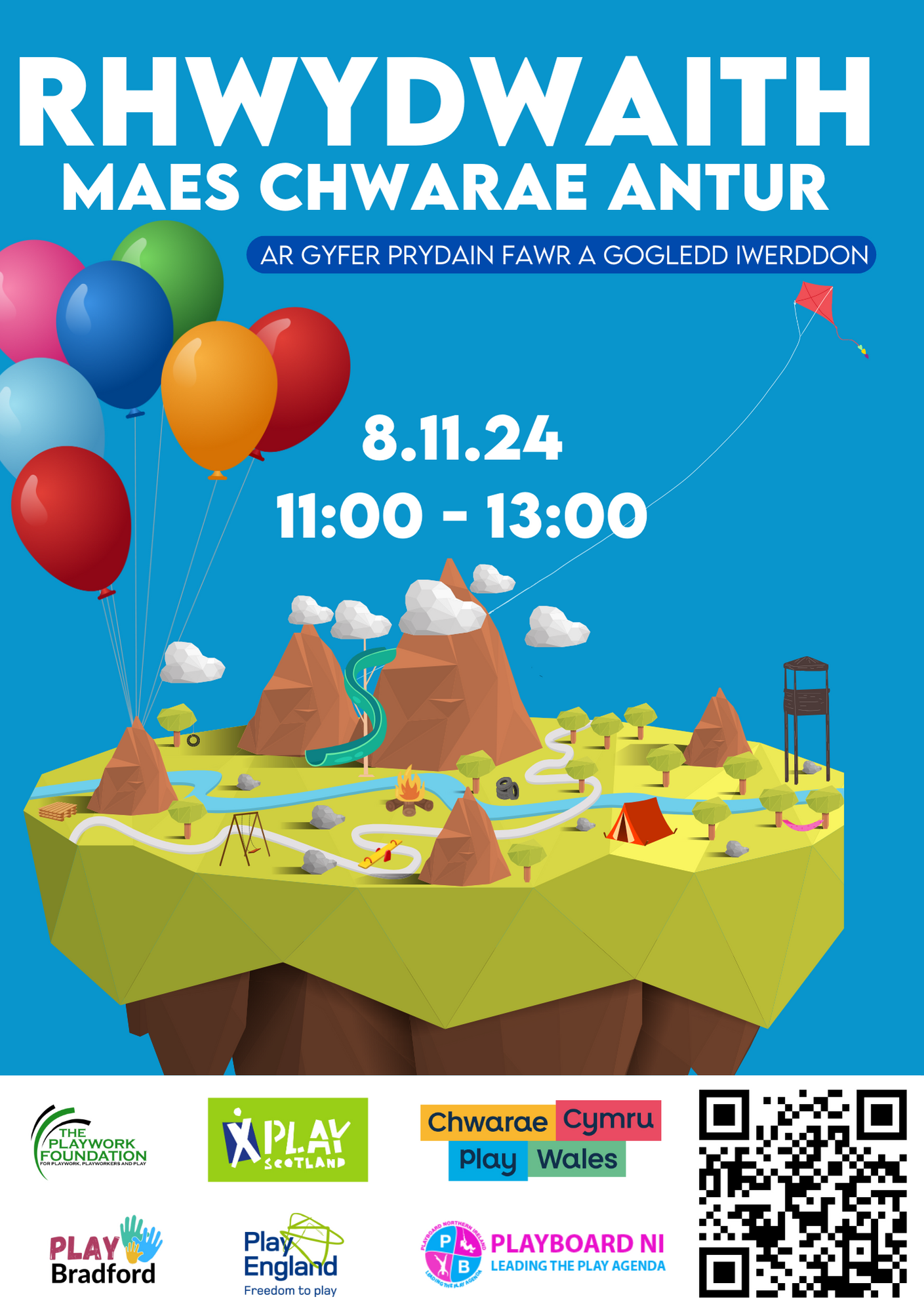
After an (unintentionally) extended period of quiet, the Adventure Playground Network is pleased to announce Friday 8th November, 11am – 1pm, as the next meeting date. To ensure you receive the most up-to-date information, including the link to the meeting, please ensure you sign up.

The Network has also been liaising with the Raising The Nation Play Commission to ensure that adventure playgrounds have an opportunity to contribute to the call for evidence. Please see the open letter to Adventure Playgrounds below:

Dear Playworkers,

Last week, Sereena, from Haringey Play Association and Mike from Play Bradford met with Policy Researchers from the Centre for Young Lives / Raising The Nation Play Commission.

Read our article on the commission here.

The aim of the meeting was to amplify the voice of England’s adventure playgrounds in the Centre for Young Lives’ and Raising the Nation Play Commission’s ‘ENQUIRY INTO WHY PLAY IS SO CRITICAL TO CHILDREN’S WELLBEING AND HOW A NATIONAL PLAY STRATEGY CAN BE ESTABLISHED.’

The aim of the meeting was threefold:

  1. Ensure that the crucial role of adventure playgrounds is not overlooked in the course of the Enquiry
  2. Maximise the time available for contributions from adventure playgrounds to be made to the Enquiry
  3. Offer the assistance of the adventure playground sector’s collective wealth of knowledge and experience to the development of a national play strategy for England.

The Centre for Young Lives has received evidence from all sectors including Health, Sport, Education, Early Years etc. Some adventure playgrounds have already submitted evidence, but the closing date is October 31st.

HOWEVER, the Adventure Playground Network has negotiated a rolling deadline, which means that the Centre will continue to welcome contributions from adventure playgrounds – via the Network – on an ongoing basis.

If you have any evidence of the wonderful work that you do, which you’d like to inform the enquiry, please consider sending it to Mike at m.wragg@leedsbeckett.ac.uk and we will ensure that your adventure playground is represented in this national enquiry into why play is so critical to children’s wellbeing and how a national play strategy can be established.

Evidence may consist of anything at all from data concerning numbers and backgrounds of beneficiaries, through to case-studies, presentations, testimonies, reflective diaries and films or video.

The Centre for Young Lives is also keen to visit adventure playgrounds across the country, so if you would be willing to show someone round your site, please let us know and we’ll pass on your details.

And if you have any questions, please let us know at m.wragg@leedsbeckett.ac.uk

Dr Mike Wragg

Senior Lecturer, Childhood Development & Playwork

The School of Health, Leeds Beckett University.

Play England AGM 2023

Following on from our earlier post, interested parties can now register to attend the 2023 Play England AGM which will be taking place Monday 6th November at 3pm.

Full details of the event can be found here, including an agenda and a Trustees’ End of Year Report.

We look forward to seeing some of you there!

DON’T FORGET: The following day, Tuesday 7th November, will be the inaugural meeting of the Network of Adventure Playgrounds. A busy week for playworkers!

This is why play is so important

This is why play is so important – a new film from Play Wales feat. Michael Sheen

Click the image to watch the trailer

“All work and no play makes you… what, exactly?” booms the voice of Welsh actor Matthew Rhys Evans across the Conference Hall of Glasgow Caledonian University. It’s Wednesday 7th June 2023, and I’m attending the International Play Association’s (IPA) triennial world conference in Glasgow thanks to a bursary from IPA Cymru. And despite the kilt-clad piper playing outside the Annie Lennox Building just the morning before, here I am, transported back to the land of my fathers as Play Wales premieres its new film ‘This is why play is so important’.

The film, commissioned by Play Wales, aims to communicate to adults working with children (and parents and carers) the importance of play. As I’m sure anyone in the playwork sector will attest, that’s easier said than done! It’s the thing that makes play and playwork so difficult for the wider world to quickly grasp – it is both simple and complex. Our impact, as adults, upon play is too readily underestimated. And the consequences of children and young people being deprived opportunities to play, freely overlooked yet so immeasurably detrimental to the health of both the child and the community in which they live.

That being said, if there’s a film to try and win hearts and minds of the masses in just a quarter of an hour, this is it. I should admit my bias and the reason the film resonated so deeply for me, at this point. The Venture, and all the wonderful children and young people who bring it to life, are prominent characters in the film. The Venture is also the place where I started out as a playworker and where I currently work as Communications Manager and Inclusion Project Manager.

A view of the sandpit and tower structures of The Venture’s adventure playground, in Wrecsam, Wales.

The film uses the voices of children and young people from across Wales and mixes them with adult memories and testimonies of play and its importance. It also provides a visual tour of the myriad of landscapes and playscapes in Wales: adventure playgrounds, streets, sea shores, gardens, skate parks, schoolyards, and verdant valleys shaded by woodland.

SPOILER ALERT: Just over halfway through the film, we get a couple of mentionable cameos. Around the 8-minute mark, complete with blond hair that might be from filming season 2 of Good Omens, we get the unmistakable Michael Sheen projecting out of the screen as he describes the joy of riding a tricycle repeatedly around a track. This is followed, not long after, by former Children’s Commissioner for Wales (and patron of The Venture) Keith Towler who tells the tale of a leap too far – an account of what Bob Hughes might have called “Deep Play” – and a plummet to hard ground below. Under normal circumstances, such stories might evoke a squeamish reaction and the conclusion that such experiences have no value and should be prevented. Yet here, in the safe confines of this well paced and gently-toned film, the moment fills the room around me with a ripple of laughter indicative of both amusement and affinity.

Photo by Jakob Owens on Unsplash

I’ve since watched the film several times. Once again in Scotland, at the closing of the IPA conference, at the Welsh premiere in a dusty barn in Llanwrthwl as part of Playworkers’ Forum, and during the northern premiere at Tŷ Pawb, Wrecsam, with some of the stars of the show. Each time, despite the assumption that I would not be brought to tears again, I find myself sniffling and smiling through the joy and adulation of this new piece of playwork culture.

What struck me in that conference hall in Glasgow, was a moment of clarity. A reminder of why we do what we do, as playworkers, and the journey we have travelled over the last few years.

In March 2020, COVID detained our ability to playwork overnight. But we eventually found a way. We ploughed through the guidance and the science; we jumped through the bubbles and the track and trace. And eventually, quietly and unceremoniously, we returned to the playwork we once knew. But it’s not the same. Funding is far more competitive; playworkers are now teaching assistants or scooped up by Aldi and Lidl; children and young people are forced onto the “catch up” conveyor belt; and that’s without even beginning to examine the impacts of lockdowns and what happened during them.

The Venture’s gates closed at the brink of the first UK-wide lockdown

But some good came out of COVID. At the beginning of 2021, we tentatively established The Venture Play Inclusion Project (PIP) – closed playwork provision for children and young people with neurodevelopmental conditions. This was because we were increasingly hearing accounts of autistic children and young people being excluded from playing in public parks and green spaces due to the volume of people and the negative/stigmatic responses of the general public. Our adventure playground at The Venture, mostly vacant during the day at that time, was offered as a sanctuary for these children and young people, and their families (and support bubble), to come and play unabated. A time and space where they could be their authentic selves in a playful environment, with adults who honoured their play: playworkers. Since then, PIP has become a group session popular with children and young people of all ages. We even attracted the attention of the Prime Minister of Wales, Mark Drakeford, who visited in May 2022 and experienced his first s’more!

Prif Weinidog, Mark Drakeford, making his first ever s’more at The Venture’s Play Inclusion Project
Dexter, one of the “OG’s” of the Play Inclusion Project, with Prif Weinidog, Mark Drakeford, and Chief Officer of The Venture, Malcolm King OBE.

There, on the big screen in Glasgow, were these children – a testament of our project. It seemed unfathomable that we hadn’t known them until COVID. Yet here, in 2023, my heart leapt at the sight of their younger selves. My mind hurtled backwards to those hand-sanitising times, where we pushed forward a front against the virus to enable these children to play in their own way. Those memories meeting and mixing with the present. Only days before, at our now-regular Saturday PIP session, these same amazing children were sharing their creativity, their aspirations, their worries, their battles. I suddenly realised how much they’d grown! Physically, their faces and features gave testimony to the passage of time and, in some cases, the ravages of puberty. They’ve also grown as people – and so have we!

Playwork Nic stands in front of two wooden towers on The Venture's adventure playground. A red spinning Gonge, black rubber tyre, and multicoloured parachute, crawling tunnel, and windmill are on the sand around him.
Playworker Nic on the sandpit of The Venture’s adventure playground

My partner, Nic, who is autistic and volunteered on those initial PIP sessions, is now a fully-fledged playworker on the inclusion project and the open-access playwork provision at The Venture. I, as a result of many conversations with parents/carers, also completed my own journey of diagnosis and can now embrace my neurodiversity.

Jackie Boldon, Dr Wendy Russell, Penny Wilson, Angharad Wyn Jones, Siôn Edwards in the Conference Hall of Glasgow Caledonian University

It was there, amongst playworkers and play advocates from around the globe, that I suddenly saw the bigger picture. It shouldn’t have taken a global pandemic, but through COVID we realised just how inclusive and universal playwork practice can be to enable children and young people to play. Those 15 minutes were cathartic.

For me this film is more than just an advocacy tool. It’s a touchstone to the past – a reminder of the route we took; an affirmation for the present for when times (and budgets) get tough; and, a torch for the future, when light is needed to help guide the way.

Diolch o galon / Thank you to Play Wales, Welsh Government, and all the contributors (especially the children and young people) from the bottom of my heart for creating such a beautiful piece.

I can’t guarantee that you will experience the film in the same way I do, but I will promise that it’s 15 minutes of your day well-spent.

Mwynha / Enjoy!

This is why play is so important

This article was written by Siôn Edwards and represents his personal opinions, rather than those of The Playwork Foundation.

Annual Open Meeting – July 2023

Photo by saeed karimi on Unsplash

Playworkers!

You are invited to attend the Annual Open Meeting of The Playwork Foundation:

Wednesday 19th July

11am – 1pm, via Zoom

Our Open Meeting will be an opportunity for members and non-members alike to find out what The Playwork Foundation has been working on over the last year and also to hear from each of the national playboards of Great Britain and Northern Ireland on the latest insights and progress from all corners of the UK.

To receive the link, please sign up to The Playwork Foundation mailing list.

Photo by Annie Spratt on Unsplash

It’s an exciting time for both the playwork sector in the UK and The Playwork Foundation, and we want you to be part of the conversation and the journey.

Before July 19th, you can read our annual report:

You can also read our Glasgow Gazette which was shared at the Glasgow IPA Conference earlier this month in Scotland:

If you’re not a member yet, now is the perfect time to join as membership is FREE!

You can also complete our “Playworking in the UK” survey – the findings to date will be shared at our Open Meeting.

Please pass this on to playwork colleagues and friends you think may be interested and we look forward to seeing you on the 19th July!

Cofion cynnes / Kind regards,

Siôn Edwards

Cadeirydd | Chair

Play England – CEO wanted


We hope you have had a playful summer, 

Opportunity for a Chief Executive: It’s all about a child’s right to play Play England’s vision is to for England to be a country where everybody can fully enjoy their right to play throughout their childhood and teenage years as set out in the UN Convention on the Rights of the Child Article 31 and our Charter for Children’s Play.
 
We have a unique opportunity for someone to be front and centre of Play England in achieving that vision. It will be the first time we have been structured in this way with a CEO as the only paid position working alongside a group of enthusiastic voluntary Trustees. The expected time commitment will equate to 1 day per week and will attract remuneration of £10,400 pa.
Accountable to the Chair and Trustees, most of the CEO’s time will be managing fundraising and acting as an external figurehead and spokesperson for Play England as well as making sure all our operations are running successfully.
 
The right candidate will be experienced as a CEO or Chair of a national organisation with a good understanding of the play sector in the UK and will likely hold a play qualification. They will have proven experience of fundraising for a national or large charity. Comfortable acting as an external spokesperson, including with national media they will feel right at home influencing large organisations including government.
 
As you would expect they will demonstrate flawless tact and diplomacy as well as superb communication skills.
 
For a detailed job description see here. Applications should be made by sending a cv and covering letter to info@playengland.org.uk by 17.00 on 7 October 2022. Interviews will be held remotely on 18/19 October 2022.


Play England AGM, Monday 21st November 2022 at 2pm
All Play England members are cordially invited to the Play England Annual General Meeting via teams.
 
Register for the event here:

https://www.eventbrite.co.uk/e/play-england-agm-2022-tickets-425597963967
 
This is an opportunity for members to gather and to reflect on our work towards England being a country where everybody can fully enjoy their right to play throughout their childhood and teenage years. We are excited to be joined by Helen Dodd is a Professor of Child Psychology at the University of Exeter. She is an expert in child mental health with a particular interest in the development of childhood anxiety disorders. Helen currently holds a UKRI Future Leaders Fellowship, which funds a program of work examining the relationship between children’s adventurous play and mental health. Helen regularly writes about children’s play and contributes to public discussions about the role of play in supporting children’s mental health.
 
The AGM will take the form of a webinar and there will be some brief presentations followed by the opportunity for questions. We expect to record the webinar for those who cannot be present on the day. If you would like a proxy vote, please email info@playengland.org.uk
 
Agenda for the AGM: Welcome from Chair of Trustees, Anita Grant Apologies for absence Notification of proxy votes Approval of Minutes of 2021 AGM Matters arising from the Minutes Adoption of Annual Report Adoption of Accounts Appointment of Independent Financial Examiner Election of Trustees Any Other AGM Business Presentation from Helen Dodd Minutes from the 2021 AGM can be downloaded here

If you are not already a member of Play England you can join via our website.
 
Kind regards

Play England team  

Will Cardiff Bay speak up for play after election day?

Tomorrow is set to be a bumper election day in Great Britain! 

In England alone, there will be local council elections, mayoral elections, Mayor of London elections, London Assembly elections and Police & Crime Commissioner* elections. Some of these are elections that were postponed in 2020 due to the outbreak of COVID-19. 

*Police & Crime Commissioner elections will also be taking place in Wales. Did you know that Wales and England share a single jurisdiction but have two legislatures? Something unique in the world. 

As if that wasn’t enough elections for one day, there will also be a Senedd Cymru/Welsh Parliament election and a Scottish Parliamentary election. This article will look at the Senedd elections – fellow Trustee, Ann-marie, has written a piece on the Scottish Parliamentary election which you can read here. If you’re unfamiliar, this short video explains the powers of the Senedd. 

This year’s Senedd election is nothing short of historic! Thanks to the ‘Senedd Election Act 2020’, 16 and 17 year-olds will be able to vote for the first time as well as an estimated 33,000 foreign nationals gaining the right to vote – this represents the biggest expansion of the franchise since 1969, when suffrage was extended to 18 to 21 year-olds, and will undoubtedly impact on the results of the election. 

So, what do the parties say about play and playwork for #Senedd2021?

Whilst a number of parties have progressive manifesto promises for children and young people, only the Wales Green Party and Welsh Liberal Democrats specifically reference “play”, albeit in the context of early years education in both cases. Questions to Plaid Cymru leader, Adam Price, on play, also returned responses linking to education and early years. Despite no mention of it in their manifesto, it could be argued that, as it was a Welsh Labour Government that produced The Children and Families (Wales) Measure 2010, that gave us the Play Sufficiency Duty, and their record in supporting play in recent years, that Labour will likely continue this commitment.  

Whatever the party-political make-up of the new Welsh parliament and government next week, a number of organisations have made it clear to all of them what they believe should be done to protect the rights of children in Wales, including their right to play.

First, we look at our national play board, Play Wales, and their manifesto “Wales – a play friendly place”. The headline asks are for the continuation of the Play Sufficiency Duty and for the opportunities for children to play to “increase and improve”. The dominance of the motor vehicle is addressed, with recommendations for default 20mph speed limits in built-up areas and government-mandated guidance for street play projects. Looking at schools, Play Wales propose a mandatory minimum time for “play breaks” within the school day and also ask for consideration, wherever practical, to making outdoor school grounds available for play after school and at weekends.  Play Wales also call for a public campaign that not only explains what play is but also communicates the health and wellbeing benefits for children and wider society. 

The Children’s Commissioner for Wales’s Manifesto briefly mentions play, asking for “more youth and play services that anyone can use, for free”. However it does go a little further by giving a vision of the future with “free adventure playgrounds all over the country”! This year will see the end of the current Commissioner’s tenure – we hope that the next Commissioner will be just as welcoming to play and playwork as Sally has been. 

Clybiau Plant Cymru Kids’ Club appear to be the only organisation making very specific representations on behalf of playworkers. Specifically, they call for: the “continued investment in professionalisation of the sector” via funding, CPD and access to training and qualifications; recognition of playworkers’ influence on children’s lives and the Welsh economy to be “recognised in all government communications and policy decisions”; parity with Early Years workers through an “active and effective sector skills council”; and a call for more initiatives that support fair remuneration for playworkers (e.g. tax-free childcare, the childcare offer and 100% rates relief). 

The Play Sufficiency Duty and legislation like the world-first Well-being of Future Generations Act, are indicative of how progressive governments can make a real difference to children and young people’s lives in a meaningful and sustainable way and on a national scale. However, any incoming Welsh Government will still be restricted by the allocation of funding set by the UK Government and by the reservation of powers over aspects of media, health and safety legislation, employment and regulation of charities. 

In the coming months, The Playwork Foundation will be revisiting ‘A Manifesto for Play: Policy proposals for children’s play in England’ that was written in partnership with Play England and IPA England ahead of the 2019 UK General Election. Taking into consideration the composition of the new parliaments and governments in Wales and Scotland following national elections, and the shifting of the political map in England as a result of local elections, we hope to present a vision for the future of playwork that can influence and encourage each nation of the UK to not only recognise the profession but utilise our expertise and practice to the benefit of children and young people in every corner of Great Britain and Northern Ireland. 

If you’re living in Wales and wondering who to vote for, the BBC have put together this guide, or, for those in Scotland and England voting this Thursday, you can find out about all the elections, candidates and parties by visiting https://whocanivotefor.co.uk/

Siôn Edwards

Researching playfulness on the streets during lockdown

By Alison Stenning and Wendy Russell

A bit of background

This research is part of a larger project that Alison was working on, funded by a Leverhulme Research Fellowship, focused on how organised street play sessions using the Playing Out model were remaking relationships between people and places on the street. Fieldwork on this project was just about to begin as Covid-19 emerged and as the first lockdown was announced in the UK, meaning playing out sessions swiftly vanished as did Alison’s fieldwork sites.

Yet just as swiftly, we witnessed the flourishing of all kinds of other activities that connected play, neighbours and streets: mutual support networks emerged; traffic levels dropped; residents took to the streets. We saw the emergence of all sorts of playful acts – rainbows in windows and Thursday night claps to thank NHS and key workers, teddy bear trails, and the proliferation of pavement chalking. These emergent spaces seemed all the more important in the face of the closure of other public spaces of play and connection, including playgrounds.

With the restrictions on movement, debates emerged around access to public space, especially for children, and particularly for those without private gardens. Pressure on public parks led to threats of closure and the media reverberated with testy discussions about what were legitimate reasons to be outside. Within these debates, children’s right to play outdoors was challenged at times by police and by vigilant neighbours, and families expressed anxieties about the safety of outdoor play.

The research study

In this context, together we worked with other play activists and researchers to present a case for outdoor play on streets, arguing that this was a space which needed protection and advocacy. But we also wanted to do some research to get a better sense of what was going on in terms of play and playfulness on streets. We wanted detail: to get at the ‘granular’ connections people were making with their streets in lockdown.

We developed a qualitative survey to gather data about playful activities, and changes in the material environment and feel of the street. The survey was circulated through social media and networks of community groups, play organisations and beyond. We received 78 responses from across England, Scotland and Wales. Reflecting the limits of online research and of our own networks, the majority of respondents were White, well-educated owner-occupiers. More than three-quarters of the respondents were women and two-thirds were aged 35-54, but more than a quarter of respondents did not have children under 18 living with them. We followed up the survey with 13 online video interviews. In these interviews, we explored participants’ survey responses in more detail but also explored the sites of play through drawing maps, using Google Maps on-screen, and sharing photos and videos. We also invited respondents’ children to participate and in 5 of the interviews a total of 12 children aged between 4 and 11 years joined for all or part of the conversation.

It is relevant to note that playworkers and community activists were disproportionately represented amongst our respondents; in part, this reflects our recruitment strategy but also, we feel, reflects the desire and willingness of such people to recognise and engage in playful acts in their communities.

What we present here in terms of ‘findings’ are very much preliminary, as we are still analysing the detail of the rich data we gathered, and we have focused on what might be of particular interest to a playwork readership.

Time, space and permission to play

We know that if conditions are right, children will play; these interdependent conditions have been categorised as time, space and permission, and as a matter of spatial justice. One thing that most children did have during lockdown was time, given that most stopped attending schools and other organised activities. Nationally, although time spent outdoors did not appear to change significantly for primary aged children, socialising was of course greatly reduced. In our research, not all parents had extra time, but several respondents did comment on the time available to spend chatting, at a distance, with neighbours. Many talked of spending more time with their children, and of children spending more time playing with their siblings if they had them, more time exploring and playing in local streets and green spaces, more time inventing their own ways to play.

Time, space and permission to play intermingled in various and sometimes contradictory ways. All had witnessed a number of changes on their streets, the most common being less traffic and more people walking in the road, reflecting widespread narratives of street life during lockdown. More people were using their street for walking, running or cycling, or to linger in front gardens, yards and pavements. This suggests a real shift in the presence of people on streets, with a sense of much more connecting with neighbours.

Just over half felt their streets were quieter during lockdown, both in terms of activity on the street (particularly traffic) and noise. Only 12% reported that traffic was slower whereas over a quarter reported seeing speeding vehicles, reflecting what has been reported elsewhere. Many also noted that the reduced traffic levels were short-lived, lasting only until lockdown started to be relaxed.

Although 60% reported that they had seen chalking on roads and pavements, a clear sign of the presence of children on streets (even if at times it was adults chalking), just 35% saw more children playing on the street. Additional responses suggested a mixed picture: on streets where children ordinarily played out, some reported that there was a reduction when lockdown started, as families followed government guidance to “stay at home”:

“I have really missed the sound of children playing … during lockdown. At first I found this eerie and sad.”

Others suggested that children were playing out more of the time as they weren’t at school. On streets where children ordinarily rarely played out, some saw no change, but some did witness a significant increase:

“For the first couple of weeks, there was no traffic at all and we could see children playing on the street corners – this has never happened before”.  

There was a temporality to all these patterns – as there was for much of what was reported – with a peak lockdown period (from 23 March to 13 May) marked generally by higher levels of street activity, but in some instances lower levels of children’s presence as parental anxieties and unclear rules restricted children’s access to outdoor space.

The kinds of activities respondents reported, in addition to simply seeing and talking to more neighbours more of the time (something significant in itself), included bingo, doorstep discos, music (live and recorded), dancing, singing, sports (including street marathons for charity), cycling and scooting, chalking, nerf wars, chalk trails and hopscotch, nature trails and bug hunts, rock snakes, rainbow trails, teddy bear trails and tea parties, toy and book swaps, football, kerby, hula-hooping, and more.

In some instances, play was animated or curated by activists, working from home or furloughed, and shifting their professional playful and community practices to their streets. In each of these instances, these playworkers and community workers opened up spaces for other neighbours, of all ages, to engage in a process of play, stepping back, in the tradition of playworking, to enable children and their families to occupy the playful environments created, but often linking this to other forms of support for those who needed it.

These diverse forms of play were experienced in all sorts of ways but a few common themes emerged. Some talked of a simple joy in seeing children playing:

“the sound of laughter and general buzz really does lift the spirits … It has been nice to see the street come alive again.”

This seemed to resonate with hope in the context of the pandemic and also the opening up more spaces for neighbours to connect:

“Seeing kids playing with each other, despite the situation, brings a smile to my face. The children may be aware of what’s going on, but being able to play without any inhibitions brings back memories of playing when I was young too. It makes the street inviting for families and brings more children out to play.”

This sense of playfulness creating a space for connection appeared in a number of responses:

“I love it. We can connect. I love the creativity, the generosity, the community spirit that it engenders. The opportunity it offers for us as older neighbours to be playful with the children/families nearby.”

For some, especially those more vulnerable and shielding, this was translated into an increased sense of security and comfort:

“They mean so much to me. I feel safer knowing my neighbours.”

“Being creative and playful felt comforting”

Much of this was connected directly to changes in the materialities and atmospheres of the street itself, created by these playful acts, such as chalking and planting, which shifted not only these respondents’ relationships to their street, but more broadly.

“Planting in the street makes me feel hopeful. And I felt really proud, sharing footage with friends and family to show them what a great street I live in! And how a sense of community can be fostered.”

Of course, these experiences were not all joyful; the pandemic and the rules of lockdown encroached on street life and on playfulness in sometimes difficult and painful ways. Respondents were aware of diverse attitudes to the rules, sometimes unsure of what was and wasn’t permitted, wary of upsetting their neighbours but also anxious that their own attempts to be playful might be watched and shamed from a neighbouring window or doorstep. Others, including those shielding or with vulnerable family members, oscillated between the comfort and security offered by seeing their neighbours animating the street and the fear that too many connections might exacerbate the pandemic and extend the lockdown. One interviewee noted how, as time went on, the rainbow pictures were still up in windows, but they had faded: she felt this was a kind of dystopian image and that the NHS, where she worked, had been forgotten, adding “they all clapped, but they broke the rules”.

Maps and materialities

A changed relationship with their most local environments was a recurring theme in our follow-up interviews where respondents described and mapped in different ways their playful practices through lockdown. Through this process, the very detailed material geography of streets – and its remaking during the weeks of lockdown – came to the fore, showing how differently streetscapes are experienced by children, and the ways they perceive the possibilities for playing.

One 8-year-old talked about how all the parked cars meant she couldn’t balance along the kerb; her 11-year-old brother marked his map with the section of the street where the kerb was particularly high, making it good to jump off on bikes and scooters. A 7-year-old talked about there being lots of rocks in the street – there was brick paving and many of the bricks were loose. A 9-year old recalled dancing across the street with her friend, from facing pavements that allowed them keep a two-metre distance.

Many people talked about staying hyperlocal. The maps reflected this, for example, showing the small spaces of the local park, discovered and explored during lockdown, and the route there through snickets, alleyways and side roads, peopled by neighbours with rainbows in their windows, hammocks in their front gardens, and chalk on their pavements. Others talked of playing in the nearby woods because they felt less watched over. One mother of a 4-year-old talked about how, because the playground was closed, her daughter “learned how to be in the woods. Now she will make up her own games, do more self-directed play”. “Sticks,” the daughter informed us, “are not toys, they’re animals”.

The importance of play and street geography

In many ways, lockdown opened up spaces for play and connection for our respondents and remade streets and neighbourhoods in multiple and positive ways, but these playful transformations took place in the shadow of Covid-19. This meant that play on streets was also at times restrained and restricted, conditions potentially antithetical to play. As official guidance on outdoor play and children socialising remains opaque and contradictory and as we face more lockdowns over the autumn and winter, the need to advocate for and make space for play on our streets and in our communities continues.

This is especially the case for those children for whom conditions for play are more restricted than for our comparatively privileged and fortunate respondents, including those in overcrowded, temporary or sub-standard accommodation and those whose access to outdoor space is limited. These are perhaps the children more likely to be those that use open access playwork services, suggesting there is a need for further research in this area and perhaps for a broader think about playwork in the community.

Alison Stenning and Wendy Russell