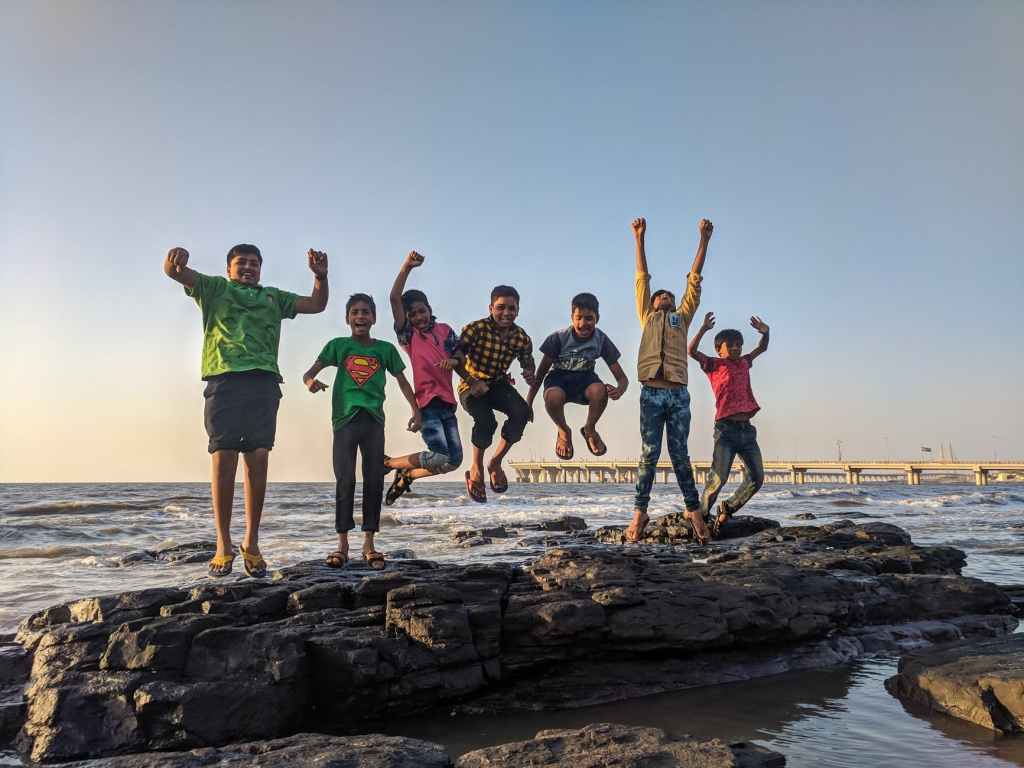
2nd ‘Playwork Campference’ announced for Houston, Texas, February 2019

A Second “Playwork Campference” has been announced for 15th-18th February 2019 in Houston. The organisers, Pop-Up Adventure Play, say it will  bring together “international experts on children’s play to discuss unconventional approaches to risk and inclusion”

Full details here

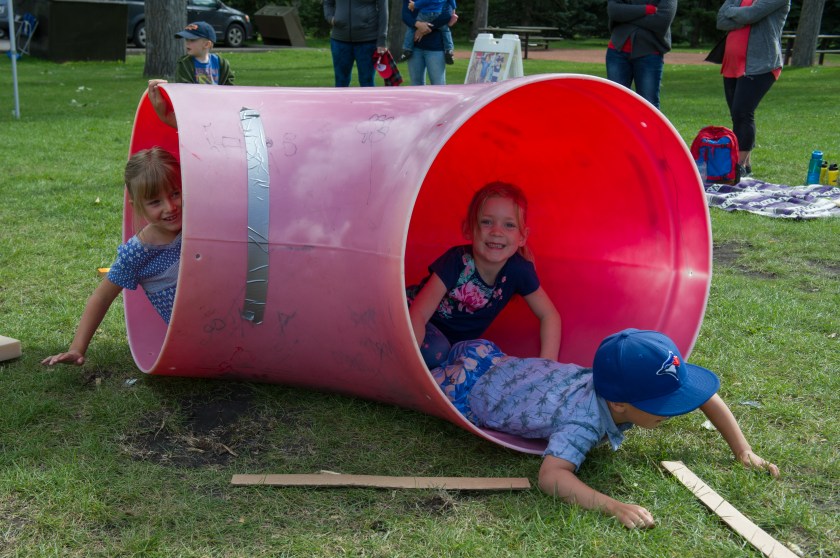
Photo: Calgary Community Services


Symbiotic homeostatic disequilibrium in playworking interaction

A new paper by Joel Seath and Gordon Sturrock, derived from and following communications at the PlayEd conference in Cambridge, May 2018.

Abstract

Playwork’s key claim is its unique manner of working for and with children. It currently suffers, however, from a lack of consensus regarding the benefits of its application. This paper challenges the dilution of playwork practice in acknowledging the art, grace and wisdom in connectivity of playworking. Drawing primarily on Antonio Damasio’s neurobiological analysis, the homeostatic disequilibrium operation at the core of body/neural intra-action is detected as reflected in the interaction of organisms.

In consideration of some key concepts of social ecology – consociation, mutual aid, co-operativity rather than competition, rhizomatic rather than hierarchical structures – and  the neurobiological study of individuals’ feelings, emotive responses, affect and culture, this paper discusses the evolving phenomenon of the playworking adult and child at play in terms of a symbiotic being and becoming.

Joel Seath and Gordon Sturrock

Download the full paper here

Image: ‘Rhizomatic tree of life’ by jef Safi

The Play Cycle 20 Years On

In 1998, Gordon Sturrock and the late Perry Else presented a paper at the IPA International Play Conference in Colorado, USA.  The paper was titled ‘The playground as therapeutic space: playwork as healing’, later referred to as The Colorado Paper and introduced the Play Cycle to play  theory.

In the last twenty years, elements of the Play Cycle (such as ‘play cues’, ‘play return’, ‘play frame’ and ‘annihilation’’) have entered into common use within the childcare sector.  The aim of this exploratory study is to investigate understandings and applications of the Play Cycle within childcare over the last 20 years.

This study is open to anybody who is currently involved in childcare but must be aged 18 years or over.  The research will be undertaken by Dr Pete King from Swansea University and Dr Shelly Newstead.  For more details about the study, please contact Pete at p.f.king@swansea.ac.uk or 01792 602 314.

To take part in this study please click on the link here

The questionnaire can be completed online using a computer, tablet or phone.

The study is open to Friday 21 December 2018.

Thanks

Dr Pete King

New policy roadshow date for London

abandoned grass light merry go round
Photo by Levi Damasceno on Pexels.com

Monday 12 November

Hosted by Hackney Play Association at

Pearson Street Adventure Playground
Hoxton
London E2 8EL

*Please note that this is a change to the date and venue previously advertised due to a clash with another play policy discussion event!

The Playwork Foundation, Play England and Hackney Play Association warmly invites you to this play policy forum. It is an opportunity for the children’s play community in London and beyond to come together to discuss the vital issues, national and local, facing our work.

The forum is part of a roadshow of discussion forums organised by Play England and the Playwork Foundation taking place across the country to share latest thinking and developments and consult with all those involved in supporting children’s play – to help shape a manifesto for play and coordinate campaigning for better play provision and opportunities.

These discussions will feed into and shape a national manifesto for play, to help put play back on the political agenda.

Speakers to be announced soon.

This event is free – all welcome!

Book your place here:

For more information please e-mail sophie@playengland.net


A Manifesto for play – a policy development event

Wednesday 5th September 2018
10am – 3pm

Sycamore Adventure Playground
Sycamore Green, Dudley, West Midlands, DY1 3QE

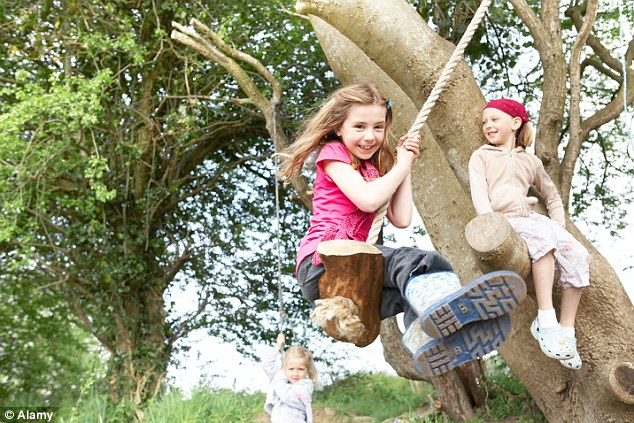
Rope swing girl-image-a-10_1434067322389

Sycamore Adventure Playground invites you to this play policy forum, ‘A manifesto for play’. It is an opportunity for the children’s play community in the West Midlands and beyond to come together to discuss the vital issues, national and local, facing our work.

Speakers will include:

  • Mike Barclay, PlaySufficiency Lead for Wrexham Council
  • Ben Tawil, Senior Lecturer in Childhood and Family Studies)
  • Libby Truscott, Trustee of Play England
  • Karen Benjamin, Chair of the Playwork Foundation
  • Anita Moore from St Pauls Trust
  • Laura Watts from the Children’s Quarter.

The forum is part of a roadshow of discussion forums organised by Play England and the Playwork Foundation taking place across the country to share latest thinking and developments and consult with all those involved in supporting children’s play – to help shape a manifesto for play and coordinate campaigning for better play provision and opportunities.

These discussions will feed into and shape a national manifesto for play, to help put play back on the political agenda.

This event is free – all welcome!

Book your place here:

https://www.eventbrite.co.uk/e/a-manifesto-for-play-play-policy-roadshow-dudley-west-midlands-tickets-48123864775

For more information please e-mail sophie@playengland.net


‘A situated ethos of playwork’ – a response from 2008

pexels-photo-236243
Photo by Pixabay on Pexels.com

In this critical response to Voce and Sturrock, Dr Pete KIng, highlighting a project from 2008, and his own study of it, suggests their proposals are nothing new, and that a greater emphasis is needed on the role of evidence-based research in developing playwork.

The recent paper by Voce and Sturrock (2018) offers five recommendation for playwork. Set within a political perspective, the five recommendations are: adopt a cohesive playwork narrative; make the policy case for children’s right to play; consolidate around a new professional body for playwork, review playwork training and qualifications and their infrastructure, renew alliances for the right to play and build a national campaign. Are these five recommendations offering anything new?

Let’s go back to 2008, the Possible Futures for Playwork project, funded by Play England and facilitated by the late Professor Perry Else. One aspect of the Possible Futures for Playwork Project asked the playwork field to propose an ‘ideas paper’ on how they see playwork progressing. In total 23 ‘ideas papers’ were submitted. Although the project did not conclude, a thematic analysis of the 23 ‘ideas papers’ (King, 2014) was undertaken and identified the following themes and sub-themes:

  • Theme: uniqueness of playwork; sub-themes: holistic development and playwork perspective of play
  • Theme: professionalism of playwork, professional body; educational and training reflective Practice
  • Theme: community based aspect of Playwork, subthemes: diversity of space and social interaction
  • Theme: relationship of playwork to ‘wider world’, subthemes: play policies/strategies and multi-professional work)
  • Theme: threats to playwork, subthemes: isolation, lack of ‘identity’ and Misunderstood).

(King, 2014)

The analysis of the 23 ‘ideas papers’ raised the following provocations for discussion:

How effective are play policies and strategies in promoting playwork to the ‘wider world’?

How relevant are the themes and sub-themes identified in this study (across each of the countries the UK?

How can playwork research be undertaken without a funding infrastructure, and what are the implications of playwork research for the professional status of playwork?

How can playwork still support what Sutton (2008) termed community cohesion in the future without the funding that was available in 2008?

How relevant are the playwork principles to playwork practice today?

How can the uniqueness of playwork support other professions and contexts where play takes place?

(King, 2014)

How do the themes and provocations from the 2008 Possible Futures for Playwork compare to the five recommendations from Voce and Sturrock (2018).

How effective are play policies and strategies in promoting playwork to the ‘wider world’?

Every country in the United Kingdom, as pointed out, except England, has a play policy or strategy. This paper has a narrow focus on England, and the defunct Play Strategy. No consideration of the other nations play policies and strategies are considered, especially for example Wales was the first country to have a play policy (2002) and strategy (2006). In addition, Wales has legislation in place for each of the 22 local authorities to undertake a Play Sufficiency Audit under the Children and Families (Wales) Measures (2010).

How relevant are the themes and sub-themes identified in this study (Possible Futures for Playwork Project) across each of the countries the UK?

If we take the five approaches suggested in this paper, we can map the themes and subthemes from the Possible Futures for Playwork Project:

Adopt a cohesive playwork narrative – uniqueness of playwork, playwork perspective of play

Make the policy case for children’s right to play – play policies and strategies

Consolidate around a new professional body for playwork – professionalism of playwork, professional body

Review playwork training and qualifications and their infrastructure – education and training

Renew alliances for the right to play – multi-professional work

Build a national campaign – lack of identity

It appears playworkers 10 years ago saw the future for playwork with similar aspirations to the five recommendations offered in this paper.

How can playwork research be undertaken without a funding infrastructure, and what are the implications of playwork research for the professional status of playwork?

The paper offers no consideration of playwork research, and how it can support both theory and practice. This is not addressed, rather it criticises on the one hand the small scale qualitative study undertaken for the Best Play (Children’s Play Council (CPC), National Playing Fields Association (NPFA) & PlayLink, 2000) publication, but in the final section fails to consider the role of research in developing playwork. For example, there is no recognition of developing evidence based research to support what playwork is, what playwork does and what playwork can possibly do.

How can playwork still support what Sutton (2008) termed community cohesion in the future without the funding that was available in 2008?

Rix’s (2018) response addresses the role of the community. Playwork takes place in a variety of contexts, not just adventure playgrounds, which this paper focuses on. The rise of the community play, for example play ranging, as well as different types of provision where playworkers work need more recognition, reflecting the Possible Futures for Playwork theme of community based aspect of playwork and the diversity of space and social interaction.

How relevant are the playwork principles to playwork practice today?

The position of the playwork principles (Playwork Principles Scrutiny Group (PPSG), 2005) are addressed briefly at the start, with an acknowledgment that any review would be welcome. What the playwork principles do not specifically state is the right to play, although Conway (2008) explains this in his chapter within ‘Foundations in Playwork’ (Brown & Taylor, 2008). The promotion of the right to play within this paper is clearly stated, but the lack of acknowledgment of how others who have been raising this, long before the Possible Futures for Playwork Project, are not recognised (for example Shier’s 1995 publication of Article 31 and how playworkers can support children’s right to play).

Are these five recommendations offering anything new?

Dr Pete King

You can access a free open access copy of the Possible Futures for Playwork Project – A Thematic Analysis at https://cronfa.swan.ac.uk/Record/cronfa25050

References:

Brown, F. & Taylor, C. (2008). Foundations of Playwork. Maidenhead: Open University Press.

Children’s Play Council, National Playing Fields Association & PlayLink (2000). Best Play: What Play Provision Should Do for Children accessed at http://www.freeplaynetwork.org.uk/pubs/bestplay.pdf.

Conway, M. (2008). The Playwork Principles. In F. Brown & C. Taylor (Eds.) (2008) Foundations of Playwork (pp. 119-122). Maidenhead: Open University Press.

King, P. (2014). The Possible Futures for Playwork project – a thematic analysis. Journal of Playwork Practice, 2(2), 143-156.

Rix, S. (2018). Colleagues, Community and Commons – Our Vital Triumvirate accessed at https://playworkfoundationorg.wordpress.com/2018/07/13/colleagues-community-and-commons-our-vital-triumverate/.

Shier, H. (Ed.) (1995). Article 31 Action Pack: Children’s rights and children’s play. Birmingham: Play-Train.

Voce & Sturrock (2018). A Situated Ethos of Playwork – Turning the Playwork Story Into a Narrative for Change accessed at https://playworkfoundationorg.wordpress.com/2018/06/20/a-situated-ethos-of-playwork/.

Welsh Assembly Government (2002). Welsh Government Play Policy accessed at https://gov.wales/dcells/publications/policy_strategy_and_planning/early-wales/playpolicy/playpolicye.pdf?lang=en.

Welsh Assembly Government (2006). Play Policy Implementation Plan accessed at https://gov.wales/dcells/publications/policy_strategy_and_planning/early-wales/playpolicy/implementationplane.pdf?lang=en.

Welsh Government (2010). Children and Families (Wales) Measure accessed at https://www.legislation.gov.uk/mwa/2010/1/contents.

Colleagues, community and commons – our vital triumverate

In this critique of Voce and Sturrock’s A Situated Ethos of Playwork, Simon Rix suggests that community should be integral to playwork practice, and the central focus of the field’s fightback.

Thanks are due to Gordon Sturrock and and Adrian Voce for their recent paper, A Situated Ethos of Playwork. It rightly acknowledges that the internal debate, about what playwork is, should at present be laid aside in the face of the urgent issue of what playwork should do. This is not to say that what playwork is is not important; it is to say that what playwork may be is being shaped, and in such circumstances, to do is to be. Doo-be-doo-be-doo!

In this response, I will first discuss some of the paper’s main points; then I will add some comments that I think are relevant. I won’t comment on the preliminary descriptions of playwork in the first section, because I cannot argue with what’s written there. Nor do I dispute the principle that playwork is, at present, a necessary part of the ludic ecology – an ecology that is inevitably linked with, overlapped by and overlapping into other parts of the totality. Currently, this is dominated by an economic hegemony under the control of very narrow interests, only aware of their own needs and assumptions. This can be described as both the ‘integrated spectacle’, and the ‘no alternative’ dialogue, favoured by crisis capitalism.

A story of recuperation?

The historical section of the paper reads as both a story of development, response and endorsement; and a story of recuperation. As Voce and Sturrock rightly point out, the elements with the greatest capacity (wealth) and / or affinity with the current hegemony, tend to have the greatest sway; and also tend to harvest those elements of and from playwork that suit their agenda. So, we find landscape architects presenting projects designed by playworkers as their own, and bit players from our field taking selected elements of the playwork approach into other, more lucrative fields.

Mutual aid and class

So, to resist recuperation and to develop itself as a discreet discipline, it is proposed that playwork should return to the totality, which was at its genesis (in a critique of the totality). The paper pronounces: “where the subordination of children is no longer accepted, everything can change”, The critique of social Darwinism, rightly identified as a way of justifying and promoting practices of domination – from race to class to gender – in fact goes back to 1902 and the publication of ‘Mutual Aid’ by Kropotkin. It’s not new; it is a longstanding heresy, which playwork has been allied to explicitly and implicitly, to varying degrees, forever.

I feel that here is a call for a period of more explicit aligning with that critique, an alignment which, in my opinion, is long overdue. Playwork has been cowed since the beginning of the neo-liberal assault on the critics of social Darwinism, an assault which has had the effect of altering the totality for most, even playwork, into the ‘no alternative’ narrative – of placing all value into the market and so forcing participation in the market at the expense of everything the critique stands for.

Marxian critique still holds sway

In support of that call, we are introduced to the precariat class as an ally. In the context of the critique of the totality, the Marxian critique based on class division still holds sway and hasn’t been superseded; but this critique is also of the totality. While the emergence, (or discovery) of the precariat class is appropriate in the face of the effects of the current neo-liberal crisis, in terms of the totality, how different is being a member of the precariat class any different from any other way of being a landless peasant?

I also wonder how different the discovery of the precariat is to the discovery of the ‘underclass’ in the 1980’s, and how successful any hopes pinned on this section of landless peasantry will be? The pinning of hopes on the underclass – which, for similar reasons, was forced to make a life outside the norms of capitalism and develop ‘post-work’ social structures – didn’t produce change. It didn’t make a significant contribution to playwork, other than providing playwork with a number of volunteers from ‘outside the system’ (a significant number of whom then dropped out of playwork too!).

This is not to denigrate those who find themselves identifying with the precariat as a class, and share playwork’s analysis. I would caution, however, that a significant part of the gig economy is made up of aspirant, slightly arty entrepreneurs whose wish is to find fame, be discovered and float on the stock market. The role of playwork is not to develop class consciousness among the precariat, nor to facilitate the advancement its aspirant element, nor to develop class consciousness among children.

‘The dialectic process demands the negation of oppositions, the creation of something new, not a mere realignment of the forces it contains’.

As Anslem Jappe points out in his recent book of essays, capitalism, class structure and its ideology – currently called neo-liberalism – reproduces itself as a social relationship, as well as reproducing countless throwaway consumer items. It’s the social relationship which is at the hub of the arrangement. How far, then, Jappe asks, is basing change, as well as our critique, on this social relationship, likely to be successful? Is not change, as a departure, dependent on the formation of new social relationships, yet to be decided, but based in other qualities: human ones. This echoes the paper’s point “The struggle we need to commit to, then, is not between different alignments of people, but between people and non-human entities”, but I wish to escape from relying on the existing social relationship as a basis for that. The dialectic process demands the negation of oppositions, the creation of something new, not a mere realignment of the forces it contains.

This is alluded to in discussion of a situated practice. I can’t disagree with the utopian picture painted. I can’t fault the likelihood that a playful approach seems a route towards it, and that playful environments will be a contributing crucible.

New organisations and methods

In pursuit of the establishment and maintenance of crucibles, the paper seems to go into two points. The first is the unification of playwork and the escape of its story from the recuperated, possibly watered down alliances that it’s had. I am a trustee of the Playwork Foundation along with Adrian (declared, though as a burden, not an interest: trusteeship has no personal benefit) and I do see this as a developing vehicle for a playworker controlled, and owned, narrative and solidarity.

There are a number of other, more local, initiatives developing as well – a coping mechanism in the face of neo-liberal denial of any but its own social system. These initiatives are about delivery through new sororal groupings, and new relationships with the state and other funders. There is an opportunity there to develop solidarity and mutual aid among playworkers and our organisations. There is opportunity through this to build local, regional and national networks of playwork delivery. Whether this is additional to, affiliated with, supported by, or any other relationship with the Foundation remains to be seen, as appropriate, but whichever route is taken, care must be taken at this development stage to have due regard to maximising direct democracy in the structure which is set up.

In both cases, Foundation and delivery, the membership is the critical mass, and the source of strength. There has been much written on organisational structure, group dynamics, meetings, consultation and decision-making. In this case, I think the choice to be be made is one which emphasises the human relationship, and tries as hard as possible to enshrine that in the structure. That means a principle of grass roots localism and autonomy, under the auspice of the agreed narrative and structure, which will, as far as possible reflect those principles and narrative. At all costs, the fallacy of democratic centralism must be avoided; as must elitism (another class issue), a tendency which the precariat seems to be susceptible to.

Policy of relationships

Secondly, we have a discussion on rights and policy. I have the greatest admiration for those who are able to sit down with the suits, jackals and other creatures that inhabit the corridors of power; and are able to both endure it, and be understood. I’m certainly not that person, but I have seen the impact it can make, and I appreciate it. The paper goes into, as I have above, the dangers of recuperation, and that any honey pot attracts flies. But, in addition to the corporate squatters and ideological heathens who gathered around the Play Strategy, I feel that the social relationship I criticised above also raised its head here. This was in the decision that the roll out should be by a managerial, and not a playwork organisation.

The idea that management is a generic skillset, and that managers need not know anything about what they are managing was a problem, both for the strategy and for playwork. Skilled and experienced playworkers found themselves leading astonished managers around events and projects; managers who in some cases had no idea of the magic that playwork can unleash. Some playworkers, whose influence had apparently been crucial, didn’t even find out their influence had been there until years after the strategy had been rolled out, never mind have a conscious input.

This is a caution to the Foundation, to the imagined delivery federation and to the field. If it is to be the Foundation that makes the policy approach to Government, if it is to be a delivery federation, if either have a role in a new phase of growth, then the medium is the message. The human relationships, enshrined by the principles of localism, autonomy and direct democracy, must be held dear by these organisations, and their structures must reflect that.

It’s the community, innit?

This leads me on to the glaring omission, the third point.

The paper contains several mentions of the word ‘community’, it talks of a community of practice, and it makes mention of the communities playworkers serve. But, in human terms, I consider community to be the most important constituency in every way. The paper speaks of a national campaign that will “listen to the voices of those on the front line, and in their communities.” Although this speaks of consultation, it doesn’t speak so strongly of participation. It speaks of building support, as traditional politics does, towards a particular goal, which can and may be forgotten as the campaigning mode subsides and the programme lost in recuperation, but it doesn’t speak of love. Love is what sustains the communities that gather around good playwork provision, retains them and facilitates their participation. Playworkers have a service role in this community, but they are not its leaders or its voice. If anything, playworkers should be a conduit based on shared skills, given freely.

‘to build a community around provision and to mobilise that community in times of threat, means everyday playworking in campaign mode’.

This is both relevant to campaigning and to everyday playwork, because to build a community around provision and to mobilise that community in times of threat, means everyday playworking in campaign mode. This shouldn’t sound extraordinary. Observation, knowledge, response, relationships, attention to detail and sometimes individuals, large affective interventions, and small effective facilitations – these should be common to both.

Everyday playworking should be able to concern itself with issues that impact on children’s lives, and affect their ability to play, just as much as it should be able to concern itself with the play environment. It should be able to make a connection with the totality of the community and respond to that, both as an acknowledgement that these issues have an impact on children’s ability to play, and because the play environment has a place in that totality. To attempt to campaign in the face of threat without having the groundwork of a position in the totality of the community renders the community an afterthought, a position nobody will respond to.

I consider this to be a more valuable mode, in the local context, than playwork organisations regarding themselves as managerial and relying on relationships with power, which have already proved fickle. I consider that mode to be as much to do with playworkers positioning themselves in the redundant social relationship that is class society, a symptom of the aspirant precariat, and we will see them by the number and strength of the communities around them and how quickly they accept their recuperation, or die.

Colleagues, community and commons – a vital triumverate

The question of how to develop this element of the triumvirate of playwork defence and development is a little more problematic, given that playwork is about relationships. If I may quote myself, “The adventure playground is not a physical thing. It’s a community. The physical appearance of the site is the hook, if you like, but it’s the social and emotional that gets people to remain”. Community should come as second nature to playworkers, but evidence shows that this is not always the case. Why? Are some tired, some resting on their laurels, some not recognising the connection, some subsumed in the status that policy mistakes of the past have dubbed them with?

Should playwork training have more emphasis on community and relationships, should it contain a unit on campaigning? Should emergent playwork organisations take it upon themselves to take this training out, as a separate piece of work? Who should it be delivered to? Should a model be devised on the hoof, as organisations develop, with due regard to the principles of localism, autonomy and direct democracy at its core? Who is going to join in?

These are questions for debate, and prompt the prequel question of, how and by whom is this debate to be organised? In that spirit, I call upon the field to engage with the Foundation and with the policy roadshows currently underway; and I call upon the roadshows and those debating at them to consider the triumvirate of colleagues, community and commons as an adage:

Colleagues – a unified workforce, building solidarity among us;
Community -meaning both those we serve, whose totality we are a part of, ­­and a community of practice; and
Commons – meaning the wider social and political environment and institutions that we need to have an oversight of, and facilitate in that environment.

If we lose sight of any part of this triumvirate, we will miss the mark.

Simon Rix

Image: Jacqueliine Pallesen

Simon Rix is a practising playworker and a trustee of The Playwork Foundation
 

A manifesto for play – a policy development event

Photo by ajay bhargav GUDURU on Pexels.com

10am – 3pm, Thursday 12 July 2018.

Shiremoor Adventure Playground, Brenkley Ave, Shiremoor, North Tyneside NE27 0PR.

Free event – all welcome!

Hosted by Shiremoor Adventure Playground, this play policy forum is a unique opportunity for everyone in the north east and beyond to come together to discuss the issues – both nationally and locally – for the play sector including children’s play in schools, the particular benefits of staffed play provision and more. You’ll also get a tour of the Adventure Playground!

Speakers include Nicola Butler from Play England, Karen Benjamin of the Playwork Foundation, Kath Smith from the ‘Remembering the Past, Resourcing the Future’, project, Claire Twinn, from Waterville Primary School and Keeks McGarry, Manager of Shiremoor Adventure Playground.

The forum is part of a roadshow of discussion forums organised by

Play England and the Playwork Foundation taking place across the country to consult with all those involved in and impacted by children’s play – to help shape a manifesto for play, coordinate campaigning for better play provision, and share latest thinking and developments in play.

These discussions will feed into and shape a national manifesto for Play to help put play back on the political agenda.

This event is free! All welcome! The Adventure Playground are very kindly provided refreshments and lunch. Donations to Shiremoor are welcome.

To register, please book your place here:

If you want more information, please e-mail sophie@playengland.net

NOTE: APOLOGIES FOR THE LATE POSTING OF THIS INFORMATION, DUE TO WEBSITE MAINTENANCE ISSUES THAT ARE NOW BEING RESOLVED

Marshmallow education

close up of woman working
Photo by Pixabay on Pexels.com

Baseline tests for 4 year-olds, designed to assess their capacity for self-regulation as a predictor of future performance, are not only culturally biased and discriminatory against poorer children, says Gordon Sturrock: they are also part of a regime that is denying the vital importance of children’s play – and their human right for that to be validated and supported by the education system.

In my recent paper with Adrian Voce, we briefly touched on the current state of our education system. Here is a vivid demonstration of the complete inability of educators (or the politicians who are driving their agenda) to understand some of the underlying implications of their essential task.

The comments that follow are drawn from an article in the Sunday Times of June 24th. The headline was ‘Tantrum Test for all 4-year olds.’ The essential focus is on the relationship between the child’s capacity to self-regulate and the consequential need to then develop self-control; measured by a test – one marshmallow now, or two if you can wait for fifteen minutes before eating the first – as evidential criteria. There are others and, were it not for the seriousness of their application, they make comedic reading.

That these tests are designed with input from Oxford University is only symptomatic of the spread of the taint: the central idea being that self-control, and the capacity to self-regulate affect, contributes to communication, language, literacy and early maths skills. This idea is part of the baseline tests being introduced by the government, nationally, by September 2020. Naturally, the biggest teaching union opposes it.

‘Teaching self-regulation’

A ‘source close to the tests’ said, ‘Whether a child can self-regulate is a very good predictor of whether they will go on to succeed in school and in life. You can teach children self-regulation by giving them exercises to do – and you can also shape the classroom environment differently for them.’ Does the notion of ‘streaming’ arise when you read those words?

Other than the marshmallow (no mention of the sugar content) predicament, this will give you some idea of the testing regime: children are given picture cards including ‘hard words’ like ‘toadstool’ or ‘saxophone’. ‘If they score highly on these tests, that is the single best predictor of performance at the age of 11.’ But against what criteria is that future performance evaluated?

The article also indicates that a parents’ group, More Than a Score, says ‘children should be allowed to learn through play.’ It is important to explain why that that statement is important and why the playwork field should also be saying it loud and clear.

Intrusion

The intrusion of ill thought out adult agendas in child development – particularly where they are sanctified by ‘education’ – is damaging. We are imposing, not simply an overweening, highly directive, conductive learning at a very early age, but in so doing we are also denying certain biological endowments and their flourishing. In particular, at a stage of life when it is vitally important, such tests – and the regimes that impose them – have the effect of negating the child’s right to play, which, lest we forget, is a human right.

There exists in the playspace ­– more on this later – a particular ludic curriculum. A curriculum devised, explored and cultivated by the children themselves. The eminent neuroscientist, Antonio Damasio, describes evolution as being focused on ‘co-operativity’ and ‘joint attention’. The essential grammar of these adaptive repertoires is through the management of affect. To be brief, the development of self-regulation is already embedded in the ludic curriculum. The idea that the bridging of the gap between children from ‘poorer homes and their middle-class peers’ by extending middle-class values through vocabulary tests is risible. They show a distinct cultural bias. They are redolent of a received interpretation. They are riddled with archaic class distinction. They are redundantly Darwinian.

The application of the ‘teaching’ of self-regulation in adapted classroom environments is wholly wrong-headed. Much closer attention needs to be paid to the learning environment itself. We have a profession with more than 70 years’ experience of just such places, in the adventure playground movement and its working ethos. We need to ‘re-wild’ education.

Children in more deprived environments may not thrive under certain socially prescribed measurements, but they often demonstrate highly sophisticated, adaptive, survival skills.

If picture cards from the real life-worlds of poorer children were shown, what might they demonstrate? Some of the longstanding assumptions about the ‘vocabulary deficits’ of poorer children are increasingly challenged by educational researchers. Children in more deprived environments may not thrive under certain socially prescribed measurements, but they often demonstrate highly sophisticated, adaptive survival skills.

And, what of educational outcomes and the perceived career destinations of children: predictions of ‘performance’ in a post-work, post-patriarchal society? Here’s a glimpse of the reality, from the Guardian of the 27th June, about the book, ‘Poverty Safari’ by Darren McGarvey, which has won the Orwell Book Prize. He writes:

‘The experiential reality of poverty is underemphasised and misunderstood, and what we have currently is a society with rules and laws, social cues and incentives, that work for emotionally regulated people. But, if you grew up in adversity, your whole sense of emotion and risk perception is completely different. The welfare system is based on the assumption that the threat of social humiliation is going to incentivise people, but that’s a complete misunderstanding of what the stress of poverty does to people. They just recoil; they’re frightened of everything, even if that fear expresses itself as aggression.’

Instrumentally directed

Why introduce tests that simply endorse social humiliation, that further exacerbate the issues and affects of poverty, that are instrumentally directed towards a future that every indicator shows will not come to pass? This from the political economist, Orit Gal: ‘complexity theory teaches us that major events are the manifestation of maturing and converging, underlying trends: they reflect change that has already occurred within the system.’

There are growing signs that our education system is not fit for purpose; these tests only signpost a totally irrelevant direction of travel. The truth of the matter is our children have a right to be angry. The real discussion should centre on our adult inability to self-regulate. By the age of 4, when ‘poorer’ children commence these baseline tests, they have already intuited that there are certain neural reward pathways, which they are denied. So they have created their own worlds. Our children are playing in the future tense.

If we could perceive, with their cooperation, what they envisage, then we could arrive at a crucial understanding: we can all learn from children. Simple, innit?

Gordon Sturrock

Describing (and not describing) playwork

A response to the review of the National Occupational Standards for Playwork

Shelly Newstead

In October 2015, Shelly Newstead posted her response to a review of the National Occupational Standards,  raising some fundamental questions about how playwork is defined and described. With kind permission, we are making her response available here, believing these questions to be as relevant as ever

Having been away from the hurly-burly of playwork training and National Occupational Standards for the last few years (doing a PhD takes up inordinate amounts of time and energy – who knew?), I attended the London consultation meeting, organised by Skillsactive, to review the Playwork National Occupational Standards. I didn’t look at the draft Standards before I went, so was interested to hear at the meeting, from SkillsActive, how things had changed, and to look at the proposed new playwork NOS with fresh eyes.

I want to say loud and clear that I believe that playwork should have its own set of National Occupational Standards. Right now they are the only thing keeping us out of what Bob Hughes (2012) called the “primeval learning soup” of the wider children’s workforce. What playwork needs, now more than ever, is a distinct identity with which to distinguish itself from other forms of working with children; to prevent us from tipping over the edge of that bubbling cauldron and becoming another unit in somebody else’s NOS (with a title something like ‘Looking after school-aged children in supervised indoor settings’ or ‘Providing play for school-aged children to support their development and self-esteem’).

Open secret

However it is an open secret, and has been since the Playwork NOS were first created in the 1990s, that some playwork people don’t think they should exist at all, and that several more don’t think they are fit for purpose (see Davy, 2007, Wilson 2008). The Playwork NOS have been criticised for being too technical, too functional and for not including what has often been referred to as the “essence” of playwork (see PlayEducation, 1983; PLAYLINK, 1997, p.2). The generic nature of the so-called ‘playwork’ NOS, which now are set to include providing food and drink and intimate care, lend themselves to the idea that anybody can do playwork, and (far more worryingly) that anybody can interpret (and reinterpret) playwork in the light of whatever job role and physical setting they find themselves in. We have developed the suicidal habit of writing specific units of the playwork NOS for specific types of spaces (which begs the question – why is what is done in the name of playwork in a prison different to what is done in the name of playwork in a park?), and are also apparently now writing special units for people who ask for them, on the grounds that there are no other qualifications available to them (see the unit on ‘leisure and entertainment’).

‘playwork has become ‘all things to all people’ (Hughes, 2006) and that is a huge problem for the continued existence of playwork as a discrete identity’.

As a result, playwork has become ‘all things to all people’ (Hughes, 2006) and that is a huge problem for the continued existence of playwork as a discrete identity. If we want to stay out of that bubbling cauldron and prevent playwork – a profession which has had children’s interests at its core for the last sixty years – from turning into another form of the institutionalisation of children, then it seems to me that the revision of the playwork NOS presents an ideal opportunity for us to do some good hard thinking.

At the London meeting several things that needed thinking about occurred to me, many of which I tried to articulate on the day, and many of which I wished I’d said better. It seems to me that if we feel passionately about playwork, then there is a responsibility to try to articulate what it is that we are passionate about. This is a bullet we’ve been dodging for the last sixty years and my fear is that if we stick to our tried-and-tested habits then playwork will not be around to see its telegram from the Queen.

So this is an attempt to capture some of the thoughts that popped into my head during the meeting, and since, as a result of the stimulating discussions held on the day. It was written in six hours straight, is certainly not a finished product, it hasn’t been proof-read for typos and it does not purport to be ‘the answer’. The best I can hope for is to provide those at the London meeting who wanted to understand more about ‘where I was at’ (to quote Meynell) with a better explanation than I did on the day, and also to get a lot of stuff that’s been buzzing around in my head since then, out of my head so that I can think about something else! If it also generates some thinking and discussion in the wider field, then great – it’s about time we had a good debate.

If what follows does generate ideas on any aspect of the playwork National Occupational Standards, whether you agree with me or not, then I encourage you to send your thoughts to SkillsActive.

The problem of ‘playwork as space’

I fully understand (thanks to SkillsActive’s very clear and helpful explanation) that the NOS are designed for the purpose of describing a JOB ROLE in order to assess whether somebody is performing that job role adequately. This shouldn’t present a problem for playwork – we’ve got other frameworks, which describe other aspects of playwork, such as quality assurance systems for playwork settings. We’ve always had difficulty in pinning down job descriptions (see Conway, 2008), so the playwork NOS should, in theory, prove helpful in setting out what it means to do playwork as a distinct role (as opposed to what it means to do early years work, residential care or operate bouncy castles.

The problem we do have at the moment, however, is that there is very little that is ‘playwork’ about the playwork NOS, apart from providing for/supporting the self-directed play of children. And even that white elephant gets us into more trouble than it’s worth, because there is, in fact, nothing playwork about providing for/supporting the self-directed play of children. Parents who have never heard of playwork do it on playgrounds all over the world at weekends, Guiders do it in their un-programmed time at camps, adults do it in woods with hacksaws and call it ‘Forest School’. All of which are great, but to describe these valuable experiences for children as ‘playwork’, as described by the NOS, is a stretch to say the least. To get the adults involved in them to call them playwork is a Herculean task.

The problem with the playwork NOS is that they attempt to construct playwork as a job role based on the concept of ‘playwork as space’. Presumably this original conceptualisation of ‘playwork as space’ goes back literally to the first playwork spaces – adventure playgrounds, which were very much defined as children’s spaces by their fences. It also echoes the whole reason for the creation of the playwork NOS in the first place: to qualify a newly expanded school-aged childcare workforce to work in after-school clubs. After-school clubs were created as new spaces within other spaces for the purpose of providing childcare, and the people who ran those spaces were qualified as playworkers mainly because there wasn’t anything else to qualify them as.

Out-dated

However, this concept of playwork as space is out-dated by about forty years. Playwork (as it was to become known) moved out of the adventure playgrounds in the 1960s and 70s (JNCTP, 1979) into schools, play schemes and hospitals, and has continued to expand into a myriad of differently organised and purposed spaces ever since. The problem is that the underpinning concept on which articulations of playwork have been constructed (not only the playwork NOS, but also our quality assurance systems and the Playwork Principles) haven’t kept up with how playwork is being used in practice.

Playwork hasn’t been about ‘providing space’ for nearly as long as I’ve been alive, but when the after-school club workforce came along in the 1990s we still qualified people in terms of the spaces they were in, instead of what they do, or should be doing, in the name of playwork, thanks to our pernicious collective consciousness of ‘playwork as space’. (Interestingly, this has resulted in the farcical situation for the last twenty five years of playwork trainers trying to teach adults to ‘do playwork’, whilst the qualifications system has been qualifying the same adults to run playwork settings – although perhaps that’s something that needs more thinking about another time.)

In discussion at the NOS review meeting, it appeared that a working definition of ‘playwork space’ was ‘anywhere playwork takes place’, which poses something of an existential dilemma. If the NOS don’t describe what it means to ‘do playwork’ (see above), then how does anybody know how to recognise when playwork is taking place in a space in order to define that space as a ‘playwork space’? Just because somebody calls himself or herself a playworker doesn’t mean they are doing playwork (because the NOS don’t tell us what that is), and neither does it mean that park/bit of desert/school playground is automatically transformed into a ‘playwork space’, just because somebody who calls her or himself a playworker is standing in it.

‘when is a playwork space not a playwork space?’

Furthermore, when is a playwork space not a playwork space? Perhaps, for example, when it’s a school hall with a headteacher insistent on enforcing the school rules about ‘no shouting’ and ‘no running’, and a grumpy caretaker who will not under any circumstances entertain the idea of sand/glitter/mud/chalk anywhere near his beautifully polished floor. Just because we say it’s a playwork space doesn’t mean it’s a space where playwork takes place, and until the playwork NOS clearly define and describe what that is (over and above ‘providing/supporting play’, which anybody can do on any terms), then trying to define and defend the existence of ‘playwork’ based on the concept of playwork as space just causes practitioners more problems than they had to start with.

On a related note, the NOS keep referring to ‘play environments’ and ‘play spaces’. At the risk of repeating myself, anybody can ‘provide’ these, and it still doesn’t make them playwork. A bouncy castle is a ‘play space’, and a swing/slide/roundabout playground is a ‘play environment’. I would defy anybody to define what is ‘playwork’ about such spaces. Furthermore, it should be children who decide what constitutes a ‘play space’ or ‘play environment’ – and they do of course, using all sorts of non-designated spaces for their play.

There is certainly still a case to be made for the provision of play spaces by adults in certain environments and in certain situations (any space designated for children’s play in the middle of Manila has to be better than the alternatives, swing/slide/roundabout to boot), but if we are going to provide adult-defined and designed alternatives to children playing in spaces they have chosen themselves, then we playwork people should stick to providing playwork spaces. As professionals with a specific and unique approach to looking at space, we should provide playwork spaces which are distinct from play spaces – and be prepared to articulate what that means (see Sutton, 2014). Otherwise we run the risk of being seen as some sort of professional child-catchers, whose nice shiny/grubby play spaces are somehow ‘better’ than other sorts of play spaces.

Playwork as practice

 There is an alternative to ‘playwork as space’, which is ‘playwork as practice’. At the moment the job role called playwork, as described by the NOS, varies depending on the space a ‘playworker’ finds him or herself in. The space defines the playwork, which in turn defines the playwork job role, which ultimately defines the practice carried out in the name of ‘playwork’. So playwork in a prison becomes the art and craft of entertaining children with practically no resources whatsoever; playwork in a residential home for children with complex care needs turns into a whole package of units including intimate care; and playwork in an ‘entertainment organisation’ (whatever that might be) becomes running birthday parties. Again, playwork becomes all things to all people, and what is playwork in one space looks completely different to playwork in another – because it is. There is no essence of playwork, there is no core to playwork as a unique and recognisable profession, and ultimately therefore there is no discipline in our discipline.

Now let’s turn that all on its head, and replace ‘playwork as space’ as the underlying concept of the playwork NOS with ‘playwork as practice’. Playwork as practice means ‘the things that we do in the name of playwork which are solely and uniquely playwork’. Playwork practice transcends space. It is something that can be done at any time and in any place: it can be done without having to make special preparations in special places. It is a way of working with children that any adult can adopt within their existing relationships with children, including parents and volunteers.

Playwork practice is something I use as a volunteer on an adventure playground; it is something that I use with children of all ages in my family, and it is something that I can (and do!) use in airports with children I have just met. Playwork practice is – or could be – ubiquitous and universal. Instead of continuously segmenting and dividing the playwork field up into their own little silos of what ‘playwork’ means in their own spaces, all we have to do is find a way of describing playwork practice in NOS shaped- parcels. That isn’t a ‘today job’, (and maybe not a ‘tomorrow job’ either!) but here’s a few ‘fantasy NOS playwork-as-practice units’ off the top of my head and in no particular order, despite the cod- NOS numbering system which I’ve just made up (see also the section below on Values, Behaviours and Skills to get the background thinking on these):

PW1 – Provide resources to use for children to use for their own purpose

PW2 – Use risk-benefit assessment to determine appropriate adult intervention

PW3 – Contribute to professional discussions and evaluations of playwork practice

PW4 – Articulate intervention decisions using playwork and other relevant theory

PW5 – Demonstrate inclusive and anti-discriminatory practice

PW6 – Advocate for children’s interests when they conflict with adult led-agendas

PW7 – Evaluate current relevant legislative and policy requirements in the light of current playwork theory to arrive at playwork practice decisions

PW8 – Make informed decisions about which methods of supervision to use

PW9 – Communicate with children on an individual level: PW10 Provide and initiate activities for children when appropriate (and explain why and how this was achieved).

…and so on.

Of course none of those would probably meet the criteria for NOS unit titles and the language would need tinkering with in playwork terms (e.g. I don’t like PW5 as it smacks of early years and an interventionist approach – we need new playwork-appropriate wording), but the aim of the exercise was to provide an example of how playwork practice could be described in terms of a job role, and specifically a job role which is different to other ways of working with children. It is simply a matter of breaking down what we do in the name of ‘playwork’, and turning this into operationalized statements (or ‘performance criteria’ in NOS-speak); then building up those statements into units, etc.

In this way ‘playwork’ is liberated from the shackles of what has to be done in a specific setting (provide food, do the paperwork, dispose of hazardous materials and anything else that isn’t playwork). Instead the playwork practitioner can do their playwork as part of their broader job title, call it playwork (practice) when it is playwork practice that they are using, and perform the rest of their job role according to whatever standards need to be achieved. Thus the job role for NOS purposes becomes ‘playwork practitioner’ and anybody can be qualified as a playwork practitioner (bouncy castles and all), provided that they can actually demonstrate that they can ‘do playwork’ as described by the NOS (as opposed to running birthday parties).

A couple of additional notes are needed here. First of all, there is a proposal in the NOS review to change the title of the Level 3 in Scotland to ‘Playwork Practitioner’. I got really excited about that when I first saw it at the meeting, as I thought that maybe the tide was finally turning from space to practice. However, if my understanding is correct, it is intended to describe somebody who is ‘in charge’ of a playwork setting, which I feel is a missed opportunity. For me, a playwork practitioner is somebody who ‘does playwork’ in whatever capacity and at whatever level of responsibility, from part-time volunteer to managers with hands-on experience – or, to put it another way, a playwork practitioner is a job role, rather than a job title.

Secondly, there is provision for ‘bolt on’ units from other NOS which might be useful to describe parts of the job role of the playwork practitioner which are not playwork practice, but do involve working with children, such as organising trips, health and safety, safeguarding etc. These may be useful in defining the wider job role of the playwork practitioner within the context of current legislation, and therefore could provide useful adjunct material to the core units that describe the business of doing playwork. However, specific units for specific settings and specific ‘types’ of children (since when did playworkers start labelling children and writing special instructions for them?) would be redundant, with a universal description of playwork as practice as the core of the playwork NOS.

Core functions

In placing the core functions of what it means to do playwork, rather than what it means to run a playwork space, at the heart of the playwork NOS, it becomes the decision of the playwork practitioner how far and to what extent to apply playwork practice. We can’t – and shouldn’t, as Penny Wilson (2008) has observed – tell practitioners exactly how to practice in any given situation: all of the decisions we make on a day-to-day basis in playwork are made by weighing up the variables in front of us on a ‘here and now’ basis. Playwork practitioners apply their judgement to the situation in front of them. In other words, just because something looks like a loose part (Nicholson 1972) doesn’t mean that children can use it for their own purposes (dog muck and syringes spring to mind).

These variables include those presented by the space we find ourselves in: playwork practitioners can decide which loose parts are suitable for working in prisons, and whether to let children with complex needs in residential homes play with clay, and whether the risks outweigh the benefits of allowing children on an adventure playground into the desert in the middle of the day. These practitioners, all working in very different physical settings, don’t need separate units written for them, they simply need to know what the parameters of playwork are within which they should practice, and then apply their judgements according to the challenges presented by the variables in front of them at any given time, or by any given space. Or, if an example might help here: to use playwork practice in an airport lounge I don’t need to set up a dedicated playwork space (although I could if the will and resources were available). However, I can:

PW1 – Provide resources to use for children to use for their own purposes. I always carry the fold-up frisbee from the Cardiff IPA conference in my handbag, plus pens, pencils, paper, a Tangle and various other bits and pieces that children can use.

PW2 – Use risk-benefit assessment to determine appropriate adult intervention. I don’t get out the Frisbee if I’m in a crowded lounge, only when there’s space to use it.

PW4 – Articulate intervention decisions using playwork and other relevant theory. I’ve often found myself having some very interesting discussions about loose parts (Nicholson 1972) and neophilic appeal (Morris 1967) with random parents in airports!

PW5 – Demonstrate inclusive and anti-discriminatory practice. I engage with whatever child is sending me play cues (Else and Sturrock 2007), not the ones who look most interesting/most like me/most articulate etc.

PW6 – Advocate for children’s interests when they conflict with adult led-agendas. I spend a lot of time reassuring adults that I don’t mind talking to children/answering their nosy questions/playing noughts and crosses/doing monkey impressions – and that it helps to alleviate my boredom too, thus (hopefully) getting the point across to frustrated adult travellers that one of the possible reasons for their little darling screaming the place down is that they are in a sterile adult-designed environment and thus bored witless.

And so on..

I could go through all of my ‘fantasy playwork-as-practice NOS’ from above, but hopefully the example serves. Clearly nobody is going to employ me as a playwork practitioner in an airport lounge (although wouldn’t it be lovely if they did – maybe one day…), but the point here is that, if we constructed the playwork NOS on the basis of playwork as a practice, then playwork practitioners would be able to articulate and describe their practice as something uniquely ‘playwork’, no matter what physical setting they work in. Or to put that another way, if I can describe how I do playwork practice in an airport lounge using my fantasy playwork NOS, which isn’t (as far as I know) even on the radar for a special ‘playwork’ unit of its own, then we should be able to articulate playwork practice anywhere – no walls or fences required.

Playwork as practice’ as the underpinning concept for the playwork NOS would have four main advantages. Firstly, it would finally distinguish playwork from other forms of working with children, something that has vexed the playwork field since the days of the early adventure playgrounds (Mays 1957, Abernethy 1975). Secondly, it would dramatically increase the size of the workforce, as anybody working with children could (in theory) demonstrate their competence in playwork practice, once we have those competencies clearly defined. This would be a significant advantage for a field that has constantly lamented the lack of status and recognition (see PlayEducation 1983; Martin 2014), as the more of us there are, the more likely it is that our voice is heard. Thirdly, it would narrow the gap between playwork theory and playwork practice, enabling practitioners to apply playwork theory according to specific situations, instead of grappling wholesale with theories that simply do not fit certain spaces (e.g., if you can’t provide ‘deep play’ (Hughes 2002) in a prison, does that mean that you’re not doing playwork?). And, finally, it would achieve a consistency and stability for playwork which has been missing for the last sixty years – or to put it another way, when playwork people all get together in a room the size of an aircraft hangar, we would be able to work out that we are in the right aircraft hangar as we would all be talking about the same practices in the name of ‘playwork’, albeit set in a diversity of different contexts.

The Playwork Principles

I’ll finish with a brief word on the Playwork Principles (PPSG 2005). There is some controversy at the moment about the omission of the Playwork Principles in the re-drafting of the playwork NOS and their possible replacement by statements of ‘Values, Behaviours and Skills’ (VBS). The bone of contention seems to be whether the new NOS can include reference to external documents. SkillsActive said at the meeting that it was not possible to include external documents, but it was permissible to describe the VBS that underpin the job role. SkillsActive produced a draft of the VBS statements, partially based on the Playwork Principles. These referenced the Playwork Principles in the draft NOS, and where I have left some of the original Playwork Principle statements in my revised VBS below, they should also be properly referenced.

However this is a complicated exercise and would take some time (for example, the original definition of play goes back to 1984), so I hope for now that it will be obvious to most readers which statements originally belonged in the Playwork Principles, and if not then the VBS statements below can easily be crossed referenced with the original SkillsActive version via the link above.

As they stand, the VBS written by SkillsActive do not reflect playwork as I understand it, nor as it is reflected in much of the contemporary and historical playwork literature. If it is the case that the new NOS cannot include external documents, it is possible simply to delete the VBS completely and have no Values, Behaviours and Skills underpinning the playwork NOS at all. However in my view that would be a huge mistake, particularly if we have to stick with the ‘playwork as space’ construct of playwork for the sake of expediency this time round. In the absence of anything particularly ‘playwork’ about the NOS in their draft revised form, the VBS statements are the only chance we have of injecting some idea of what is unique and distinct about playwork into the playwork NOS. For me it’s imperative that we make the most of this opportunity, before somebody somewhere decides to make childcare soup out of us to save the expense of supporting a separate sector.

Broader concept

It was made clear at the meeting that it would be possible for playwork people to re-write the VBS if they were to be included in the new NOS. So what follows below is an off-the-top-of-my-head outline of how I think the Values, Behaviours and Skills for playwork could sound, with the specific aim of providing a unique playwork perspective for working with children. The Playwork Principles aim to do this, but they are in fact more narrowly focussed on providing play, and therefore offer no clues on the many other non-play situations involved in daily practice which call for a playwork response (which may differ from an early years/youthwork/teacher response). I have therefore shifted the focus of the role of the playwork practitioner to the broader concept of playwork as providing children with the time and space “to follow their own instincts, ideas and interests, in their own way for their own reasons” – which of course is in the Playwork Principles but is framed solely in terms of children’s play, which I think is a missed opportunity. Although it still doesn’t provide the whole story and needs further development, this broader conceptualisation of playwork is much closer to the founding aims of the adventure playground pioneers, and thus roots contemporary playwork practice firmly within its own unique tradition and paradigm.

A couple of other things to note. I have deliberately only referred to legislation, rather than ‘organisational policies’ as per the original VBS, as organisational policies often conflict with playwork understandings and practices. Far better to tell practitioners to weigh up legislation, policy and playwork (see PW7 above!) in my view, than make a virtue out of following organisational policies which state that everybody must line up for face-painting, as the thing that is supposed to set us apart from other approaches to working with children. And whilst the statements below are numbered, they are not ranked – this has been thrown together in half a day and would need to be much more developed before any sort of ranking could take place. In an ideal world I would have matched up my PWs (above) with my VBS statements below – but this is as far as I got within the time available, and doubtless there are more Values, Behaviours and Skills that we could come up with between us!

AN ALTERNATIVE (AND VERY PRELIMINARY) DRAFT RENDITION OF THE VALUES, BEHAVIOURS AND SKILLS FOR PLAYWORK

Playwork began in the adventure playgrounds set up in the UK after the Second World War, and playwork practice is now used in a wide variety of settings throughout the world, from prisons to parks, and deserts to school playgrounds. Founded on the premise that children need some time and space to do the things that matter to them, rather than to the adults around them, playwork takes a unique approach to working with children and young people within the wider children’s workforce. These Playwork Values, Behaviours and Skills provide an overview of what distinguishes playwork practice from other approaches to working with children, and describe the qualities that playwork practitioners working in any setting must demonstrate in order to distinguish their professional playwork practice from other forms of professional training and experience.

VALUES
  1. Be committed to children’s rights to make their own choices, discover their own solutions and to develop at their own pace and in their own way
  2. Be committed to engaging with adult-led agendas where they conflict with children’s ability to follow their own instincts, ideas and interests, in their own way for their own reasons, both inside and outside the playwork setting.
  3. Be committed to diversity and equal of opportunity for all children.
  4. Be committed to the process of play as a child-led behaviour, which is freely chosen, personally directed and intrinsically motivated and carried out for its own sake.
BEHAVIOURS
  1. Demonstrate a flexible working attitude, adapting his or her level of intervention, if any, to each child and young person on an ever-changing basis
  2. Communicate with each child and young person at a level that suits the individual, using appropriate communication techniques and appropriate responses
  3. Value each child according to their individual personality and talents, regardless of labels applied to individual children outside the playwork setting.
  4. Take part constructively in team discussions based on reflective practice to evaluate the effectiveness of the playwork setting in terms of children’s ability to follow their own instincts, ideas and interests, in their own way for their own reasons, current playwork theory and legislative requirements.
SKILLS
  1. Make well-defined decisions about when adult intervention in children’s activities is necessary and when it is not.
  2. Articulate those decisions in terms of current playwork theory and current relevant legislation.
  3. Provide resources which encourage children to use them for their own purposes, including scrounged materials
  4. Provide supervision in a way which balances children’s ability to follow their own instincts, ideas and interests, in their own way for their own reasons, with current legal requirements
  5. Carry out reflective practice before, during and after hands-on work with children to evaluate the impact of one’s own practice on children’s ability to enjoy their own time and space
  6. Engage constructively with conflicting adult agendas as an advocate for children’s right to have some time and space to do what matters to them.

Shelly Newstead

Photo: Adrian Voce (Glamis adventure playground, East London).


References

Abernethy, W. D. (1975). Training of Workers for Adventure Play. Paper presented at the Adventure Playground in Theory and Practice conference. Adventure Playgrounds and Children’s Playgrounds; Report of the Sixth International Conference. University Bucconi, Milan, Italy. 31st August to 6th September 1975

Conway, M. (2008). Do our playwork job descriptions describe the job? – Ideas Paper 5 [Report]. London: Play England

Davy, A. (2007). ‘Playwork: Art, Science, Political Movement or Religion?’. In W. Russell, B. Handscomb and J. Fitzpatrick (Eds), Playwork Voices: In Celebration of Bob Hughes and Gordon Sturrock (pp. 41-46). London: London Centre for Playwork Education and Training

Else, P. and Sturrock, G. (2007). Therapeutic Playwork Reader one 1995-2000. Eastleigh: Common Threads Publications

Hughes, B. (2002b). A Playworker’s Taxonomy of Play Types. (2nd Ed.). London: PlayEducation

Hughes, B. (2006). Play Types Speculations and Possibilities. London: London Centre for Playwork Education and Training

Hughes, B. (2012). Evolutionary Playwork. (2nd Ed.). London: Routledge.

JNCTP[a] Joint National Committee on Training for Playleadership. (1979)

Recommendations on Training (also known as the Black Book) Saltney, Chester: Grosvenor Printing Co Ltd.

Martin, C. (2014). ‘Playwork cuts: the effect of austerity on playwork practitioners, playgrounds and play services’. Journal of Playwork Practice, 1 (1), 74-81.

Mays, J. (1957). Adventure in Play. 2nd Edition. Eastleigh: Common Threads Publications. Morris, D. (1967). The Naked Ape London: Jonathan Cape.

Nicholson, S. (1972). ‘The Theory of Loose Parts, An important principle for design methodology’. Studies in Design Education Craft & Technology, 4 (2).

PlayEducation. (1983). PlayEd 1983 – Play and Playwork: Developments and Definitions. Bolton.

Sutton, L. (2014). ‘Adventure Playgrounds and environmental modification: a beginner’s guide’. Journal of Playwork Practice, 1 (2), 211-217.

Wilson, P. (2008). Passion, recalcitrance, sound management and confident applications of the craft – Ideas Paper 15a [Report]. London: Play England

© Shelly Newstead, October 2015