Politics, playwork and neo-liberalism

NO. 1 IN AN ORIGINAL SERIES OF PAMPHLETS BY GORDON STURROCK

In this first of an original series of pamphlets, the UK playwork scholar Gordon Sturrock argues that avoiding the political implications of playwork practice will lead to its continuing, inevitable demise. Nor should we water our politics down to accommodate more dominant discourses. Instead, he argues, the field must vigorously embrace its true ethos, and so offer a vital alternative to the neo-liberal colonisation of education – and the wider public realm – to the rapacious capitalist project.

READ THE FULL PAMPHLET HERE

Gordon Sturrock is a playwork theorist and writer. He is co-author, with the late Perry Else, of The Play Cycle: An Introduction to Psycholudics (The Colorado Paper), and The Therapeutic Playwork Reader.

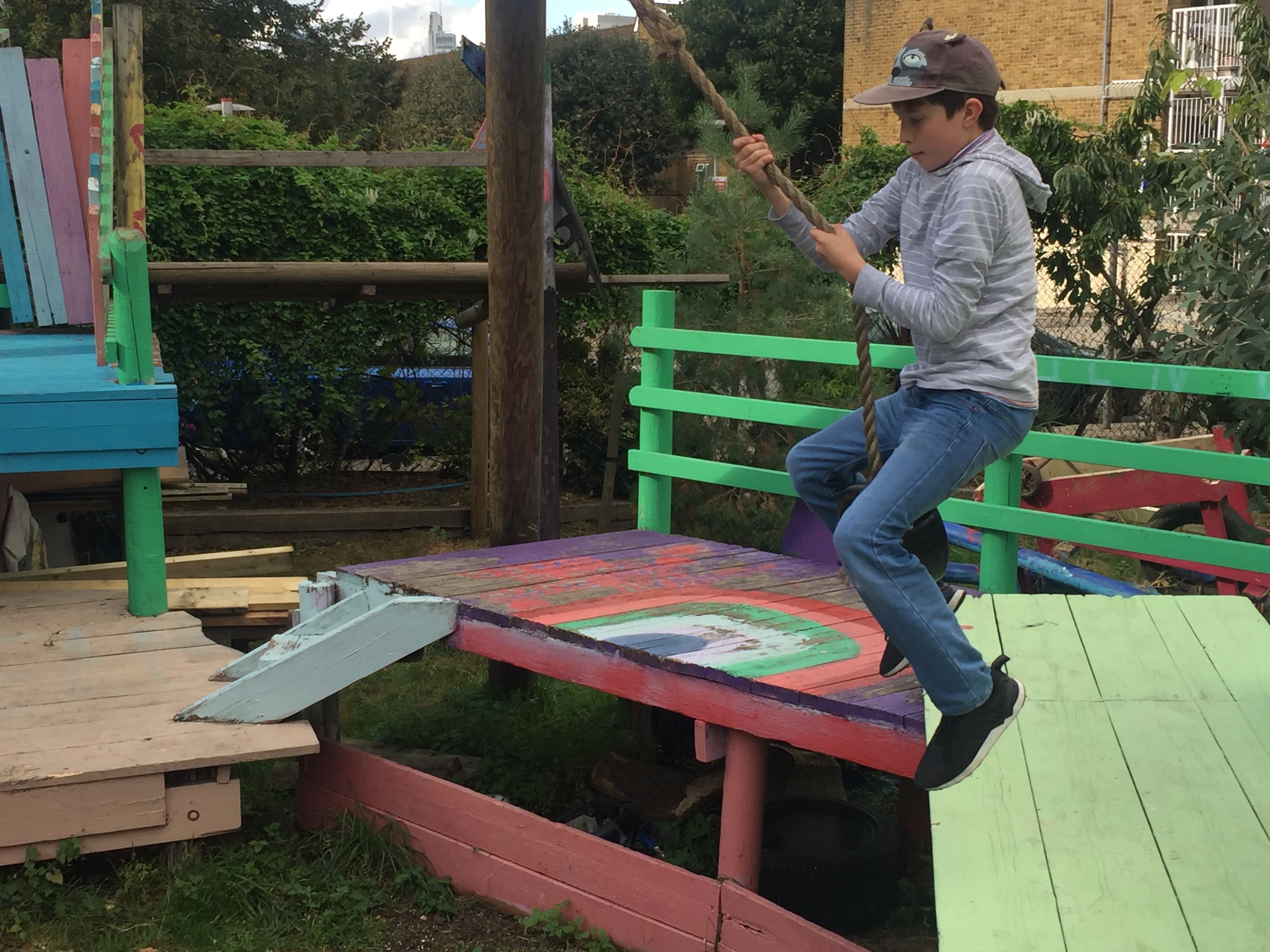
Photo: Meriden Adventure Playground

Are adventure playgrounds really under threat from a risk-averse insurance industry?


Simon Bazley, after taking the temperature of this week’s media flurry about insurance companies and adventure playgrounds, decided to do a little bit of his own investigative journalism. He discovered that the picture is not exactly as described by some illustrious newspapers, and suggests that the more serious threats lie elsewhere.

A couple of weeks ago, around 14th January, I learned through social media that Felix Road Adventure Playground in Bristol had been advised, in the words of its manager, Eddie Nutall, that “adventure playgrounds were not economically viable to them anymore … good luck, and sorry.” 

Upon hearing this, I was naturally concerned about the implications for other adventure playgrounds across the UK and I decided to do some digging, getting in touch with some of my own contacts within the insurance industry.  In short, they said “what are you worrying about? It’s only one insurer and there are many others; just speak to a broker”. 

These contacts, quite senior people in the industry, went on to suggest that it is quite normal for an insurance provider to change their emphasis within various portfolios but that, as one company leaves the market, it provides opportunities for others to compete for the business.  

The Times and the Sun

Fast forward two weeks, and I, like many of us in our field, was a little shocked to read the Times’ and Suns’ versions of events.

“Adventure playgrounds in danger of mass closure after insurer Zurich pulls out”? (The Times)

PARK STRIFE : ‘Claims culture’ could force mass closure of playparks as insurer Zurich ‘threatens to end cover’
(The Sun)

These headlines, which appeared on Monday this week, made me sit up and take more notice than I usually do of certain mainstream media. But are they factually correct?  If so, then our sector has a serious problem, a sentiment manifest in the waves anxiety sweeping across social media all week. ‘Is this the final nail in our coffin?’ was one typical comment.

Panic

The trigger for this panic has surely been the Times’ assertion that Zurich, until now, was ‘the only insurer willing to back (adventure playgrounds)’. But my initial enquiries suggested this was not true, and so let’s take a closer look.

Speaking to a friend and colleague yesterday, I learned that the oldest adventure playground in Wales, Wrexham’s The Venture, was insured by Royal Sun Alliance (RSA), not Zurich. RSA also insures my own work as a self-employed playworker and play consultant. 

Further investigation, via my insurance broker, Keegan and Pennykid in Edinburgh, provided more evidence that the problem has been exaggerated, to say the least.  They advised me that they have a number of adventure playgrounds as clients and have successfully negotiated policies for them via RSA and Aviva, two of the largest insurance providers in the UK. According to Keegan and Pennykid, other companies are also amenable.

Bigger picture

From just a little research, it is clear that The Times story is inaccurate. Of course, we need to try and ascertain the bigger picture, and I would encourage all adventure playgrounds to respond to a survey that has been issued by London Play (see below). I am currently trying to find out who insures the other three adventure playgrounds still remaining in Wales and will feed this into the gathering evidence base.

Hopefully, a concerted and collaborative bit of data gathering will tell us whether or not adventure playgrounds across the UK can, in general, get reasonable insurance, with fair terms and conditions at a reasonable price. If not, then, as a playwork sector, we may indeed have a problem.

If, on the other hand, the answer is yes, albeit that some playgrounds may be now looking for new cover, then perhaps we can use this current attention on our work to highlight our value, collaborate on good practice and workable solutions; and maybe even strike some better deals with the insurance industry.

There is more than one meaning to the term ‘a good risk’!

Simon Bazley

Simon Bazley is the CEO of Playful Futures and a trustee of the Playwork Foundation.

London Play has asked for help in collecting some information about insurance and adventure playgrounds. If you run, work for or volunteer at an adventure playground anywhere in the country please complete the survey at the link below soon as possible. Thank you!

https://www.surveymonkey.co.uk/r/H9X3M2D

How youth workers can go the extra mile for play

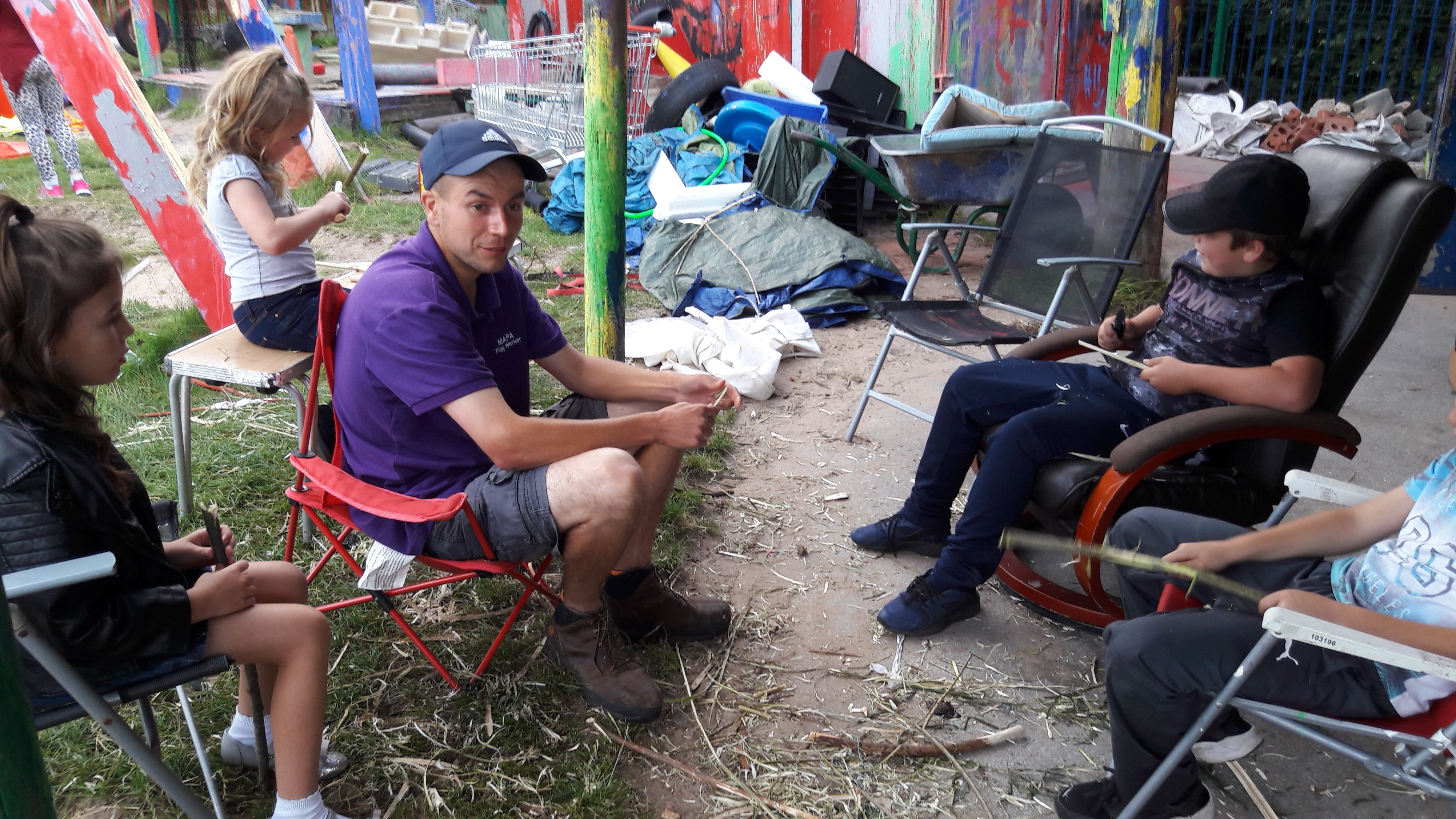
whittling
When Ali Wood enrolled for an event, ‘In Defence of Youth Work’, in Birmingham, she saw that the agenda featured discussions on youth work in different settings and situations. Never being shy about speaking out for play, Ali asked if youth work in adventure playgrounds could be added to the programme. This is a synopsis of her resulting workshop, and Ali’s rationale for it.

I qualified as a youth and community worker in 1985 and worked in a whole range of centres and clubs in Birmingham for a number of years.  Things were changing though –both in the local authority and across the country and it wasn’t hard to see the writing on the wall.  Funding for community work was dwindling fast and youth work as it had been was changing and becoming more issue-based, but somehow in that process we ended up losing numbers of young people – partly due to focussing more on discussion work than recreational activities and young people’s choices.  I ‘defected’ to playwork, which had begun with the introduction of adventure playgrounds in London in the 70’s and over the ensuing decades built up its own theory base, research evidence for play and qualifications for playworkers. I have been there ever since.

Adventure playgrounds

So for those of you who don’t know and have never been to one – what’s an adventure playground?  There aren’t that many left around since all the recent local authority cuts, so you’d be forgiven if you hadn’t come across one.¹  Basically an adventure playground is a community-rooted self-built site for both children and young people, where kids can come and be themselves and do their thing – which often includes the stuff that they can’t do elsewhere like lighting fires, using tools and building, making food, digging, climbing, swinging, jumping off high platforms, managing risk for themselves, playing with water and mud. It’s also a space where they know they’ll feel heard and valued and where spontaneous conversations will likely yield support or information they need.

they know they’ll feel heard and valued and spontaneous conversations will likely yield support or information they need. 

So what’s the difference between playwork and youthwork – or doing youth work on such a site?  In some ways – when you get youth workers who have a real sense of vocation – not a lot necessarily in practice.  But there are givens here that may not be automatically understood or recognised.

First principles

Firstly there is the understanding of the fundamental importance of play in children and young people’s lives. And by play, we mean that as it is expressed in the first two Playwork Principles² – which provide a professional and ethical framework for playwork.

  1. All children and young people need to play. The impulse to play is innate. Play is a biological, psychological and social necessity, and is fundamental to the healthy development and wellbeing of individuals and communities.
  2. Play is a process that is freely chosen, personally directed and intrinsically motivated. That is, children and young people determine and control the content and intent of their play, by following their own instincts, ideas and interests, in their own way for their own reasons.

If you recall some of your own memories of playing (and do this now before you read on!), I can pretty much guarantee that these will consist of being outside, taking risks and being away from adults – and the older you are, the more that will be the case.  Am I right?  And why do those three things feature so widely in people’s memories? Because children naturally long for freedom and independence as they grow; and if adults are around, those adults are likely to try and control, supervise, guide, direct, organise, stop or take over whatever kids are doing. Start watching yourself, and how much you do this when you’re with kids!

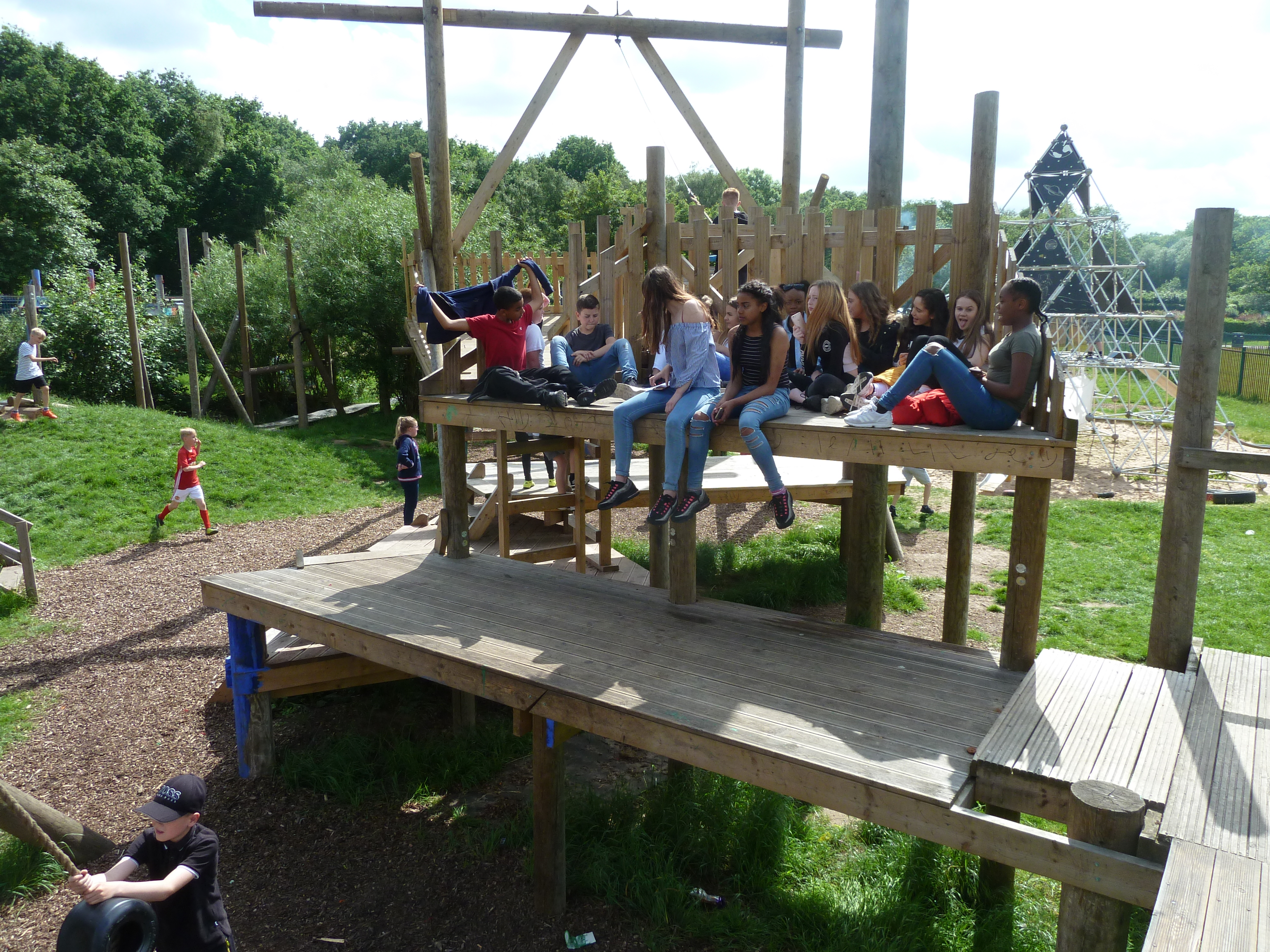
gathering on platform 2

So, children seek out time and space away from adult eyes in order to play. However, over the last few decades, kids have had less and less free time away from adults when they can make their own mistakes, be daft, work stuff out and try things out for themselves, be responsible for themselves and each other. Yet it is play as described above that is the natural medium for these things to happen, but opportunities for play have been squeezed, banned, or diluted – often with the supposed best of adult intentions – because we have forgotten how vital free play is and we are bewitched by the spirit of the age of over-protection and structured education of our children and young people. In playwork we call this play deprivation³ and it is a concept that other professions are also recognising as really damaging.

So, youth work really needs to understand what play is, why kids crave it and how to support it and respect it without getting in the way (and that honestly isn’t easy and takes a lot of reflective practice!) instead of planning a load of other stuff that we think is more important and riding rough-shod over young people in the process.  More than ever – because of being more play deprived in their own childhoods – young people need to play⁴.

Understanding risk

Secondly, in playwork there is a different understanding about risk, it’s necessity in young lives and how we can manage it. We use an approach that has been recognised and is promoted by the Health and Safety Executive⁵ for anyone working with children and young people and yet somehow youth work has not taken this on. It is the process of constant risk:benefit assessment⁶, whereby instead of automatically intervening to ‘make something safe’, playworkers observe children and young people in whatever they are doing and dynamically assess the risks of this, but also the benefits –i.e. what kids will gain from doing whatever it is, and also to think through ways of minimising the risks if this is necessary, without taking over and ‘doing it for them’.

Young people don’t have a death wish, they have an inbuilt sense of self-protection and survival that too often we have crushed by not allowing them to use it. 

It takes courage and practice, but it works. Young people don’t have a death wish, they have an inbuilt sense of self-protection and survival that too often we have crushed by not allowing them to use it.  When they know they are responsible for themselves, they really take that on and their skills and confidence flourish. On the adventure playground where I work and where we have unaccompanied children from 7-18 years on site,  we’ve had about half a dozen accidents that have entailed a visit to A & E in ten years, and yet our kids regularly use axes and mallets, hammers and saws, throw themselves off platforms and cook on the open fire.  Youth work really needs to better understand risk-benefit assessment in practice.

Differences

So, the main differences when doing youth work on an adventure playground (and we have youth only sessions at our playground as well as open sessions for all ages), entail youth workers:-

  1. developing a deep understanding of play in all its forms and how to support it;
  2. a profound respect for children and young people that recognises their capabilities and competencies first;
  3. a richer kind of reflective practice⁷ that puts us adults – with all our feelings and motives – under the microscope to examine how our interventions are too often colonial and patronising; and
  4. a commitment to risk:benefit assessment observation and recording.

This takes passion and courage, lots of supportive teamwork and the willingness to regularly go the extra mile. But in many ways, although I have called myself a playworker for the last twenty years, it is much more akin to the youth work I first felt so drawn to in the 80s.

Ali Wood

Ali Wood is a playwork writer, researcher and trainer. She is chair of Meriden Adventure Playground in the West Midlands, and a founding board member of the Playwork Foundation.

Photos: Meriden Adventure Playground

References

  1. http://www.playengland.org.uk/resources-list/adventure-playgrounds/
  2. http://issuu.com/playwales/docs/the_playwork_principles_-_an_overvi?e=5305098/11658290
  3. http://www.playwales.org.uk/login/uploaded/documents/INFORMATION%20SHEETS/play%20deprivation%20impact%20consequences%20and%20potential%20of%20playwork.pdf
  4. http://issuu.com/playwales/docs/building_resilience_?e=5305098/31468341
  5. http://www.hse.gov.uk/entertainment/childrens-play-july-2012.pdf
  6. http://issuu.com/playwales/docs/play_and_risk?mode=window
  7. https://issuu.com/playwales/docs/reflective_practice?e=5305098/62475902


Children’s Access to Play in Schools

Children’s Access to Play in Schools ( CAPS ), a University of Gloucestershire project under the EU’s Erasmus programme, is introducing its Play-friendly Schools Quality Criteria to the UK at an event in Gloucester on 5 December.

Download details here.

Symbiotic homeostatic disequilibrium in playworking interaction

A new paper by Joel Seath and Gordon Sturrock, derived from and following communications at the PlayEd conference in Cambridge, May 2018.

Abstract

Playwork’s key claim is its unique manner of working for and with children. It currently suffers, however, from a lack of consensus regarding the benefits of its application. This paper challenges the dilution of playwork practice in acknowledging the art, grace and wisdom in connectivity of playworking. Drawing primarily on Antonio Damasio’s neurobiological analysis, the homeostatic disequilibrium operation at the core of body/neural intra-action is detected as reflected in the interaction of organisms.

In consideration of some key concepts of social ecology – consociation, mutual aid, co-operativity rather than competition, rhizomatic rather than hierarchical structures – and  the neurobiological study of individuals’ feelings, emotive responses, affect and culture, this paper discusses the evolving phenomenon of the playworking adult and child at play in terms of a symbiotic being and becoming.

Joel Seath and Gordon Sturrock

Download the full paper here

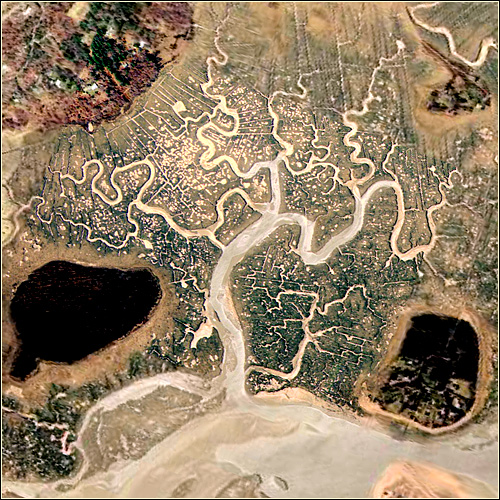
Image: ‘Rhizomatic tree of life’ by jef Safi

The Play Cycle 20 Years On

In 1998, Gordon Sturrock and the late Perry Else presented a paper at the IPA International Play Conference in Colorado, USA.  The paper was titled ‘The playground as therapeutic space: playwork as healing’, later referred to as The Colorado Paper and introduced the Play Cycle to play  theory.

In the last twenty years, elements of the Play Cycle (such as ‘play cues’, ‘play return’, ‘play frame’ and ‘annihilation’’) have entered into common use within the childcare sector.  The aim of this exploratory study is to investigate understandings and applications of the Play Cycle within childcare over the last 20 years.

This study is open to anybody who is currently involved in childcare but must be aged 18 years or over.  The research will be undertaken by Dr Pete King from Swansea University and Dr Shelly Newstead.  For more details about the study, please contact Pete at p.f.king@swansea.ac.uk or 01792 602 314.

To take part in this study please click on the link here

The questionnaire can be completed online using a computer, tablet or phone.

The study is open to Friday 21 December 2018.

Thanks

Dr Pete King

‘Youth vs. the world’

playfreenyc

Like so many, Meriden Adventure Playground, in the West Midlands, is having to fight a rearguard action to preserve even its meagre level of funding. It faces an uncertain future; something not lost on its young users.

These include a girl called Misha, who earlier this week delivered this message, via the playground staff, to the adult world.

I am your future, I am your forgotten youth.

I am the friend you played kirby with. I was your secret keeper, your companion, climber of trees, jumper of brooks, the mischief-maker, the person that defended you, the one that held your hand.

I am youth, I am you.

You cut our clubs and you make places disappear, you disregard our fun and bring us fear.

Communities ignore us, governments use us, we are just tools to be abused. The media shows lies to sell papers. The government tells lies to gain votes, while the youth are left powerless without any hope.

Who will be our hero, who will be our voice, what will we do if someone doesn’t make a noise when we try to stand up for ourselves? We only get pushed back down.  

“You cut our clubs and you make places disappear, you disregard our fun and bring us fear”

Why do you hate us? What have we done for you to treat us this way? You say you only want the best for us, but without asking us you don’t know what we want, what we need.

Instead you assume you know what’s best and when it all goes wrong, who do you blame? Us.

We never seem to please you, everything we do is wrong one way or the other. We try so hard but you only see us for the bad. What is your problem with us? Why are we being moaned at for being ourselves?

We go out not to be criticised but to have fun. Who cares what we look like, who cares about what you think you see. The inside is what matters.

I have a dream that one day we will all be seen as equals.

Misha
(aged 11)


Adventure playgrounds are too important to consign to history

Eran at Glamis

A variety of recent projects in the arts, heritage and academic sectors have taken adventure playgrounds as their theme, bringing welcome attention to this important part of the UK play scene. However, cautions Adrian Voce, it would be a mistake, and a missed opportunity, if the surge of interest were to be predominantly nostalgic or historical.

Over the last year or so, adventure playgrounds in the UK seem to have become the subject of wider than usual attention far beyond the usual play and playwork sectors. In truth, this swell of interest is around an accumulation of separate projects and initiatives, which have each either come to fruition, or have been launched, with attendant publicity, around the same time.

Perhaps the most high profile of these, certainly in terms of popular culture, is no less than a brand new stage musical. The Lockleaze adventure playground in Bristol, known locally simply as ‘The Vench’, is both the subject and the setting for an original new comedy-musical, described by the Bristol Post as ‘a wildly funny and vivid new production about a miscreant group of Bristolian misfit teenagers who come together to build an adventure playground’. Junkyard will open on 24 February at Bristol’s Old Vic theatre.

Sharing memories

The Vench was also one of a number of adventure playgrounds in the West of England cities of Bristol and Gloucester, recently mined by researchers for the memories that they have inspired and bequeathed to their local communities. Sharing Memories of Adventure Playgrounds (SMAP) was a research project of the University of Gloucestershire (featured recently on these pages here) that beautifully conveyed, through an exhibition, a film and a short report, the unique role that places like the Vench can play in the lives of successive generations of communities, and the value they hold for neighbourhoods where there may not otherwise be much that children can call their own.

Elsewhere in England, researchers and curators at the Queen Mary, University of London and the V&A’s Museum of Childhood respectively are also collaborating on an exciting new initiative on the social history of London’s adventure playgrounds. Adventures in the City: the politics and practice of children’s adventure play in urban Britain, 1955–97 is a funded PhD project that began last year and will culminate in a new, interactive, permanent exhibition (an adventure playground, one presumes – as much as such a thing is possible within this context) at the museum’s popular Bethnal Green site in East London.

One hears of other doctorates that have identified adventure playgrounds and their history as a subject ripe for researching (e.g. Shelly Newstead’s paper at Child in the City 2014). There are other artistic ventures too. Mark Neville’s recently opened exhibition of photographs on the theme of ‘Child’s Play’ chooses adventure playgrounds as the setting for what it describes as ‘play in free space’. Neville juxtaposes his commanding images of children very much taking their space in some of London’s adventure playgrounds with those of children in less sympathetic contexts: the ‘structured space’ of school, and the ‘oppressed space’ of war and poverty.

‘Fulfilling childhood’

2015 saw the release of a short documentary film by Erin Davis ‘about the nature of play, risk and hazard’ set in The Land, an adventure playground in North Wales. ‘The Land’, as the documentary is also called, was described by Hanna Rosin in The Atlantic as a film that ‘will change everything you think you believe … In scene after natural scene the truth becomes obvious: With a little bit of creativity, empathy and guidance, children can be freed to experience a much more fun, adventurous and fulfilling childhood.’

This kind of exposure and recognition for a form of provision that perennially struggles on meagre budgets and – with some rare exceptions – little support from their local authorities, can only be welcome. It is important too, that both academia and the heritage sector are taking adventure playgrounds seriously as the subject of both research and cultural archive.

img_3779Nevertheless, play advocates may also feel a little uneasy that so much of this attention is from an historical perspective. It is more than implied in this approach that adventure playgrounds today, if not quite anachronistic, are certainly an ‘endangered species’, as Dr. Wendy Russell acknowledged at the launch of the SMAP project last month. She estimates that there are no more than 150 remaining in the UK – and that not all of these are necessarily adventure playgrounds in the original sense of the term – compared to more than 500 in their 70s heyday.

Sense of community

Exploring the reason for this decline needs an article (or a PhD!) all to itself, but as Mark Neville’s exhibition and its accompanying book assert, Erin Davis’ film so eloquently conveys and the children past and present of Bristol and Gloucester’s adventure playgrounds say for themselves, the unique experience of playful community that is given to children in a proper adventure playground, is too vital to be merely the subject of a museum piece.

These supported spaces to play – with materials large and small, with the elements, and with the full spectrum of human curiosity, invention, and interaction – protected from the future focused, outcomes-obsessed world of adult-laid plans and rules for them, enrich the lives of the children who attend them. That this is in ways that are difficult to measure within the reductionist outcomes frameworks now routinely applied to public services should not, but inevitably often does, make it difficult to make the case that modern Britain needs more, not fewer adventure playgrounds.

We must hope that, far from ushering them towards the door marked ‘cultural artefact’, researching the history of adventure playgrounds, exhibiting them in museums and celebrating them through the arts will alert a new generation of advocates, policymakers and funders to their unique value to children and communities now.

Adrian Voce

Photos: Eran at Glamis Adventure Playground in 2016, and Glamis’ rules, by Adrian Voce

*this article’s final two paragraphs were edited for clarity on 23 February.
Sharing memories of ‘endangered’ adventure playgrounds

The University of Gloucestershire has launched the report, and a short film, of its Sharing Memories of Adventure Playgrounds (SMAP) research project. The project worked with adventure playgrounds in the cities of Bristol and Gloucester to gather memories of those involved – as children, staff, families and communities – over their history, in order to explore their value; but the project also shines a spotlight on the decline in the number of UK adventure playgrounds, and their ongoing insecurity.

Adventure playgrounds are a specific form of play provision generally catering for children aged 5-15 years of age, with local variations. Their received history tells how they were first introduced into the UK in the late 1940s by Lady Allen of Hurtwood after her visit to the junk playground in Emdrup, Copenhagen. These facilities sprung up in urban spaces left by wartime bombs, using waste materials, tools and the permissive supervision of a playworker to create spaces where children could build play structures, make dens, use tools, have fires and generally engage in outdoor play. Largely developed and run by voluntary organisations, such seemingly anarchic and chaotic spaces were welcomed by the authorities as an effective response to the rise in delinquency amongst working-class boys.

Over the last 70 or so years, these playgrounds have had a chequered history. At times adventure playgrounds have been well funded because of their perceived social and economic benefits (instrumental value), at others less so. Alongside this, the ethos and practices of adventure playgrounds in the UK have both affected and been affected by the zeitgeist, theory and social policy paradigms. From an estimated 500 in operation across the UK in the 1970s, their decline to less than 150 today (many of which no longer operate wholeheartedly according to the original principles) has been attributed to a number of socio-legal changes, including the Health and Safety at Work Act 1975, the Children Act 1989, the introduction of out of school childcare and now unprecedented public expenditure cuts.

‘Critical cartography’

This trans-disciplinary project held events at each of the playgrounds and recorded these using video, audio and the work of artists. It was funded by both the Being Human and Sport, Exercise, Health and Wellbeing Research Priority Areas at the University of Gloucestershire. It drew on concepts from post-qualitative research methodologies, memory studies, geography, philosophy and policy. It aimed to develop a ‘critical cartography’ as a different way of articulating the value of adventure playgrounds that can be used to inform future policy.

There is plenty of evidence showing the benefits of play for children, but less showing the benefits of play provision. What does exist tends to show the instrumental value of adventure playgrounds and playwork in terms of its capacity to address social policy concerns such as reducing physical inactivity and obesity, crime reduction, or community cohesion. These are important, and at the same time the desire to show measurable benefits in this way obscures other ways of expressing value. The creative methods we used looked to show how much these spaces mattered to those involved.

“Adventure playgrounds are an endangered species”

Dr. Wendy Russell

At the launch of the SMAP project, with an exhibition at the University’s Oxstalls campus on 27 January, the Mayor of Gloucester, Councillor Neil Hampson highlighted the huge value of the city’s adventure playgrounds to successive generations of local communities and decried the austerity policies that was placing them at risk. Dr. Wendy Russell, for the research team, said they were an ‘endangered species’, which needed to be documented while they were still in existence.

Adrian Voce

Illustration: Mick Conway (from original artwork produced for the project)
Photo: Bristol Daily News

As well as the exhibition, the project has produced a film, which can be viewed here and a short report, available here. If you would like to host the exhibition, please contact the research team at smap@glos.ac.uk.


Tags: 

Adventure playground to open in the heart of New York City

An adventure playground will open in the heart of New York City this May. play:ground, a local voluntary organisation will open a 5,000 square foot play space on Governors Island where children can imagine a world of their own making and experience self-directed play. Modelled after the original junk playgrounds, the adventure playground will let children shape their environment using an assortment of materials, tools, water, dirt, and up-cycled ‘junk’.

playfreenyc
Photo: play:ground

At the Governors Island adventure playground, instead of shiny metal slides or swings, children might build their own forts from wood pallets and hay bales, they might manage a see-saw out of planks of wood, or a trampoline from old tyres that lands them in a pile of mud. All this happens under the watchful eyes of trained playworkers – staff who are on hand to provide assistance when requested, but otherwise stand back and let the children take the lead.

In a news release, play:ground said:

‘Today in New York, young people experience a tightly managed urban landscape, with rare access to spaces belonging entirely to them. Where are kids free to self-organize, or independently create from their imaginations? play:ground encourages a sense of freedom and permissiveness not found in most of the city’.

“I feel free at adventure playgrounds. You’re the one who builds the playground.”
– Oliver, 7.

Reilly Wilson, co-founder of play:ground and PhD candidate/NSF Graduate Research Fellow in Environmental Psychology at The Graduate Centre of the CUNY said:

“You can’t go to your normal neighbourhood playground and start tying stuff onto the playground structure, or start drawing on things with markers. You definitely can’t start nailing things to the playground structure”.

In addition to free public hours, play:ground will offer summer camps and school visits. Beyond the space on Governor’s Island, play:ground will continue providing local outreach through its on-going initiative — play:ground in the park.

Based on the Pop-Up Adventure Play model, play:ground in the park brings loose parts (e.g. boxes, fabric, found objects, art materials) to parks around the city, installing temporary play spaces for all.

play:ground launched its $25,000 kick-starter campaign with a deadline of March 30th, to help cover the starting costs including materials, fencing, and playworker staffing for Spring/Summer 2016.

https://www.kickstarter.com/projects/570159653/play-ground-an-adventure-playground-in-nychttp://play-ground.nyc/

http://play-ground.nyc/