Professional(?) practice

As a playworker, has anyone ever asked you if you get paid for what you do? Have people assumed that you are a volunteer? Have they watched you doing all the things that being a playworker entails (often in some of the most dynamic and volatile circumstances) and still been shocked when they realise it’s your job? Why is that?

Is it because we (as a society) don’t value childhood? I mean, we value people-in-waiting. Citizens-in-the-making. Economy-drivers of the future. But, do we really value what it is to be a child? Why it’s important to be a child?

And/or is it because we don’t value play? It’s considered frivolous. A luxury. But, “play is not a nice to have, [or] a maybe tomorrow” (as Matthew Rhys Evans says in Play Wales’s This is why play is so important film), it’s a necessity.

Of course, we – as playworkers – know that. The problem is that the rest of the world does not. Even some (emphasis on *some*) of our closest comrades – like early years workers, youth workers etc – don’t quite understand the distinct role playworkers play in keeping interfering adults away from the intimate realms where children’s minds commune with the physical world through play.

It’s our constant battle: To communicate the tricksy duality of play as simplistically complicated, yet simultaneously perplexingly plain.

From my own experience, youth workers don’t seem to have the same difficulty in communicating or demonstrating what they do, nor for the value of their role to be recognised by authorities and the community. Perhaps theirs is a little more obvious: they’re dealing with troublesome teenagers smashing bottles and smoking weed on the skate park – “That’s hard work, that – chwarae teg”. Whereas playworkers… “well, you lot just build sandcastles and roast marshmallows, right?” – right… 🙄

The benefits, impacts, and outcomes of enabling children’s play is one of speculation. There is no guarantee of return on investment. And, any dividends will be paid long-after the playworker has left the lives of the once-children/now-adults, which – in a capitalist system at least – makes it a hard sell for society to value in-the-now.

But is that the difference? Much of what youth workers do is playwork (to some extent), and vice-versa. As has been demonstrated at many workshops at the National Playwork conference in England, there is often very little that divides what we do either as playworkers or youth workers (or both) when working with young people.

But, there is a distinction. Just as there is a distinction between the “physical activity” that we see when children are involved in self-directed locomotor play, and the “movement” that might be described by sport practitioners. They are different. And, that’s ok. But sport and youth work have something we don’t… and it’s something that is being mooted as a potential way for playwork to finally receive the recognition it deserves.

That something is professional registration. What does that mean? And why is it of potential use?

Generally, a professional register is a list of maintained by a recognised professional body that includes the names of individuals who have met certain criteria. These criteria will typically be clarification that a practitioner has:

  • training, education, or experience of a particular level and/or standard (that is recognised by the government of the nation in which they work);
  • completed other mandatory training (e.g. safeguarding and Prevent Duty);
  • (if relevant) a valid enhanced criminal records check to enable them to work with children and/or vulnerable adults (e.g. DBS check in England and Wales, Enhanced Disclosure in Scotland, or AccessNI Check in Northern Ireland);
  • committed to adhere to a Code of Conduct;
  • committed to Continuous Professional Development (CPD).

The purpose? Very briefly, it is generally thought that professional registration brings greater professional recognition, elevated professional standards, and better employment terms and conditions.

Across Great Britain, there has been lively debate on the matter since last year, but the conversation is reaching a particular crescendo in Wales as the Welsh Government consultation on the Professional registration of the childcare and playwork workforce draws closer to its deadline of 7th March 2024 (a week today!).

From: https://www.clybiauplantcymru.org/blog/consultation-on-professional-registration-of-the-childcare-and-playwork-workforce/

The consultation was announced on 30th November 2023 by Deputy Minister for Social Services, Julie Morgan MS, and described as “an opportunity for those managing, working, and using childcare and playwork settings across Wales to tell us what they think about the principle of professional registration and whether they feel a workforce register would be beneficial for the childcare and playwork sector now or in the future”.

What’s not to like?

Some discussions have highlighted concerns that could have a negative impact on the playwork workforce:

  • It will cost – estimated figures put registration around the £65-100 mark to be covered by playworkers themselves. In the past, when DBS costs have been passed-on to playworkers, it can negatively impacted recruitment.
  • It might cost even more – Youth Workers in Wales already have to be registered with the Education Workforce Council (EWC) in order to practice, with a baseline fee of at least £45 per year. Many teaching and youth work staff already feel this lacks value for money. It’s unlikely (but not impossible) that playworkers and youth workers will share a professional register, meaning those who practice playwork and youth work may have to pay twice.
  • Registered settings only? – It has been suggested that professional registration might only apply to those settings which have to register with Care Inspectorate Wales (CIW). At present, there are loopholes / exemptions that avoid the requirement to register with CIW (e.g. not open for more than 2 hours a day; not open more than 5 days a year). To avoid increased costs or to retain staff, providers may choose to use these loopholes more – this would counter the narrative of improving quality, and even increase the likelihood of safeguarding concerns.
  • P3 or not P3? That is the question” – Which qualifications might the professional register recognise? What about playworkers moving to or working in Wales from elsewhere? What about those seasoned playworkers who have no qualifications? Which leads us on to one of principle…
  • Who decides? – Whether it’s recognition of previous experience or learning, or fitness to practice… who decides what is good enough?

Contemporary playworkers share their heritage with the adventure playground movement that first took seed in the Blitzed rubble of London in 1946. Grassroots community members – parents, carers, siblings, neighbours, councillors, shopkeepers – protecting spaces for children to play. 80 years later, how would they have stacked-up against a professional register? Is that still relevant?

In the 1970s and 80s – with the emergence of workplace health and safety legislation, and inspection and registration requirements – adventure playgrounds faced existential crises. Comply or close was often the reality. So, playwork practice changed. Then, in the late 00s, a change of Government in Westminster and an accompanying financial crash led to more adventure playgrounds being lost to the history books (and the housing developers).
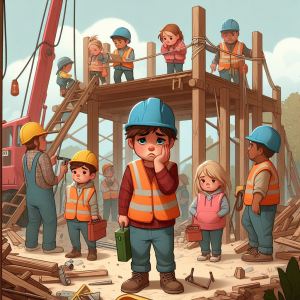
Born in 1987, all of this I know from articles, books, and offensive-language-strewn YouTube videos about the early days of adventure playgrounds. But, my guess is that this prospect of professional registration is potentially what it might have felt like in the 70s and 80s on those OG APs [that’s “original gangster adventure playgrounds” for those of you even more ancient than I].

The Health & Safety at Work etc Act 1974 was an inarguable positive step for workers rights and public safety, but it must have been heart-breaking to watch the towers, high beams, and trampolines all be dismantled and discarded, never to return, as a result. But what if playwork had refused to change? Would it have survived to today?

Playwork is under threat. Whether it’s Forest Schools incorporating “playwork” into their practice whilst also fulfilling the Forest School Principles, sports bodies broadening and diversifying the definition of “physical activity” and “movement” to access funding, or the allure of education and structured activities in youth work provision for children aged 11 – 18, playwork is struggling to cut-through the noise.

Could professional registration elevate the perception of playworkers?

Is it just a question of timing?

Play Wales are encouraging playworkers, managers, and those working in the playwork sector to respond to the consultation, and have also published their own draft response to help people in doing so.

Another consultation with a slightly shorter deadline (TODAY) is Future spending purposes for dormant assets funding in Wales. Welsh Government is seeking views on how dormant assets could be used to improve the lives of people in Wales. Section 3.4 of the consultation specifically discusses the option of using funds to address barriers to children’s play and leisure activities.

This article was written by Siôn Edwards (Chair of The Playwork Foundation), and these statements represent his own views and do not necessarily reflect those of The Playwork Foundation.
Play the way to a happy, safe childhood

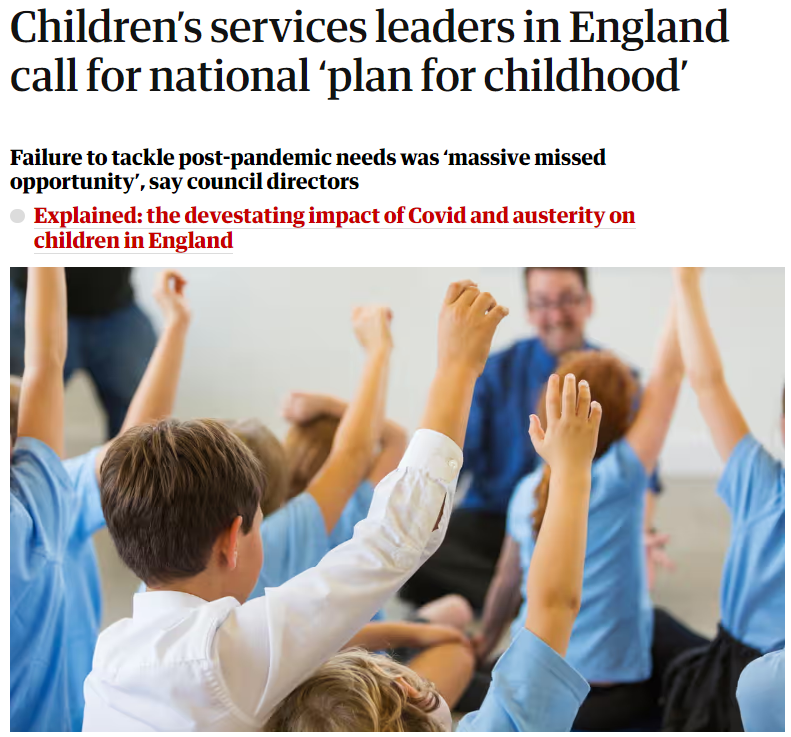
Last week, the Association of Directors of Children’s Services – the national leadership association for statutory directors of children’s services in England – was thrust into the headlines following the release of its report Childhood Matters.

An update to its 2017 policy paper A country that works for all children, the report provides a bleak overview of the Westminster Government’s treatment of children and young people in England:

“All too often it seems that where investment in children’s futures is needed, the bare minimum is on offer, whether that’s to repair or rebuild school buildings or support children to recover from the pandemic experience”

Some headline recommendations of the report – identified by ADCS members – include:

  • Cross-government plan for childhood coordinated by the Cabinet Office;
  • Sustainable multi-year funding from the Treasury;
  • Funding to local government and children’s services from the Department of Levelling-Up, Housing and Communities should better represent local contexts, populations, and levels of actual need;
  • The Department for Education to reaffirm its role as a champion and advocate for children and young people across the Westminster Government;
  • The Department for Health and Social Care should delegate the resources and responsibilities for the commissioning and provision of all children’s community and mental health services to place-based integrated partnerships;
  • A root-and-branch review of children’s mental health services in NHS England, so that needs are met as soon as possible in the places and spaces that suit children’s lives and preferences;
  • An independent evaluation of the impact of the current welfare system on children, young people and families should be commissioned by the Department for Work and Pensions to ensure it is working towards the eradication of child poverty.

But, what do you think?

Last week, AssemblePlay asked that very question, and received some interesting and passionate responses. Therefore, with The Playwork Foundation, we’re holding an open meeting for those within the playwork sector to come together and discuss, express, and propose the current state of children’s services in England, and across Great Britain and Northern Ireland.

If you would like to join us, simply save the date:

Thursday 29th February, from 1pm

And click the link below to join us:

https://us02web.zoom.us/j/85183099330?pwd=RnBmZllpb2kzbmZPRmsvczU1S05Fdz09

Meeting ID: 851 8309 9330
Passcode: 257340

The meeting will be chaired by Penny Wilson [right] (Assembly Play) and Siôn Edwards [left] (Chair of The Playwork Foundation).

Adventure playgrounds and local authorities

STARTING AT 11am:

https://us02web.zoom.us/j/86754113695?pwd=Y01XUzhzR3YrcE9jU2dEYTJwdFB0Zz09

Meeting ID: 867 5411 3695
Passcode: 205537

Following the success of our inaugural meeting in November 2023, the Adventure Playground Network’s next get-together is scheduled for Friday 23rd February, 11am – 1pm.

The subject of this meeting’s discussion, as proposed by Malcolm King from The Venture at the last event, is the relationship of adventure playgrounds to local government.   

Lesley Griffiths MS with Malcolm King, Chief Officer of The Venture Integrated Children’s Centre

This might include:

  • implications for adventure playgrounds of the precarious state of local government finances;
  • matters concerning local authority grants and commissioning processes;
  • tenancies and leases; and,
  • the opportunities and threats faced by many adventure playgrounds as they deliver on services for children and families previously provided by our nations’ often underfunded local councils.
Hackney Marsh Adventure Playground
https://londonadventureplaygrounds.org.uk/playgrounds/hackney-marsh-adventure-playground/

To receive the link for the meeting, sign-up to our mailing list or become a member (it’s free! Click Join Us from the menu).

If you were at the last meeting, thank you for all of your contributions and to those whose suggestions have developed the discussion topics for the forthcoming conversation.  If you weren’t in attendance at the previous meeting, we’d like to extend this invitation to you to join a likeminded collective of adventure playground representatives.  

The vision for this collaborative venture is to connect playworkers, from across Great Britain and Northern Ireland, to discuss issues affecting the adventure playground sector and shape the agenda for subsequent bimonthly meetings.

Ali Long (Course Director, Leeds Beckett) will be guest Chairing this meeting with the support of Mike Wragg (Senior Lecturer, Leeds Beckett) and Siôn Edwards (Chair, Playwork Foundation).

You can find all things Adventure Playground Network related here.

Play does not equate with physicality

By Penny Wilson

Play is a universal biological imperative.
Sport is an artificial construct, elevating the survival of the fittest
(in this I include disabled sports people).

Sport revels in elitism – it is a status term, a badge of pride.

Play is antithetical to competition.
It is predicated upon the joy of failing.

Play is egalitarian.
The play of every child is valid, creative, unique and stunningly beautiful.

To reduce the glorious essential complexity of the neurological processes which inform the intricate business of the exquisite slow nurture and growth of each individual human body, mind, soul, ethical foundation, empathy, wit, relationships – the genius, continuing, discovery of one’s existence in this world as uniquely different from every other amazing individual – to equate this quotidian miracle with an externally imposed set of shallow rules, pointless goals, team kits, and bought loyalty is farcical.

To imagine, because one small sliver of play incorporates physicality woven in and out of its luscious tapestry, that this splendid phenomenon of humanity should sit under the aegis of a burpee obsessed mindset is risible and insulting to our species.

Play cannot be sold for a handful of glass beads.
It is not ours to sell.
We do need money, but we need our souls too.

To have our treasured craft of playwork governed by goal-orientated mindsets is simplistic and ill-informed.
It is adulteration (this is a loan word employed as a neologism by a man of genius who had dedicated his life’s work to understanding and advocating for play). Sturrock used the word to describe the corruption of the play process leading, if unchecked, to the annihilation of that play process.
That is a superb example of ow to reinvent language to express complex and nuanced concepts, by the way.

Just because the concept of sports and competitive tunnel-vision-based constructs are easy enough to understand that they can secure funding… Just because there is a naïve success agenda 0 rewarding externally imposed trained behaviours with treats (money, fame, praise, tasty biscuits) this success agenda bringing proxy glory to sponsors and funders, just because that is easy enough for even he most binary of adults to understand, doesn’t n that we should snuggle up to them. Ewwwww.

Years ago, Thatcher’s Government realised that investing in children’s play could go some way to placate and quell the city riots. The existing tried-and-tested infrastructures that had evolved around the play process, to support it as its core, those infrastructures which included playwork theory and language and practices and training and education – all of this was unpicked and reconfigured, remodelled at the whim of the unsafe minds behind the Tory agenda.

We were coaxed to accept this rebrand with sugar lumps of money.

Play was used as the opium of the people in communities that were being treated contemptuously. The, what a shock everything was dropped, disowned. We were left with the suggestion that we take funding from the tobacco industry. The responsibility for training playworkers was handed over to tick-box minds wo knew nothing of the delicacy and essential vibrancy of what they were doing. Of what they were systematically killing off.

We are still reeling from this colonisation and the oppression of children whose playhoods are being stolen from them. Abused by adults who failed to recognise their right to play.

This will not happen again. Not with us advocating for the people whose work is predicated on its primary focus and essence being to support the play process on behalf of children.

This article was written by Penny Wilson of AssemblePlay and a Trustee of The Playwork Foundation. These views are her own personal views and not necessarily those of AssemblePlay and/or The Playwork Foundation.

Guardian of play

“From the moment your child is born, you become grateful for playgrounds… these spaces can be a refuge: from traffic, drunks and scary dogs… without playgrounds, you end up breastfeeding on kerbs or walls”

Rhiannon Lucy Cosslett, The Guardian

It’s been a busy week for play (and it’s only Tuesday!). On Monday, Guardian columnist Lucy Cosslett – in her article ‘Arrogant parents and extravagant tantrums: all the world’s a stage in our precious playgrounds’ – provided an honest personal account of the safe haven fixed equipment playgrounds can be for parents/carers of young children, whilst also shining a light on some stark statistics that playworkers will unfortunately familiar with, or at least not surprised.

Some examples included:

One anecdote about “wrangling a heavy, furious child” waiting for their go on the swings, particularly caught my eye:

Thankfully, most parents… will say gently to their kid, “It’s time to let the baby have a go.” There is always one, however, who lets their darling offspring hog the equipment and then affects to see right through you, your tantrumming toddler and the queue behind you”

Rhiannon Lucy Cosslett, The Guardian

As a playworker on an adventure playground, rather than being on one parents side or another, I’m immediately reminded that (however well maintained and designed) these playgrounds are not accompanied by trained playworkers to hold the space in an informed, sensitive, and more impartial way than even parents/carers with the best of intentions.

Then, today, Sandra Laville – Environment correspondent for The Guardian, writing in her article ‘Children suffering due to lack of outdoor play, UK charities warn‘- highlighted the voice of a coalition of charities pushing the Westminster Government to recognise the damage being inflicted upon the health and wellbeing of children in England by refusing to prioritise outdoor play.

The coalition, which includes Playing Out, Wildlife and Countryside Link, and Save the Children UK, will be meeting with the Levelling-Up Housing & Communities Committee who have launched an inquiry into planning, building, and urban design in England.

The call for evidence has closed, with over 100 pieces of written evidence submitted, and the first oral evidence session is tomorrow – Wednesday 24th January 2024, from 09:45am – and can be viewed live on the parliamentlive.tv website here. Current agenda listed below:

We’re going to Eastbourne… are you?

It’s just 7 weeks until the 21st National Playwork Conference in England, and The Playwork Foundation is pleased to share that, not only will our Trustees be travelling from all corners of Great Britain to attend but, we will also be curating our own track!

In an email earlier this week, Meynell of Meynell Games (the organiser of the conference) shared some of the exciting speakers lined-up for another new track entitled ‘Play and Playwork Around The World’:

  • Meera Patel and Juliette Liebi will be drawing on their experiences in South Africa, and discussing the Art Panels their project has produced;
  • Maya Lan will be traveling from Cyrpus to deliver a session on processing trauma through play, which she has noticed in her work in the Middle East;
  • Niki Buchan will be drawing on her experiences working in South Africa and Australia, and talking about the importance of play for mental health and wellbeing; and
  • Joan Beattie will be speaking Playwork and the experience in Transylvania.

We also got a sneak peak of what Playwork in Progress regular, Suzanne Axelsson, will be presenting on at the conference:

Conference prices will be going up again in February, so if you’ve not already booked now is the time (and tell them The Playwork Foundation sent you 😜):

You can also join us for Playwork in Progress this afternoon (Friday 19th January 2024) from 3pm by clicking the link below:

https://us02web.zoom.us/j/87276469635?pwd=aFpwSXEzNzVqeUQzajJka1JtRzc2UT09

Meeting ID: 872 7646 9635
Passcode: 682987

Time running out to recognise great playwork

It’s the final push for nominations to the 14th Annual Playwork Awards

Arguably the highlight of the playwork year, the Annual Playwork Awards mark the pinnacle point of the National Playwork Conference held in Eastbourne, England, each year (except when there’s a pandemic, of course).

Now in their 14th year, it’s easier than ever to nominate who you think are the GOAT of playwork. Nominations can be in writing (as before) and can also be made by audio and video! And all you need is to answer 3 questions:

  1. Who are you nominating?
  2. Which award are you nominating them for?
  3. Why are you nominating them?

But you will have to be quick, as time is running out with the deadline for submissions this Friday, 17th November 2023.

Here are the different awards you can nominate under:

The Play and Community Development Award 2024

This Award recognises an organisation or individual who has engaged with and involved the local community to increase children’s opportunities to play.

The recipient of this award will be able to demonstrate:

  • Engagement with the local community through auditing play, gathering children’s views, hyperlocal research, fundraising, access to play and/or spaces of play
  • Commitment to the playwork principles, diversity, equity and inclusion
  • Appropriate collaboration with children to ensure their voices are heard

Click here to nominate

The Paul Bonel Special Mention Award 2024

Paul Bonel, who died in January 2011, was always striving to make the world a better place for children and was at the forefront of the development of playwork as a recognised profession. We are looking to celebrate a living individual who has made a difference to children’s lives through their contribution to playwork.

This award will go to an individual:

  • Who has made a significant contribution to the development and understanding of playwork practice at a local or national level
  • Whose contribution is respected and acknowledged by their peers

Click here to nominate

The Frontline Playwork Award 2024

This award is for an organisation whose work, practice and ethos is underpinned by the playwork principles.

The recipient of the award will be able to evidence/demonstrate:

  • How they underpin all of the playwork principles
  • How children have ownership and a voice over the organisation
  • How the organisation promotes play and playwork to others in the community

Click here to nominate

The Professional Development Award 2024

This award is for an organisation or individual who has really made a difference through their training, mentoring practice, and approach to professional development. This can be for either internal workplace or external training and mentoring

The recipient of the award must be able to evidence/demonstrate:

  • How they promote playwork and the playwork principles in their training, mentoring and professional development work with individuals and organisations
  • How they work so that the individual needs of staff, learners or mentees are met as much as possible to enable inclusive practice
  • How their work results in demonstrably innovative and sustainable playwork practice from those they train, support or mentor

Click here to nominate

The Altogether Different Award 2024

The recipient of this award is recognised for their flexibility and openness to others – specifically around issues of diversity, equity and inclusion – as they make the celebratory and transformative potential of playwork theory and practice real.

The award goes to the individual or organisation that best meets the following criteria:

  • Have a diverse and inclusive reach professionally and with the wider community
  • Constantly working to improve or upskill themselves and/or their team about other cultures, beliefs, abilities and preferences
  • Show responsiveness within their practice to support the diverse needs of others

Click here to nominate

DON’T DELAY: Deadline this Friday 17th November!

Play England AGM 2023

Following on from our earlier post, interested parties can now register to attend the 2023 Play England AGM which will be taking place Monday 6th November at 3pm.

Full details of the event can be found here, including an agenda and a Trustees’ End of Year Report.

We look forward to seeing some of you there!

DON’T FORGET: The following day, Tuesday 7th November, will be the inaugural meeting of the Network of Adventure Playgrounds. A busy week for playworkers!

Save the date

Please see below a notice from Play England’s September newsletter asking people to save the date for their AGM, currently set for Monday 6th November at 3pm.

We hope to see you there!

Annual Open Meeting – July 2023

Photo by saeed karimi on Unsplash

Playworkers!

You are invited to attend the Annual Open Meeting of The Playwork Foundation:

Wednesday 19th July

11am – 1pm, via Zoom

Our Open Meeting will be an opportunity for members and non-members alike to find out what The Playwork Foundation has been working on over the last year and also to hear from each of the national playboards of Great Britain and Northern Ireland on the latest insights and progress from all corners of the UK.

To receive the link, please sign up to The Playwork Foundation mailing list.

Photo by Annie Spratt on Unsplash

It’s an exciting time for both the playwork sector in the UK and The Playwork Foundation, and we want you to be part of the conversation and the journey.

Before July 19th, you can read our annual report:

You can also read our Glasgow Gazette which was shared at the Glasgow IPA Conference earlier this month in Scotland:

If you’re not a member yet, now is the perfect time to join as membership is FREE!

You can also complete our “Playworking in the UK” survey – the findings to date will be shared at our Open Meeting.

Please pass this on to playwork colleagues and friends you think may be interested and we look forward to seeing you on the 19th July!

Cofion cynnes / Kind regards,

Siôn Edwards

Cadeirydd | Chair