PETC England is looking for its next Chair! If you’re passionate about playwork training and ready to influence its future, this is your chance to step into a crucial leadership role.
The Playwork Education and Training Council for England (PETC England) plays a pivotal role in shaping playwork training, and qualifications. Bringing together sector leaders, trainers, employers, and practitioners, the council drives discussions on the big challenges and opportunities facing playwork in England. With secretariat support from The Playwork Foundation, PETC England aims to ensure that the playwork workforce has a strong, united voice in policy development, best practice sharing, and professional standards.
Bringing the Sector Together
One of the Chair’s responsibilities is to ensure PETC England remains a dynamic and effective platform for collaboration. This includes fostering productive engagement with Playwork Education and Training Councils in Wales, Scotland, and Northern Ireland, ensuring transnational learning and the sharing of best practices.
Beyond leading discussions, the Chair supports the council in taking action – helping to translate ideas into progress, whether in qualification development, employer engagement, or responding to emerging challenges within the sector.
The Right Fit?
Individuals with expertise in playwork, qualifications development, employer perspectives, or FE/HE training environments are well-placed to contribute to PETC England’s leadership. The Chair should be confident in facilitating discussions, balancing diverse viewpoints, and ensuring structured dialogue leads to meaningful outcomes.
Expressions of interest are now open for PETC England’s Chair position, with applications invited until 27/06/25.
Play England describe the ideal candidate as having experience and knowledge of:
The playwork sector
Training and qualifications in England, including further and higher education
The needs of playwork employers
The development and accreditation of qualifications
They also describe the responsibilities as including:
Chairing 2-4 online meetings per year
Being unbiased in the role of chair
Communicating with other PETCs across the UK
Following-up on actions from meetings
Those interested in taking on this key leadership role should submit a statement of interest and a CV to PETC@playengland.org.uk by 27/06/25.
Job Description and Terms of Reference for PETC England below:
The opportunity to lead PETC England is more than just chairing meetings – it’s about making a lasting impact on the future of playwork education and training. Interested candidates are encouraged to apply and be part of a sector-wide effort to ensure playwork professionals receive high-quality training, recognition, and support.
The second annual International Day of Play took place on Wednesday this week. The aim is to highlight play as not merely a leisurely activity but a human right – enshrined in Article 31 of the UN Convention on the Rights of the Child.
In her 2025 message, Robyn Monro Miler, President of the International Play Association, reminded us of this right but also pointed to opportunities for children to play being dependent upon where they live, their gender, their abilities, their families and their communites.
Robyn goes further to suggest that the International Day of Play is not merely a celebration or an opportunity to raise awareness, it is a day of reflection. A day to recognise the barriers to play.
Who in your community does not have the opportunity to play every day?
What are the barriers to children playing every day in your community?
And who are the people in your community you can work with to remove those barriers?
And finally, what action can you take together to ensure that all children not only have the right to play, but can play every day?
International Day of Play was also the launch of the much-anticipated final report of the Raising the Nation Play Commission which was launched a year ago by Anne Longfield and Paul Lindley to campaign for children’s right to play in England.
Play England hailed the report as “a call to arms”, putting its full support into the core asks and drawing the parallels to their own 2024 manifesto and Open Letter to Government. With participation by Eugene Minogue, Play England’s Executive Director, and a number of Board member as Commissioners, it is not surprising that the blueprint is aligned with their new 10-year strategy, It All Starts with Play!
In a blog from Play Scotland’s Chair, the report was framed as “a real milestone for play in England” and an opportunity for England to “to seek to align with so many of our successes” [in Scotland], including their 2019 Statutory Play Sufficiency Duty.
PlayBoard Northern Ireland’s CEO, Alan Herron, attended the House of Lords launch and lamented that “whilst the report is England-focused, Northern Ireland faces similar challenges” to those described in the report.
National Play Strategy for England – A 10-year, cross-government plan, led by a dedicated Minister for Play in Westminster.
Statutory Play Sufficiency Duty – A duty on every local authority in England to audit, report on and secure sufficient play opportunities.
Annual Play Fund (£125 m) – A ring-fenced budget (potentially from sugar-levy revenues and unspent developer contributions) to sustain playgrounds, street playschemes and playworkers.
Planning Policy Reform – Strengthen the National Planning Policy Framework in England to mandate play-friendly design in all new developments and ban “No Ball Games” signs.
Play in Education – Embed play across the primary curriculum; guarantee daily, protected play times; ban smartphones during the school day; promote “always-active” uniforms.
Digital Play Safeguards – Raise the digital age of consent to 16; prohibit “addictive-by-design” features in products marketed to children; and a national digital-detox campaign.
Child-Rights Protections – Incorporate the UN Convention on the Rights of the Child into domestic law; outlaw any discrimination that blocks a child’s access to play.
Play-Focused Family Hubs – Roll out play-first Family Hubs with “parent play champions”, ensuring every family can access screen-free play support.
Community Play Services – Expand street-play permits, playranger patrols, mobile play buses and toy libraries, prioritising low-play and high-poverty areas.
Play and Public Health – Establish a “play-on-prescription” pilot in the English NHS; and embed play support within mental-health and healthy-weight programmes.
Parental Engagement Campaign – Government-led information campaign on why play is important and how parents and carers can help children play safely every day.
Cross-Sector Leadership – Form an All-Party Parliamentary Group on Play, backed by clear accountability across Transport, Housing, Education, Health and the Department for Culture Media and Sport.
Jane Dodd MS and supporters in front of the Senedd
Back in 2010, Wales became the first UK nation to introduce a statutory Play Sufficiency Duty through the Children & Families Measure 2010.
In the same vein, Wales was first in the UK to place children’s rights on the statute book with Rights of Children and Young Persons (Wales) Measure 2011 requiring Welsh Ministers to give “due regard” to Part 1 of the UNCRC whenever they make or review legislation and policy.
Whilst this established mechanisms such as children’s rights impact assessments, it stopped short of giving children a direct court-enforceable right unlike Scotland’s UNCRC (Incorporation) (Scotland) Act 2024 which allows enforcement of UNCRC rights in Scottish courts.
However, a week before International Day of Play, Bil Pob Plentyn (“A Bill/Law for Every Child”) – a legislative proposal calling on the Senedd to enshrine a Right for Every Child in Welsh law – was launched on the steps of the Welsh Parliament by Jane Dodds MS. If passed, the Bill would close that gap and ensure that every every child in Wales has a legal right to be heard, protected and supported.
Meanwhile, the Isle of Man’s One World Centre brings us back down to earth by using June 11 to remind us that in places like Gaza and Sudan, play is a distant dream under siege and displacement. Their social-media post linked the right to play with the right to safety, food, water and medical care, urging governments to uphold humanitarian law before anything else.
And, closer to home – reflecting on the IPA President’s address from the beginning of this article – I found it difficult to celebrate this International Day of Play.
A passionate playworker I know asked for nothing more than a few reasonable adjustments to accommodate their needs. Though adhered to at first, eventually they were met with offhand quips describing them as weird (amongst other things), quietly removed from their job without so much as a proper health assessment, and eventually hidden away and silenced.
That injustice underlines a painful truth: we can proclaim play as a right on paper, but unless our organisations match those words with genuine empathy, clear duties and real accountability, we fail both the children we serve and the very people who help to bring play to life. If Bil Pob Plentyn and other rights-based milestones are to have meaning, they must shield every playworker- as they should every child – from being punished for simply asking for things that bring them peace and enable them to share this world. Only then can we truly mark June 11th as more than a slogan, but as the start of real, everyday change.
The New Dawn light sculpture at the entrance of St. Steven’s Hall celebrating women’s right to vote
In evidence submitted to the Planning and Infrastructure Bill Committee at the end of April this year, Play England put forward a comprehensive case to introduce a new clause to the Planning and Infrastructure Bill 2025 that would require local authorities in England to secure sufficient play opportunities for children – effectively creating a Play Sufficiency Duty in England.
Yesterday, that vision moved closer to reality when Labour MP for Bournemouth East, Tom Hayes, formally tabled amendment NC82 to the Bill to enshrine this duty in law.
Big moment for play! 🛝
Working closely with @PlayEngland, @TomHayesBmouth MP has officially tabled an amendment to the Planning and Infrastructure Bill. It calls for a statutory Play Sufficiency duty to be embedded in planning law.
In what Eugene Minogue, Executive Director of Play England, described as a “big moment for play”, the amendment constitutes the closest move towards a Play Sufficiency Duty in England.
So, what does the proposed clause say?
As outlined in Play England’s evidence submission, the clause would place a statutory duty on all local authorities in England to “so far as reasonably practicable, assess, secure, enhance, and protect sufficient opportunities for children’s play when exercising any of its planning functions”.
To do this, local authorities must:
Undertake and publish play sufficiency assessments
Evaluate and report on the quantity, quality, accessibility, inclusivity and integration of play opportunities
Incorporate the findings and recommendations of such assessments into local plans, relevant strategies, infrastructure planning, and development decisions
Deny planning permission that would result in a net loss of play spaces
Require new developments to provide high-quality, accessible, inclusive play opportunities
Consult regularly with children, families, communities, and play professionals regarding play provision
The clause also includes the following definitions:
“play” means activities undertaken by children and young people that are freely chosen, self-directed, and carried out following their own interests, in their own way, and for their own reasons
“play opportunities” include formal and informal play spaces, parks, open spaces, streets, schools, neighbourhood spaces, natural green areas, active travel routes, supervised play settings (including adventure playgrounds), and community recreation facilities;
“sufficient” means adequate in quantity, quality, accessibility, inclusivity, and integration within community infrastructure.”
With the launch of Play England’s new 10-year strategy – It All Starts With Play – in Westminster just a few weeks ago, the excitement and momentum around play in England is hard to ignore. But, the legislation isn’t over the line yet!
So far, the amendment has the backing of 48 Members of Westminster Parliament. But further explicit support from your Westminster MP will help us ensure that a play sufficiency duty in England becomes a reality.
However, time is of the essence as the amendment is due to be heard on Monday!
Is your MP’s name on the list below?
If not, here are some things you can do:
Contact your MP – Write an email explaining why the amendment is important to you and your community. Politicians receive mountains of correspondence, so adding the personal touch will make it stand out. Find out who is your local MP by visiting WriteToThem.com.
Contact other politicians – Garnering the support of other politicians, particularly from the same party, might also encourage your MP to back the amendment. You might approach your local Community Councillors/Parish Councillors and County Councillors. In Wales and Scotland, ask your Members of the Senedd (MSs) or Members of the Scottish Parliament (MSPs) respectively to lobby their Westminster counterparts sharing the example of play sufficiency duty in those countries.
Attend constituency meetings – Attend you local MP’s surgeries and discuss the issue in person. Most MP’s have their own website or social media where such information will be available.
Engage your CLP – If you’re a Labour Party member, ask your local group to discuss (and support) the amendment.
Sponsors of the amendment as of 06/06/25 14:00:
London & South East England
Ms Polly Billington – East Thanet (Labour)
Natasha Irons – Croydon East (Labour)
Ms Stella Creasy – Walthamstow (Labour)
Daniel Francis – Bexleyheath and Crayford (Labour)
Dame Siobhain McDonagh – Mitcham and Morden (Labour)
Mr Calvin Bailey – Leyton and Wanstead (Labour)
David Burton-Sampson – Southend West and Leigh (Labour)
Tom Gordon – Harrogate and Knaresborough (Liberal Democrat)
It’s just a meeting. I can see why some may come that conclusion. But, when the Adventure Playground Network meet later today, it as a show of resilience from a sector that has been transforming communities for decades.
Anyone who has worked or spent time on an adventure playground will know that these places are much more than amphitheatres for locomotor play. As detailed Professor Ben Highmore and Dr Mike Wragg’s recent briefing, children are co-producers of the space. This essential “self-build” ethos empowering children and young people to create ownership of their community whilst also fostering creativity and independence.
Over the past 15 years, the playwork sector has faced unprecedented funding cuts and dwindling national support in England – a context explored in “Encouraging State of Playwork in the UK”. Though these reductions have been the death knell for many community projects, adventure playgrounds have emerged as remarkable examples of resilience. Their mixed funding models and reliance on resourceful “competent social actors” have allowed them to not only survive but, in some cases, thrive.
Today’s meeting is a testament to the commitment of those who believe that the benefits of free, child-led play far outweigh the short-sighted risks of a hyper risk-averse society.
The creation of the Adventure Playground Network for Great Britain and Northern Ireland stands as a powerful response to the challenges posed by diminishing local government budgets, rising insurance costs, and political disinvestment in Westminster. Born out of chance encounters and a shared vision, the Network is a democratic, non-hierarchical platform where ideas are exchanged and best practices disseminated.
Today, discussions build on previous meetings – from tackling insurance premium challenges to exploring evidence-based policy solutions – to further enhance the sustainability of these invaluable community assets.
In today’s session – Chaired by London Play’s Fiona Sutherland – our agenda includes:
Play ‘n’ Politics: What are your stories of political support (or not) for play where you are? It could be interactions with your local Community/Parish Councils, County Councils and Councillors, Members of Westminster (MPs), Holyrood (MSPs), Senedd (MSs) and Stormont Parliaments, or even Cabinet Ministers(!).
It All Starts With Play: News and views on the launch of Play England’s new 10-year strategy and a new All-Party Parliamentary Group (APPG) on Play!
Play Commission: Reflections on the adventure playgrounds round-table plus an update on submissions
Today’s gathering is more than a routine meeting – it is a celebration of the people who make play. Whether you are a seasoned playworker, an emerging community leader, or a passionate advocate for children’s rights, your contributions are warmly welcomed.
As we look to the future, The Playwork Foundation remains committed to fostering inclusive spaces, advocating for robust playwork practice and policy, and encouraging initiatives that empower children. Together, we will ensure that the spirit of adventure playgrounds continues to inspire change.
This week, on the banks of the River Thames, Play England unveiled It All Starts with Play – their 10-year strategy aimed at restoring children’s freedom to play by 2035.
The Decline of Play—And the Case for Change
Its not news to playworkers that over recent generations, play has been systematically eroded. It’s a depressing normality for us to be aware that where children once freely explored and played on their streets and in their communities, today childhood is shaped by fear, inequality, spatial injustice, control over time, and loss of child-friendly and play-permissive spaces. We also know that the impact of play deprivation is profound, and no doubt contributing to worsening mental health, reduced physical activity, and deepening social inequalities.
It All Starts With Play outlines play as not a luxury but as a fundamental right, enshrined in Article 31 of the UNCRC. Yet England lags behind Wales and Scotland, both of which have enshrined children’s right to play into law.
At the heart of the strategy is the STAR framework, developed by Dr. Naomi Lott at the University of Reading, which aims to ensure play is embedded in policy and practice:
Space: Physical and mental freedom to play, imagine, explore, and belong. Time: Protected, unstructured time for spontaneous, self-directed play. Acceptance: A culture that recognises and celebrates play as a right. Rights: Legal, policy, and planning systems that secure and uphold children’s right.
This strategic framework guides the four key priorities:
Spaces – Investing in parks, streets, adventure playgrounds, and digital play spaces.
Skills – Recognising playworkers and community enablers as essential.
Systems – Advocating for national policy, legislation, and sustainable funding.
Society – Shifting public narratives to make play visible, accepted, and protected.
The launch of the strategy comes at a time of increasing political interest in play in England. In January 2025, play was debated in Westminster for the first time in eight years. The establishment of an All-Party Parliamentary Group (APPG) on Play was also launched at the event this week, further reinforcing a route to secure national play sufficiency legislation for England.
The alignment between Play England’s strategy and the objectives of our Play Commission underscores the importance of collaborative efforts in creating environments where children can thrive.
Thanks also to Tom Hayes MP for his leadership within Parliament ensuring children’s play is high on the political agenda to help deliver a better future for all.
Paul Lindley, chair of the Raising the Nation Play Commission.
PlayNation, in their coverage, emphasised the push for a new National Play Strategy for England, echoing Play England’s call for systemic change. Meanwhile, an article in The Guardian outlined how planning laws might evolve to integrate play into urban design, urging MPs to champion play-friendly policies.
I have yet to read the strategy with the necessary attention to detail, but it does feel like both an opportunity and a call to action. An appeal for collaboration to secure a future where every child has the freedom to play. As my union rep says, the proof of the pudding is in the eating, so I intend to sit down and tie a napkin around my neck soon.
Have you read the strategy? What are your thoughts?
On Wednesday, 6th August 2025, children, families, and communities across England, Northern Ireland, Scotland and Wales will celebrate Playday 2025 – the UK-wide annual day for play. And this year’s theme has been announced as Spaces for Play!
Specifically, the theme is a call for spaces for play that:
Are inclusive and welcoming for children and young people of all ages and abilities.
Provide accessible, safe, and playful spaces where children can play freely in their local community.
Maximise opportunities for play in schools, childcare, and youth settings
Are shaped by the voices, needs, and experiences of children and young people themselves.
Support play that promotes fun, friendship, being active, enjoying nature, and building a strong sense of belonging.
Encourage families, carers, and communities to come together through play across generations.
There is a clear emphasis on play spaces that are accessible, inclusive and safe environments for play that are also part of the fabric of communities – not siloed, reservations for play. The theme also clearly advocates for genuine participation of children and young people, where their lived experiences are heard and help shape the environment.
Organised by Play England, PlayBoard Northern Ireland, Play Scotland and Play Wales, Playday is both a celebration and a campaign. It reinforces the fundamental right to play for children – enshrined in Article 31 of the UNCRC – and serves as a reminder to community members, politicians, teachers, shopkeepers, everyone(!) that play is essential for children’s physical, emotional, and social well-being.
Why Spaces for Play Is Important
Play is not a luxury—it’s a necessity. Safe, accessible play spaces allow children to explore, take risks, and build relationships. Remove these opportunities, and children and young people are deprived of the key experiences necessary for their overall well-being. For many, a lack of adequate play environments – due to restricted outdoor space, unsafe streets, or reduced investment in community play provision – has been a longstanding reality.
This call for inclusive spaces isn’t just theoretical. Diagnosed as neurodivergent only in recent years, I have seen up-close-and-personal how advocating for my needs can sometimes be met with resistance and outright rejection. Even as a fairly confident thirty-something who can articulate my case, such experiences have been devastating, frustrating, and isolating. Imagine what it must be like for children – especially for those who communicate in different ways or who struggle to communicate at all.
Using terms like “accessible”, “inclusive” and “safe” must go beyond mere lip service. It’s not enough to simply say “everyone is welcome”. Creating spaces where the “voices, needs, and experiences” of all children shape the environment requires us to listen—not just to those who speak the loudest, but to the quiet, the misunderstood, and, critically, those children who aren’t yet present.
The encouraging news is that resources and guides are emerging to support individuals and organisations to make their Playday events more accessible and inclusive.
If you’re already busy on Playday, did you know there are other dedicated days for play around the world?
World Play Day (28 May 2025)
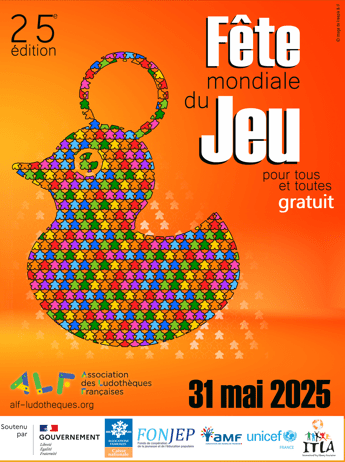
Observed across multiple countries, including Germany and France, this annual event promotes child-friendly environments and policies that support play. In Germany, Weltspieltag is led by the German Children’s Fund, while France’s Journée Mondiale du Jeu encourages families and communities to embrace play in daily life.
Each year, local authorities in the Republic of Ireland organise events that celebrate children’s right to play, supported by the Department of Children, Equality, Disability, Integration and Youth. The initiative aims to create accessible, high-quality play experiences for children across Ireland.
First celebrated in 2024, this global event was created to promote play as a fundamental right. The 2025 theme, “Choose Play – Every Day”, calls for a shift in attitudes to ensure play is prioritised in childhood policy, urban planning, and education systems.
Tickets are on sale for the Play in Education, Development, and Learning (PEDAL) Conference 2025, celebrating 10 years of research into play and early childhood development. Aptly titled “Playing for the Future: 10 Years of PEDAL”, this one-day event on 11th June 2025 promises to bring together leading minds from research, policy, and practice to discuss the past, present, and future of play.
PEDAL was established in 2015 with a donation from the LEGO Foundation. Based at the University of Cambridge’s Faculty of Education, PEDAL is dedicated to unlocking the true value of play through world-class research. The Centre’s work focuses on understanding how play impacts children’s development and learning, developing innovative programs to support families, schools, and communities, and influencing policy and practice to improve children’s lives globally. PEDAL also trains the next generation of play researchers, fostering a global network of experts committed to advancing the field
Meet the speakers:
Risky Play: Ellen Beate Hansen Sandseter explores the benefits of thrilling play for children’s development.
Next 1000 Days: Dr. Catherine Draper shares insights from South Africa on early learning and executive function.
Crisis Support Systems: Dr. Nikhit D’Sa discusses activating home, school, and church networks in Haiti.
Inclusive Play: Dr. Julian Grenier emphasises play’s importance for underserved communities.
Future of Play: Bo Stjerne Thomsen reveals why play drives creativity and resilience.
Workshops and panel discussions to be announced.
Attendees will have the chance to engage in insightful workshops and networking opportunities, exploring innovative ways to ensure inclusive and valued play for future generations.
The event will take place at the Faculty of Education and the Mary Allan Building in Homerton College, Cambridge. Tickets are priced at £20, covering lunch and refreshments. Wheelchair access, hearing loops, and quiet spaces available.
Spaces are limited, so secure your place today to join the conversation and contribute to the future of play!
Steven has been immersed in playwork since 1983, working on adventure playgrounds in Exeter, Cambridge, and York. He now serves as a trustee of Play Torbay, managing two adventure playgrounds: Indigos in Brixham and Wildfox in Paignton.
For those who have not had a chance to read the whole document, the report says:
“Adventure playgrounds can be particularly effective in encouraging children and young people into natural spaces, and we have received a wealth of evidence specifically about their importance and how they can differ from the typical ‘local playground’. We are planning to hear more from adventure playground practitioners ahead of our final report publication in June”
There will also be a follow up to the Mentimeter survey trialled by Sereena Keymatlian (Haringey Play Association) at Eastbourne with questions her playworkers wanted to ask delegates about current practice; with an opportunity to ask your own question in real time.
Plus, latest news on the insurance survey, mapping adventure playgrounds and the design of a potential survey on adventure playground funding.
Don’t forget to put future dates in your diary. All dates can be found on the Network’s dedicated webpage playwork.foundation/apn.
If there is something you would like to raise with the Network, or (like Steven) you would like to chair a Network meeting or present on a topic, you can contact our dedicated inbox: apn@playwork.foundation.
London playworkers and play advocates are invited to gather at Martin Luther King Adventure Playground this Friday 14th March, from 11:30am, for the next London Adventure Playground meet-up organised by London Play.
The event aims to foster collaboration and offer an opportunity to share stories in a friendly setting. Located at 3 Sheringham Rd, London N7 8PF, MLK adventure playground has recently reopened, so this will also be an opportunity to have a look around.
The event is free to attend and offers a valuable opportunity for those interested in the future of play in London.
Agenda:
11:30 AM: Arrival and hellos (Tea/coffee available)
11:40 AM: Welcome by Fiona Sutherland, London Play
11:45 AM: Swings and roundabouts (Group speed networking session)
12:15 PM: MLK and play in Islington by Simon Rix, Islington Play/MLK
12:45 PM: 2025: A pivotal year for play? by Fiona Sutherland, London Play, and Sereena Keymatlian, Haringey Play
1:05 PM: AOB (Wrap up, next steps)
1:15 PM: Light lunch/networking and playground tour
This event promises to be an enriching experience for anyone passionate about play and its future in London. Don’t miss out on this opportunity to connect with like-minded individuals and explore new ideas for enhancing play in England’s capital.
For this and more London Play news, check out the Spring edition of London Playwire.
The Playwork Foundation are back in Eastbourne for the National Playwork Conference for England 2025. Here are some of the extracts from our annual Eastbourne Bulletin, so you too are in the loop!
Talking politics because it’s necessary
Looking out from the Cavendish Hotel to the English Channel, our thoughts may turn eastward to Ukraine, where the Russian invasion has entered its third year, or to Gaza, where conflict continues to devastate countless lives.
Or, our thoughts may drift westward, across the Atlantic, where a new President resides in the White House.
Or, in Wales, your thoughts may cast ahead to the 2026 general election, when boundary changes, a new voting system, and more Members of the Senedd will likely shift the political landscape.
But, that’s all just politics. Right?
To me, playwork is inescapably political. We advocate for the rights of others. We consider the broader social and economic contexts where we advocate for play, and then we contend and collaborate to secure it. If we succeed, we stand guard. Eternal vigilance is the price of liberty, so they say.
Inspired by the words of another political figure from across the pond, my message for this conference (if I might be so bold) is this:
We must use our power; we must organise, mobilise, educate andadvocate. Our strength flows from our faith in each other, and our refusal to surrender to cynicism.
Not because it is easy, but because it is necessary. Not because victory is guaranteed, but because the fight is worth it.
The Playwork Foundation will continue to do all we can to support playwork, playworkers and play whenever we can across these isles and the wider world – you can too by joining today (it’s free!).
Our thanks to Meynell and his team for curating and coordinating another incredible conference. We hope you all enjoy your time in Eastbourne – please come and say “hello”!
Siôn Edwards, Chair
Calmer with Starmer? Or just playing it safe
This time last year, things could only get better. Then, on 5th July, Labour formed the new Westminster Government.
So, is it all Teletubbies and Cool Britannia (a la ‘97) for children and young people now? Here’s what Starmer has got over the line so far:
A watershed for junk food advertising on TV
Energy drinks age-restricted to 16+
Single headline judgementsof schools in England scrapped
There have also been strong commitments in terms of budget or policy for:
Free breakfast clubs in every primary school in England
A new National Youth Strategy for England
Additionally, there has been collaboration with the Scottish Government, Welsh Government, and Northern Ireland Executive to:
Ban the sale of tobacco to anyone born after 1st January 2009
Restrict the sale of vapes
Whilst you’d be right to ask “Where is play and playwork?” in all of this, progress has been made to push them onto the Westminster agenda:
In December 2023, Play England celebrated a win from their manifesto: namely, the recognition of “formal play spaces” in the National Planning Policy Framework for England.
Then, in January 2024, Play England supported Tom Hayes MP to secure a Westminster Hall debate on the provision of playgrounds by local authorities in England. This discussion also expanded into areas such as the importance of free play, adventure playgrounds, and the role of playworkers.
Furthermore, Play England have made submissions to the Children’s Wellbeing and Schools Bill Committee, the State of Play Inquiry and played a key role in the Raising the Nation: Play Commission (hosted by the Centre for Young Lives).
The Playwork Foundation supports Play England’s campaign for Play Sufficiency legislation and a new National Play Strategy for England.
Adventure Playground Network
The Adventure Playground Network is a collaborative venture to connect “people who make play” at adventure playgrounds – including playworkers – to discuss issues affecting the sector, and to shape the agenda for future meetings.
Each meeting is led by a different person with the support of The Playwork Foundation.
From our earlier meetings, we have several existing working groups leading on areas of work, including:
Adventure Playground Insurance task and finish group
The Network is also the focus of a recent paper from Dr. Mike Wragg (School of Health, Leeds Beckett University) in the International Journal of Play entitled “Encouraging state of playwork in the UK”:
Talking about what we do has always been vital for playworkers. We do so daily with our teams, and, if we are lucky, at events like the National Playwork Conference.
During lockdown, Trustee Penny Wilson, of AssemblePlay and author of The Playwork Primer fame, organised informal gatherings to help playworkers navigate a world without playwork. These evolved into Playwork in Progress, a regular, open Zoom meeting for playworkers worldwide to share and learn.
Penny continues to chair these free, weekly online reflective practice sessions on behalf of The Playwork Foundation most Fridays from 3pm.
In October 2024, Karen Benjamin and Trustee Helen Stephenson kicked-off our pilot series of free webinars on play and playwork for the out-of-school (OOS) sector with a session entitled What is Play?.
We have now run eight sessions, on topics including: the role of the playworker, the play cycle, play types, loose parts, play environments, risk and intervention styles.
Trustee Ali Wood and former Trustee Karen Benjamin at launch of The Playwork Foundation (Photo courtesy of Adrian Voce).
In A New Beginning for Playwork, Adrian Voce describes The Playwork Foundation’s origins at a 2013 meeting convened by Bob Hughes and Professor Perry Else, which concluded “a fully independent playwork practitioner body” was needed.
In 2017, The Playwork Foundation launched at Goldsmiths, University of London.
Today, we announce our next chapter as we transition in the coming months from a Foundation model Community Interest Organisation (CIO) to an Association model.
This change means our members will have a direct and democratic influence on our work and ambitions. To be the first to know when this will launch, join us for free by visiting playwork.foundation/join.
Other news
Club Central Conference In October 2024, Trustees Helen Stephenson and Anne-Marie Mackin delivered a “Playful Play Spaces” workshop at the Club Central Conference.
We also sponsored the Play Setting of the Year award at the Out-of-School Club Awards. Congratulations to winners Marble Hill Adventure Playground!
The Right Way In October 2024, our Chair, Siôn Edwards, attended the launch of “The Right Way” – a framework from the Children’s Commissioner for Wales to help public bodies integrate children’s rights.
We’ll also be joining the panel for the Commissioner’s next event: A Wales for All Children, focusing on engagement with disabled children and those with additional learning needs.
National Play Conference Trustees attended Play Wales’ national play conference in November 2024.
Out-of-school (OOS) Network Following the success of our OOS webinars, we will be piloting a series of online networking sessions in the autumn 2025 term. These will be led by Trustee Anne-Marie Mackin, an OOSC Manager based in Scotland with 30 years of experience.
The aim of these sessions is to be a relaxed space to share ideas and issues.
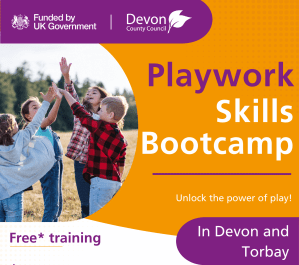
Playwork training Following on from our work with Devon County Council to develop playwork training for HAF providers, The Playwork Foundation have recently developed playwork training to accompany a pilot Playwork Skills Bootcamp currently being run in Devon and Torbay.
















 The Playwork Foundation