A one day conference in Eastbourne on 19 November, hosted by Community, Youth and Play Workers in Unite will feature a discussion about the emerging Playwork Foundation led by Adrian Voce of the new body’s steering group, under the heading ‘Do we need a professional identity and if so how do we develop it?’.
Under the theme of ‘identifying risk and building resilience‘ the conference will ‘offer a range of seminars, expert panels and workshops facilitated and delivered by key professionals in the field, and the wider youth and play sector, that will identify, explore and offer new insight into some of the more complex and challenging issues that professionals and the children and young people that they work with face. The event will provide delegates with an excellent opportunity to discuss and debate the key issues and challenges faced in delivering a high quality service that provides children and young people with the best possible start in life’.
For full details please visit the conference homepage here
Tomorrow, 3 August, tens of thousands of children and young people from across the United Kingdom will be out playing, celebrating Playday – the national day for play, when hundreds of local and regional play events are taking place to promote the importance of children’s right to play.
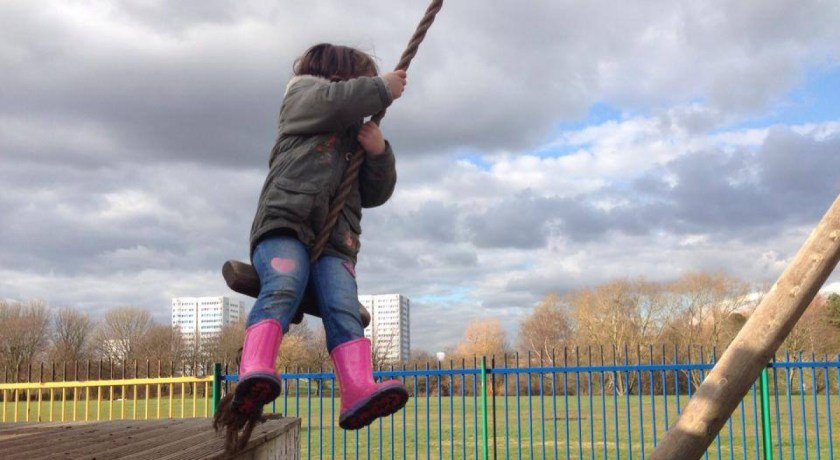
This year’s Playday theme, ‘Play Matters…’ celebrates the many benefits of outdoor play: climbing trees, making dens, jumping in puddles, making mud pies, rolling down hills, playing with water, chasing, hide and seek, climbing.
Playday national coordinators, Play England, Play Scotland, Play Wales and PlayBoard Northern Ireland issued a statement, saying:
“It will be no surprise to learn that when children talk about their preferred play experiences, they more often than not cite outdoor play as their favourite activity. This makes sense; the outdoors is the very best place for children to practice and master emerging physical skills. Frequent and regular opportunities to explore and play in the outdoor environment are essential for children’s … well-being, health, happiness, learning and development”.
To mark this year’s Playday, publishers Routledge, part of the Taylor and Francis Group, have made a selection of play-related academic papers and articles available free of charge for the duration of August. Visit their site here to view the selection.
About Playday
Playday was originated by a small group of playworkers in London in 1986 as a response to threatened cuts and closures to adventure playgrounds and play schemes (Plus ca change!)
It has become the national day to celebrate children’s play in the UK, traditionally held on the first Wednesday of August. As well as a coordinated annual event, Playday continues to be part of the campaign to highlight the importance of play in children’s lives and their right for this to be provided for within the public realm.
In this adapted re-blog from the First Discoverers website, Adrian Voce discusses the language of disability and suggests that attitudes and understanding, more than institutional terminology, are the key to supporting all children equally.
Working with children who are deemed to have ‘Special Educational Needs’ or ‘disabilities’ (SEND), and their families, can, especially to the inexperienced practitioner, be a minefield of seemingly innocuous, everyday terms that are, depending on the audience, either out-dated, inappropriate or simply offensive. David Williams has commented on the First Discoverers site that ‘different agencies will explain the difficulties of children with SEN in markedly different ways’. Some, such as psychiatrists … even distinguishing between normal and abnormal groups of children: language that in other professions, such as social work for example, is no longer acceptable. This can present a dilemma for playworkers wanting to use the right language.
Even the officially sanctioned terminology can seem unhelpful to some families. A few years ago when I was developing proposals for a local Parent Partnership Scheme under the SEN Code of Practice, the consultation that I carried out with parents revealed some quite stark disconnects between the institutional and professional language deployed in this area, and ways that parents and their children spoke about what they were looking for in the way of a response to the many challenges they faced.
‘Our children’s needs are exactly the same as other children’s’
– parent of a child with ‘SEN’
One of the most profound pleas was from the mother of a child with language and mobility impairments who told me that even the label ‘special educational needs’ was both patronising and undermining. ‘Our children’s needs are exactly the same as other children’s’, she said. ‘They are only special in the sense that every child is special’. Describing their educational needs as ‘special’, she felt, made it seem that they were asking for more, when all they want is the same opportunities as everyone else.
And so, with even the official, overall term for this group of children proving controversial, how should we navigate this terrain safely, without stumbling into the ‘misunderstandings’ or ‘inhibit(ed) communication’, that Williams says is all too common? I have some suggestions:
1. Forget the idea that there is a ‘group’ of children that ‘has SEND’ (and another group that does not)
The term SEN (or SEND) has its origins in education policy (Warnock, 1978) and educational institutions, which have developed a means of categorising children to allocate additional or different resources to their learning. Thus the term is not describing something that is intrinsic to the child; it is a label that only has meaning in relation to how the education system responds to him or her.
Whether or not a child ‘has’ SEN(D), therefore, is really an illogical consideration. What we really mean is, does this child qualify for this additional support? This may – and does – change: over time, in different institutions and according to different education policies. And of course, outside of the education system the term SEN has no real meaning at all. Children all have educational needs, and they are all special. Whether they will get more or different support in school or not is really quite arbitrary.
2. Understand and adopt the social model
This approach to the term SEN may seem like splitting hairs, a pedantic or – dare I say – overly ‘PC’ approach; until we consider the social model of disability, and find that the question of what is intrinsic and what is relational, permeates the entire experience of disabled people.
I use the term ‘disabled people’ advisedly here because the majority of organisations run by disabled people themselves prefer it. They have adopted the social model of disability, as – now – have many other disability charities, such as Scope. In the social model, people are disabled by attitudes and environments that discriminate against them. They may have impairments of various kinds – such as sensory, language, learning or mobility impairments – but how disabled or enabled they are is a result of how society responds.
Disability is relational, not intrinsic
For example, I am quite considerably short-sighted, a relatively minor but still significant visual impairment. Am I disabled? No, society has made it easy for me to adjust; my glasses are affordable and readily available. Were this not so, driving, watching television, catching a bus, going to the cinema or even identifying people in the street would be beyond me. I would, to a degree, be disabled. So do I ‘have a disability’? No. Disability is relational, not intrinsic. It depends on how society responds to my impairment.
People with various impairments are not intrinsically disabled, any more than children with different challenges at school ‘have’ SEN. It is the medical model of talking about them, which conflates impairment with disability, that construes it this way by placing the disability with the person, not with society’s response to him or her. Why does this matter? Because it tends to have the insidious effect of letting society off the hook; abnegating our responsibility to ensure equal rights and opportunities for everyone.
The social model of disability is one of the cornerstones of disability equality training, which is recommended for anyone working with children.
3. Be child-centred
Sometimes misinterpreted to mean ‘letting children have their own way’, the child-centred approach, in fact, creates a space in which children are better able to feel what they feel, take responsibility for it and find the best response. In clinical psychology, the person-centred approach originated with the American psychologist Carl Rogers (1951), who found, in his extensive study of service men and women with Post-Traumatic Stress Disorder, that certain qualities in the clinician or therapist were more important to the outcome of counselling than the particular practice or methods they deployed. These qualities were what Rogers called ‘unconditional positive regard’, ‘presence’ and ‘congruence’. Being non-directive, accepting, present and authentic, in other words, counted for more than any particular therapeutic technique in creating the opportunity for patients to heal and recover. Playworkers will recognise these qualities as being also a key to fully applying the playwork principles.
being child-centred means that you will always see, respect and respond to the individual child – not the abilities or impairments they may have
How is this approach relevant to working with disabled children? Because being child-centred means that you will always see, respect and respond to the individual child – not the abilities or impairments they may have or the labels they may have been given – and so create a space in which the child may find their own strength, creativity and purpose; choose their own play.
Truly inclusive projects and services are not simply those that admit the widest range of children, but those that respond to each one as the unique and special person that they are. Get this right, and the language will tend to take care of itself.
Adrian Voce
Adrian Voce is the author of Policy for play: responding to children’s forgotten right. A former playworker, he is also an experienced ‘special needs’ assistant, parent partnership worker and inclusive play trainer.
References
Rogers, Carl (1951), Client-Centered Therapy: Its Current Practice, Implications and Theory. London: Constable.
Warnock, Baroness, Mary, (1978), Special Educational Needs: Report of the Committee of Enquiry into the Education of Handicapped Children and Young People (The Warnock Report), London: HMSO.
In this adapted version of an article originally published in the International Journal of Play, Adrian Voce places the establishment of the Playwork Foundation in its historical context, and suggests that such a vehicle for practitioners is an essential development if playwork is to overcome its current challenges
Playwork is an approach to working with children in inclusive, open-access spaces, ideally free of charge,[1] within services that depend to a large extent on state funding. The inexorable squeeze on such resources since 2010 is therefore the unavoidable context for our work, as it is for so much public and voluntary sector activity in the age of austerity. The recent announcement of Watford Borough Council to close the town’s only two adventure playgrounds, and the redundancy of yet more playworkers, is just the latest such attack on our field, and sadly will not be the last.
Originally, as it emerged on the adventure playgrounds of the 60s, 70s and 80s, playwork was a local, grass roots response to the growing need of urban children to have their space to play protected and supported within increasingly dense, spatially deprived inner city neighbourhoods. Voluntary action would lead to fundraising to employ staff and acquire tools and other resources, but sustainable finance needed longer-term funding streams and although many of the adventure playgrounds in which playwork developed were – and still are – independently managed by local charities, they have long depended upon local authority grants and (more latterly) contracts for the lion’s share of their usually meagre funds.
“Playwork services have rarely been a high priority for local authority funding in their own right”
Rarely a high priority for local authority funding in their own right (Cole-Hamilton and Gill, 2000) and with no proper statutory basis, playwork services during the 90s tended to become increasingly overshadowed – and in many cases annexed – by the National Childcare Strategy, as the government made a priority of subsidising not just nursery schools for the children of working parents, but before and after-school care for their primary-aged children too.
Thus, playwork eventually became part of the growth in state provision for children and families that had its apogee in England in the New Labour Government’s Every Child Matters policy (HM Treasury, 2003) – although it was not until the subsequent Children’s Plan (DCSF, 2007), and its promise of a national play strategy, that ministers fully embraced the principle that ‘enjoy and achieve’ did not simply mean doing well at school. The devolved Welsh government had by this time already adopted a rights based national play policy that would lead in time to a ground-breaking statutory play duty on local authorities.
“Brown (2008) … hailed a ‘moment of optimism’ for the play movement”.
In the Foundations of Playwork, Brown (2008), noting the arrival of the national Play Strategy (DCSF/DCMS, 2008), which ‘for the first time in a government document … saw importance given to the role of playworkers’, and no doubt reflecting also on the developments in Wales, hailed a ‘moment of optimism’ for the play movement. As a pioneer in higher education for this emerging profession, he will have been especially encouraged by the Play Strategy’s commitment to create 4000 new playworkers, including ‘a core of professionally qualified new graduate leaders’ (DCSF, 2008b).
There were reasons to be cheerful, too, about the ‘Play Pathfinder’ programme which was to create 30 new staffed adventure playgrounds within top-tier local authorities, whose key strategic staff would also be trained and challenged to develop the crosscutting local play strategies that would aim to transform the public realm for children by embedding playwork perspectives within the planning and commissioning processes for both children’s services and playable, child-friendly public space (DCSF, 2010).
“playwork was in the vanguard – in England as it had also been in Wales – of the movement that led to the adoption of this ambitious vision by the national government”
The Play Strategy was a 12-year plan, underpinned by an initial investment of £235m for the first three years, to ensure that every neighbourhood in England offered ‘a variety of supervised and unsupervised places for play, free of charge’ and that the wider public space was welcoming, safe and attractive for children and their play. The influence of the fixed-equipment playground sector notwithstanding[2], playwork and its allies were in the vanguard – in England as they had also been in Wales – of the movement that led to the adoption of this ambitious vision by the national government, and had the strategy been sustained for its full duration, could look forward to the prospect, as Brown had anticipated, of becoming an increasingly important part of the children’s workforce.
How things have changed. The Children’s Rights Alliance for England (2015) has reported that ‘children’s play has been a casualty of the austerity drive (as) councils have disproportionately targeted play services for cuts, with many long-standing services and projects closed and the land redeveloped’. CRAE attributes this decline – which it very conservatively[3] quantifies as an overall reduction of 54% in funding for play by local authorities between 2010-14 – directly to the Conservative-led coalition government abandoning the Play Strategy after barely two years, and dropping play from ministerial portfolios altogether for the first time since the early 80s.
“UNCRC (2016) has decried the ‘withdrawal of a play policy in England and the under-funding of play’ across the UK.”
Apart from the large scale reduction in services that these figures represent, the Cameron government, as CRAE also notes, has ‘withdrawn recognition of playwork in out-of-school care’, leaving many children effectively in school – or under equivalent ‘arrangements’ – for up to 10-hours a day. Since CRAE’s report, the UN Committee on the Rights of the Child (2016) has itself decried the ‘withdrawal of a play policy in England and the under-funding of play’ across the UK.
Where this leaves playwork, certainly in England, is without the policy, funding or regulatory frameworks that create the demand for it. The unexpected Conservative victory of May 2015 augured no respite, whatever the Children’s Play Policy Forum (2015) may have hoped for in the way of ‘support for staffed play provision to test social prescription models for … health and well-being initiatives’. Whether the new government of Theresa May will signal a sufficient change of economic policy to offer some respite, or even hope, to the beleaguered play sector remains to be seen, but there will not be many in our field who view the coming, Brexit-dominated months and years with eager anticipation. Only seven years after Brown’s ‘moment of optimism’, playwork, in England at least, would appear to be in something of an existential crisis.
How should we respond? This was the question earnestly put by the independent researcher and theorist, Bob Hughes and the late Professor Perry Else, when they invited others in the field to a summit at the University of Sheffield Hallam in the summer of 2013. Hughes and Else called their meeting ‘The Argument for Playwork’ and suggested that our main problem was that we had not yet conveyed – or possibly even fully-formed – a cohesive and convincing narrative of what playwork is for, what it can do for children, or why this should be important to society.
“…the meeting in Sheffield wondered whether the greater hindrance to playwork’s survival might be not so much the lack of an agreed or convincing story to tell, as the absence of a proper vehicle through which to tell it”.
Coming from two such leading lights, men who had each done so much to define playwork as an emerging profession[4], this was a sobering reflection. When not debating the relative merits of evolutionary, developmental and socio-cultural perspectives on play, much of the two-day event was spent considering this credibility gap. Others at the meeting in Sheffield, however, wondered whether the greater hindrance to playwork’s survival might be not so much the lack of an agreed or convincing story to tell, as the absence of a proper vehicle through which to tell it.
Dating back to Lady Allen’s pioneering work of the 50s and 60s, playwork was central to the broader movement for children’s right to play in the UK that eventually led to the big policy advances of 1998-2008. Included in these were the establishment of a vocational training and qualifications framework and higher education courses in playwork, but in spite of this, there has not been a sustained practitioner body since the profession first began to emerge.
In England, the various national play bodies, culminating in Play England in 2006[5], had seen themselves as advocates for children’s right to play in its broadest sense, as defined by article 31 of the UN Convention of the Rights of the Child. Staffed provision was just one among several areas of public life and public services where advocates sought to influence change in favour of children’s right to play (Play England, 2006).
Furthermore, until very recently, the national play agencies in England have tended to be part of larger organisations, with broader remits than children’s play, such as the National Playing Fields Association or the National Children’s Bureau (NCB). Even the development of a recognised training and qualifications framework – which many saw as the key to defining playwork as a profession – while relying heavily on input from playworkers (or playwork trainers and service managers), was led not by an emergent professional body but by an employer-led agency, Skillsactive, licenced by the government to standardise workforce development for the sports and outdoor leisure sectors.
An attempt in the 2000s to create a practitioner-led national body for playworkers – in part to give playworkers themselves a greater voice in this activity – was short-lived. The Playworkers Association, founded in 2002, discovered that what its members most needed from organised action was pressure for better terms and conditions. It consequently joined the Community and Youth Workers Union en masse. When CYWU merged with Unite the Union, this led to the creation of a playwork convenor there and the Union now campaigns against government cuts to playwork services and jobs (Unite the Union, 2013). Skillsactive (2013), for its part, has launched the Register of Playwork Professionals: to reassure parents: that ‘staff are appropriately qualified’; to regulate their adherence to National Occupational Standards; and to ensure their maintenance of on-going professional development.
Photo: Meriden adventure playground
All things being equal, unionisation and a national register of qualified practitioners could each be seen as milestones in the progression of playwork towards better recognition; steps, perhaps, on the way to its full professional status. Yet, especially in the context of the scarcity of funding and the absence of policy or regulatory drivers for services, each of these developments must be considered in the context of the greater challenges: not how to accredit qualified playworkers, or secure them greater rewards, but how to make the case for their very existence.
This logically leads to another big question: who is best placed to make that case? Neither the professional register at Skillsactive, or the playwork membership at Unite the Union, are ultimately governed by practitioners (or advocates, or trainers) of playwork. One of the conundrums of the English play and playwork movement has been its failure to take control of its national vehicles and thus, ultimately, of its own destiny.
The Children’s Play Council (CPC), which transformed into Play England with the injection of strategic lottery funding in 2006, was never an independent body, operating instead as an alliance of other agencies, convened and hosted by one of its original members, NCB. As CPC, and then Play England, became increasingly successful, NCB took ever-greater control. When Play England then asserted its independence, voting to become a separate charity in 2010 (whilst a £15m lottery grant, partially awarded for the purpose, still had a year to run), NCB resisted: fearing, no doubt, for its own future after losing several government contracts. It would be a further four years before a hugely diminished Play England was able to announce its full independence from NCB, the lottery millions dedicated to the creation of a strategic, long-term support and development infrastructure for sustainable play provision (BIG, 2006) long since dissipated.
first priority emerging from the discussions was for any new body to be ‘fully independent of other agencies, owned by and accountable only to its members’.
When the Sheffield summit convened by Else and Hughes led to a series of open meetings to consult on the need for, and the viability of a potential ‘new vehicle for playwork’ it is perhaps, then, no surprise that the first priority emerging from the discussions was for any new body to be ‘fully independent of other agencies, owned by and accountable only to its members’. The need to agree and communicate a clear and cohesive narrative of playwork also featured highly, as did consistency with the established Playwork Principles. But what the playwork community most seems to want from a national body is a representative, collective voice: raising the status of playwork, campaigning for it and influencing policy that would be conducive to its growth 95 per cent of those responding to a survey by the steering group formed to develop the idea thought such a body were needed, while 96 per cent said they would join it.
With such a mandate, albeit couched in some strong caveats – most particularly that any new body should add to and not undermine or compete with existing national bodies in any of the home nations – the work to create a vehicle for playwork continues. Unlike the years culminating in the Play Strategy of 2008, there is now no government (or indeed any other) funding for such a venture and the work is therefore slow, dependent upon the spare time of people working elsewhere. It is progressing, nevertheless, and there is a strong sense that if the lack of financial or infrastructure support is the early price to pay for independence, then it will be a price worth paying.
Leaving aside the embryonic development of a new, independent vehicle for playwork – a small, as yet barely flickering light amidst so much gloom – there is another, perhaps even more pertinent sense in which the state of playwork in 2015 may not be as fragile as the policy and services landscape would paint it. This has to do with the playworker’s role as advocate for children’s play and the influence that this has, which may now be seen far beyond the adventure playground, and in many places other than the UK.
Although playwork’s origins go back several decades earlier, it was the UN Convention on the Rights of the Child (CRC) of 1989 that galvanised the movement to seek proper public support for its work: to pressurise government bodies to act and make resources available. According to the UN itself, the CRC ‘marked the transition from addressing children’s immediate needs through charity alone … towards advocacy (for) systemic change for the realisation of (their) rights’. The Playwork Principles demand that playworkers, as well as making space and supporting children in their play, also ‘act as advocates for play when engaging with adult led agendas’. They assert that ‘the primacy of the play process should inform this advocacy in the policy, strategy and training arenas’.
“advocacy work by the playwork community is a consistent and important thread throughout the development of play policy, not just in the UK but internationally”.
This advocacy work by the playwork community is a consistent and important thread throughout the development of play policy, not just in the UK but internationally. The distinguished academic of children’s rights and children’s geographies, Professor Roger Hart (2015), describes playwork as the ‘uniquely British profession that understands children’s daily lives out of school – their play, their culture and the spaces that best afford it – better than any other’. Who better than playworkers, then, to advocate for children’s right to play?
It is no accident that much of the work leading to the UN’s General Comment on Article 31 (UNCRC, 2013) was done by British academics (Lester and Russell, 2013), steeped in the playwork tradition. Playwork is currently inspiring a revitalised play movement in the US (Leichter-Saxby, 2015) and Australia (Armitage, 2015). Playwork projects are having an impact in troubled places of the world as diverse as Romania (Brown, 2012) and Iran (Milne, 2015); and seeds are being sown across several Eastern European countries through the Volunteers in Playwork (VIPER, 2015) project of the University of Gloucestershire’s Playwork Partnerships,
Closer to home, the pioneering legislation of the Welsh Government, placing a statutory duty on local authorities to assess and provide a sufficiency of play opportunities for their children, is relying to a large extent for its implementation and evaluation on methodologies and criteria developed by the playwork community, which, as in England, was also at the heart of the campaign to secure the policy that made it possible.
The playwork voice is an alternative one to the ‘dominant discourse,’ (Lester and Russell, 2008) wherein improving the child’s future life chances, as measured through long-term projections of her earning capacity or health and disease patterns, is considered the primary, sometimes the sole, objective of child policy, whilst the child’s ever-present, deeply instinctive desire to be freely expressed, to ‘play and to dream’ (McKelway, 1913) is at best trivialised, at worst conceived as a pathology.
Our experience as a community of practitioner-advocates working, as far as our national collective efforts in England have been concerned, within (or ‘under the aegis’) of organisations happily aligned to that prevailing paradigm is perhaps analogous to the experience of many children. We owe it to them, and to ourselves, to champion the alternative. If we can maintain a perspective on the current challenges that places them within the context of a global downturn and a political response to it that is depriving whole swathes of the public and voluntary sectors of oxygen – not just us – we may find that when there is again sufficient air to breathe, the world will be more receptive to our cause than it has ever been. The Playwork Foundation is conceived to enable us to be ready, when that time comes, to take best advantage of it.
Adrian Voce Note: This article is written in a personal capacity and does to necessarily reflect the views of the Playwork Foundation.
[1] Perry Else broadly defined good play provision by the ‘Three Frees’: 1) it is free of charge; 2) it offers freedom of choice; and 3) children are free to come and go. The Big Lottery Fund adopted these rules of thumb as the headline criteria for eligibility under its Children’s Play Programme in England (2006-11).
[2] Uncalled for by the playwork community or by Play England, which led the lobby and would have preferred a more gradual period of investment based on the pathfinder pilot studies of how best to adopt new design criteria (Play England, 2008), the first phase of the strategy included £1m for every top-tier authority in England to build a total of 3,500 new play areas by 2010-11. The scale – and timescale – of this capital investment, the Playbuilder Programme, as well as itself being rather too hurried to allow for the innovation that was called for, also tended to overshadow other, arguably more important, strategic elements such as the Playshaper Programme, which aimed to embed play principles within planning, traffic, housing and other key local authority functions.
[3] A closer reading reveals that this figure is derived from the only 32 councils who responded to a Freedom of Information request – and of these three had reduced their play spending to zero. A more accurate figure for the reduced spending on play – including all those authorities who presumably do not even have anyone left to field the enquiry – is therefore likely to be considerably higher
[4] See, for example, Hughes’ Evolutionary Playwork (2001) and Else and Sturrock’s ‘Colorado Paper’ (1996).
[5] Play England, like its predecessor, the Children’s Play Council, was not, in fact, an independent charity but operated ‘under the aegis’ of the National Children’s Bureau until 2014, when it finally acquired full independent status.
Brown, F. And Taylor, C., Eds, 2008, Foundations Of Playwork, Maidenhead: Open University Press.
Brown, F, 2012, Playwork, Play Deprivation, and Play: An Interview with Fraser Brown, American Journal of Play, volume 4, number 3.
Children’s Play Policy Forum (CPPF), 2015, 4 asks For Play (campaigning pamphlet), London: CPPF.
Children’s Rights Alliance for England (CRAE), 2015, UK implementation of the Convention On The Rights Of The Child: Civil society alternative report to the Committee on the Rights of the Child, England, London: CRAE
Cole-Hamilton, I. And Gill, T., 2002, Making The Case For Play, London: Children’s Play Council.
Committee on the Rights of the Child (CRC), 2013, Article 31: General comment no. 17 on the right of the child to rest, leisure, play, recreational activities, cultural life and the arts, adopted 17 April 2013, available from: http://www2.ohchr.org
Department For Children, Schools And Families (DCSF), 2007, The Children’s Plan: Building Brighter Futures, London: The Stationery Office
Department for Children, Schools and Families (DCSF) / Department for Culture, Media and Sport, (DCMS), 2008, The play strategy, London: Crown Copyright
Department for Children, Schools and Families (DCSF), 2010, Embedding the play strategy, London: Crown Copyright
Hart, R., 2015, in Voce, A., Policy for Play, Bristol: Policy Press.
HM Treasury, 2003, Every Child Matters, London: Crown Copyright
Lester, S. and Russell, W. (2010) Children’s right to play: An examination of the importance of play in the lives of children worldwide. Working Paper No. 57. The Hague, The Netherlands: Bernard van Leer Foundation
McKelway, A, 1913, Declaration of dependence by the children of America in mines and factories and workshops assembled, in H.D. Hindman, 2002, Child labor: An American history, New York: M.E. Sharpe
Milne, J. (2015) An adventure playground for Halabja: Halabja Community Playground Project, Northern Iraq, in Journal of Playwork Practice: Second issue.
The steering group for the new Playwork Foundation has met for a two-day residential workshop to develop its plans and resolve outstanding administrative issues associated with the organisation’s imminent launch.
The meeting, on 5-6 July, made substantial progress towards establishing the body as a new charitable organisation, and on its first programme of work. The steering group also reaffirmed its commitment to engage with other national play organisations to explore potential collaborations, ensure the foundation’s work is complementary to existing activity and avoid possible duplication.
More details of the Foundation’s plans will be published soon on this site.
An adventure playground will open in the heart of New York City this May. play:ground, a local voluntary organisation will open a 5,000 square foot play space on Governors Island where children can imagine a world of their own making and experience self-directed play. Modelled after the original junk playgrounds, the adventure playground will let children shape their environment using an assortment of materials, tools, water, dirt, and up-cycled ‘junk’.
Photo: play:ground
At the Governors Island adventure playground, instead of shiny metal slides or swings, children might build their own forts from wood pallets and hay bales, they might manage a see-saw out of planks of wood, or a trampoline from old tyres that lands them in a pile of mud. All this happens under the watchful eyes of trained playworkers – staff who are on hand to provide assistance when requested, but otherwise stand back and let the children take the lead.
In a news release, play:groundsaid:
‘Today in New York, young people experience a tightly managed urban landscape, with rare access to spaces belonging entirely to them. Where are kids free to self-organize, or independently create from their imaginations? play:ground encourages a sense of freedom and permissiveness not found in most of the city’.
“I feel free at adventure playgrounds. You’re the one who builds the playground.”
– Oliver, 7.
Reilly Wilson, co-founder of play:ground and PhD candidate/NSF Graduate Research Fellow in Environmental Psychology at The Graduate Centre of the CUNY said:
“You can’t go to your normal neighbourhood playground and start tying stuff onto the playground structure, or start drawing on things with markers. You definitely can’t start nailing things to the playground structure”.
In addition to free public hours, play:ground will offer summer camps and school visits. Beyond the space on Governor’s Island, play:ground will continue providing local outreach through its on-going initiative — play:ground in the park.
Based on the Pop-Up Adventure Play model, play:ground in the park brings loose parts (e.g. boxes, fabric, found objects, art materials) to parks around the city, installing temporary play spaces for all.
play:ground launched its $25,000 kick-starter campaign with a deadline of March 30th, to help cover the starting costs including materials, fencing, and playworker staffing for Spring/Summer 2016.
Steering group announces new vehicle for playwork will soon be open for business.
The steering group formed to develop plans for a new representative vehicle for playwork has agreed a name and a legal structure for the new body: The Playwork Foundation, and is applying for it to be registered as a new charity.
The proposed objects, part of the constitution of the new body, will be:
‘To advance and promote education, for the public benefit, in children’s play and playwork, in particular but not exclusively by: providing information; raising awareness; facilitating discourse; carrying out research; and building capacity’ within the field of playwork’.
The new playwork foundation is almost ready to launch. Photo: Meriden Adventure Playground
The steering group said that it expects the new body’s trustees to be guided by its founding aims and principles, which were developed through a series of open meetings and mailings from 2013-15. The idea of a new body was raised at a summit meeting in Sheffield, called by Bob Hughes and the late Perry Else to discuss the future of playwork and how it could better make its case.
A survey of the playwork field in 2014-15 found that more than 94 per cent of those responding welcomed the idea of a new vehicle for playwork, and said that representing playworkers, raising the profile of playwork and campaigning for playwork services should be its top priorities.
In an email to prospective members, the steering group said it expected the foundation’s activities to be initially “modest” but that it will, nevertheless, “be open for business” once Charity Commission registration is complete. It intends to “engage fully in the national discussions and debates that are most relevant to our field –offering a platform for the playwork community to do the same”.
The steering group presented its plans at the national Playwork Conference in Eastbourne in March 2016 and wants to encourage the playwork community to get involved and make use of the new vehicle.
The Playwork Foundation Steering Group is:
Simon Bazley Karen Benjamin Jeff Hill Barbara McIlwrath Simon Rix Adrian Voce Debbie Willett Ali Wood
For further information about joining the Playwork Foundation please click here




 The Playwork Foundation