Playwork foundation launches at London event

The Playwork Foundation was launched as a membership organisation at a special event in London last week.

The Playwork Foundation finally opened for business last week at a special launch event in London.

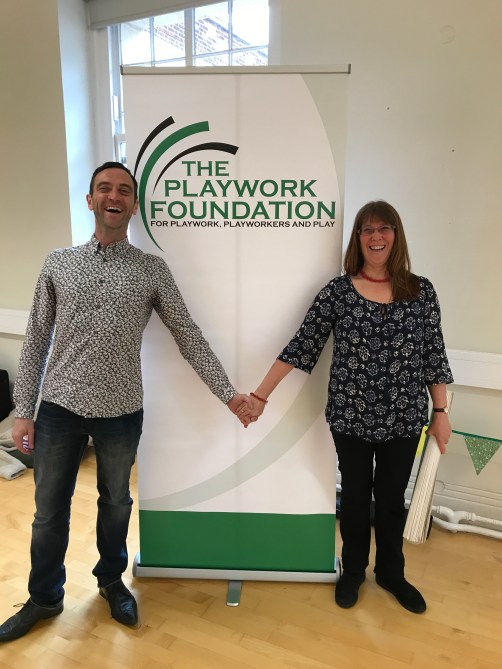
Board members Ali Wood and Karen Benjamin, experienced playwork trainers, writers and consultants, introduced the event with a review of the foundation’s development, which began at a meeting called by Bob Hughes and the late Professor Perry Else at the University of Sheffield Hallam, in 2013.

Wood and Benjamin said that an extensive consultation with the field had found overwhelming support for a new vehicle for playwork and had established some clear aims and principles.
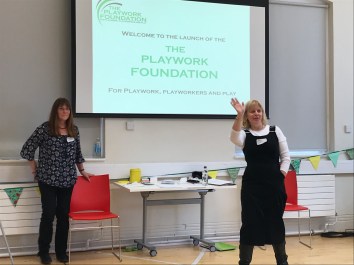
Development

They said that, although slow because of the lack of resources, the development work had been proceeding steadily to this point. The new body has a charitable constitution, adopted by a board of trustees, and is awaiting registration. It has a website, a list of potential members and has developed a dialogue with national bodies in each of the four UK nations. The time was ripe, they said, to launch a membership scheme as the next significant milestone.

UNIQUE

Among the guest speakers at the launch event, held at Goldsmiths University of London, was Professor Fraser Brown of Leeds Becket University, who welcomed the launch and spoke about what makes playwork unique, illustrating each quality with a story in his inimitable style. Professor Brown said the playwork approach ‘actively resists dominant and subordinating narratives and practices’. Playworkers, he said, practice non-judgmental acceptance of children, holding them in ‘unconditional positive regard’, akin to the approach of person-centred counselling as developed by Carl Rogers. He said playwork offers children flexible environments, in which to afford them opportunities for the fullest possible range of play types.

entreaty

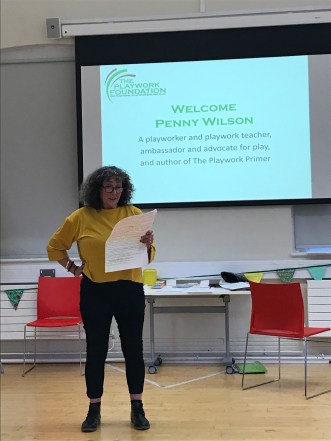
Penny Wilson, the London-based playworker and author of The Playwork Primer greeted the launch of the new body with a lyrical and impassioned entreaty from the field, reflecting the discourse at the recent adventure playground conference in Bristol.  Wilson said the field wants ‘an organisation that is tailor made – like playwork is  – a bespoke design with enough strength in its warp and weft to be responsive and resilient, to be able to meet and greet the unpredicted; an organisation that is play literate and promotes play literacy’.

INDEPENDENT
Adrian Voce, author of Policy for Play, and a member of the foundation’s board, spoke about the need for the playwork field to create its own vehicle, after previously seeing its support structures hosted or controlled by organisations with wider remits – and for whom play would only ever be a priority when it was in favour with government or brought in extra funding.

Quoting Labour Party leader Jeremy Corbyn, Voce said it was a mistake to believe that the decline in playwork opportunities was long-term. He said the period of austerity should be seen as an opportunity to re-group, stronger and wiser than before, ready to take the case for play and playwork into the next election campaign. He suggested that we need to now move quickly given the volatility of the political situation.

Meynell spoke about the longer-term history of playwork development, and previous incarnations of the national movement. He hoped the new organisation would help to revive the field after the decline of the austerity years.

Although modest in scale, many of those attending said the event – and the new body – felt like something they could identify with and belong to. Others said it was a significant moment in playwork’s history.

Time will tell.

More details of the different presentations, including a full transcript of Penny Wilson’s speech, will be made available soon.

WITH THANKS TO GOLDSMITHS UNIVERSITY OF LONDON, WHO HOSTED THE EVENT FREE OF CHARGE

JOIN THE PLAYWORK FOUNDATION HERE

The Playwork Foundation Board is

Simon Bazley (pictured, top)
Karen Benjamin (inset, right)
Barbara McIlwrath
Tanny Stobart
Debbie Willett
Ali Wood (pictured, top and inset left)
Adrian Voce
Playwork Foundation membership launch – 8 November

Wednesday, 8 November 2017
1.00 – 4.30 pm
Goldsmiths, University of London, SE14

Free, with refreshments

Room number RHB 300
Goldsmiths College
New Cross
London, SE14 6NW

 Speakers include

Professor Fraser Brown, Penny Wilson, Adrian Voce and Meynell

The Playwork Foundation is launching a membership scheme. To mark the occasion, this event is an opportunity to hear different perspectives on the playwork field and its challenges. There will be round-table discussions about the importance of the profession, its future and what is most needed from a new membership body.

The Playwork Foundation is being created as a membership body for the playwork community, offering playwork practitioners, trainers, students, researchers and others:

  • A collective voice to raise awareness about the value of play and playwork
  • A platform to promote and debate issues that affect playwork
  • A strong, credible representative vehicle to make the argument for playwork to policy-makers, the media and the world at large
  • A network for mutual support, dissemination of research, and sharing good practice.

 Please join us! To reserve a place email kbenjamin@glos.ac.uk

The Play Cycle 20 Years On

 In 1998, Gordon Sturrock and the late Perry Else presented a paper at the IPA International Play Conference in Colorado, Canada.  The paper was titled ‘The playground as therapeutic space: playwork as healing’, later referred to as ‘The Colorado Paper’ and introduced the Play Cycle to playwork theory.

In the last twenty years, elements of the Play Cycle (such as ‘play cues’, ‘play return’, ‘play frame’ and ‘annihilation’’) have entered into common use within the playwork sector, and appear in training and education , text books  and underpins professional playwork practice.   The aim of this exploratory study is to investigate understandings and applications of the Play Cycle within the playwork field over the last 20 years.

This study is open to anybody who is currently involved in playwork but must be aged 18 years or over. The research will be undertaken by Dr Pete King from Swansea University and Shelly Newstead (UCL IOE). For more details about the study, please contact Pete at p.f.king@swansea.ac.uk or 01792 602 314.

To take part in this study please click here

The questionnaire can be completed online using a computer, tablet or phone. The study is open from Wednesday 20th September to Friday 1st December 2017.

Thanks,

Dr Pete King.


‘Youth vs. the world’

playfreenyc

Like so many, Meriden Adventure Playground, in the West Midlands, is having to fight a rearguard action to preserve even its meagre level of funding. It faces an uncertain future; something not lost on its young users.

These include a girl called Misha, who earlier this week delivered this message, via the playground staff, to the adult world.

I am your future, I am your forgotten youth.

I am the friend you played kirby with. I was your secret keeper, your companion, climber of trees, jumper of brooks, the mischief-maker, the person that defended you, the one that held your hand.

I am youth, I am you.

You cut our clubs and you make places disappear, you disregard our fun and bring us fear.

Communities ignore us, governments use us, we are just tools to be abused. The media shows lies to sell papers. The government tells lies to gain votes, while the youth are left powerless without any hope.

Who will be our hero, who will be our voice, what will we do if someone doesn’t make a noise when we try to stand up for ourselves? We only get pushed back down.  

“You cut our clubs and you make places disappear, you disregard our fun and bring us fear”

Why do you hate us? What have we done for you to treat us this way? You say you only want the best for us, but without asking us you don’t know what we want, what we need.

Instead you assume you know what’s best and when it all goes wrong, who do you blame? Us.

We never seem to please you, everything we do is wrong one way or the other. We try so hard but you only see us for the bad. What is your problem with us? Why are we being moaned at for being ourselves?

We go out not to be criticised but to have fun. Who cares what we look like, who cares about what you think you see. The inside is what matters.

I have a dream that one day we will all be seen as equals.

Misha
(aged 11)


Withdrawing qualifications is another blow to playwork

Play England has reported that CACHE (Council for Awards in Care, Health and Education) has closed its Level 2 Award and Certificate, Level 3 Award and Level 4 Award and Certificate qualifications to new registrations. The other main awarding organisation, City and Guilds are also now only open for registrations of full Diplomas at levels 2, 3, and 5, although they are still offering the Level 4 Award. All of these qualifications, for both awarding organisations, are only available for registration until November 2017.

According to Play England, these qualifications, vital to the growth of a professional playwork sector for two decades, no longer fit within the Regulated Qualifications Framework (RQF) that replaced the former Qualifications and Credit Framework (QCF) under the Coalition Government.

Under the RQF, the ‘stepping stone’ awards and certificates, which could previously lead incrementally to full diplomas via the credit system, is being phased out. Thus, when existing qualifications come up for renewal, unless they are suitable for conversion to the new framework they are being withdraw, in spite of many playworkers and their employers preferring the modular approach.

Prospects

But the prospects of playwork in England adapting to this new context are affected by a funding squeeze. With registrations for playwork qualifications declining because of a dearth of available finance, awarding organisations are finding it harder to make the business case for the development of new ones. At a roundtable meeting at the National Playwork Conference in Eastbourne last week, co-hosted by Play England and the Playwork Foundation, it was agreed to lobby CACHE and City and Guilds, to extend registration of the level 2, 3 and 5 qualifications beyond the end of the current year. The two organisations have written to the awarding bodies and are encouraging playwork trainers and employers to do the same.

Nicola Butler, chair of Play England, says: ‘Playwork is a highly skilled job. Parents, playworkers and employers all want the playwork profession to have the training that is needed for the job, but while most playwork employers would like to be able to invest more in professional development of their workforce but are prevented from doing so by the lack of public funding’.

So what are the reasons for this decline in the playwork sector after so many years of growth? One factor is the partial de-regulation of the school-age play and childcare sector. Since September 2014, there has been no statutory requirement for out-of-school clubs and holiday play-schemes to employ staff with ‘full and relevant’ childcare or playwork qualifications. (Over-8s and open-access providers have never been required to register).

Cuts

At least as significant as the change in regulatory requirements has been the effect of cuts to local authority play services, which in many places have been withdrawn altogether.  A 2014 report showed that capital and revenue spending on children’s play by England’s local authorities from 2010-13 fell by 50% and 61% respectively and it is clear that deep cuts have continued.

Many believe that playwork is now in something of an existential crisis, certainly in England. 10 years ago, the first phase of a 10-year national play strategy included funding to qualify 4,000 playworkers and a new graduate level qualification for playwork managers. Since then, the government has, according to the Children’s Rights Alliance for England, ‘undermined’ children’s right to play by abandoning the play strategy and not having a minister with responsibility for play policy for the first time since the 1980s; a situation that remains, in spite of the calls for a wide ranging national play policy by an All Party Parliamentary Group on children’s health in 2015.

What does all this mean for children? Most obviously, vital play services such as staffed adventure playgrounds (where playwork originated) are being closed. In some places these are being replaced with fixed equipment play areas, as in Watford; in others, such as Battersea Park, children can now indulge in ‘tree-top adventures’ for between £20 – £38 a session, where they used to play for free on structures that they had helped to build. Wendy Russell of the University of Gloucestershire estimates there only 150 traditional adventure playgrounds remaining in Britain, compared to around 500 at their peak; and with the erosion of playwork training and the on-gong pressures on funding, she has called those that remain an ‘endangered species’.

Extended schools

Less apparently, but perhaps even more significantly (certainly for larger numbers of children) the removal of a requirement for qualified staff means that children attending after-school and holiday play services – not voluntarily, let’s remember, but because their parents need to work – are now much more likely to be supervised either by classroom assistants or staff with no training at all; often on school premises.

When Labour introduced the concept of ‘wrap-around’ services as a key development of its ‘childcare revolution’, it was quick to distance itself from the term ‘extended schools’; but what the abandonment of playwork practice as the benchmark for quality in out-of-school provision means for many children, is that they are now effectively in school for up to 10 hours a day.


 A New Playwork Apprenticeship

The one area of potential growth for the playwork training sector is apprenticeships. The government is introducing an Apprenticeship Levy, although most small centres are not eligible for this funding unless subcontracted by larger providers. On this point, the Playwork Foundation is concerned that a high proportion of the few larger centres offering playwork apprenticeships employ trainers and assessors who are ‘not occupationally competent’.

A group of playwork employers has submitted an expression of interest to develop a new Playwork Trailblazer apprenticeship, which aims to: enable employers to access playwork apprenticeships; clarify what they should cover; develop the skills needed for quality playwork provision; and reinforce that they need to be delivered by trainers and assessors fully competent in playwork.

Adrian Voce

An edited version of this article was published in Children and Young People Now on 14 March 2017

This article is about playwork qualifications in England. For an overview of the situation in Northern Ireland, Scotland and Wales read this

Adventure playgrounds are too important to consign to history

Eran at Glamis

A variety of recent projects in the arts, heritage and academic sectors have taken adventure playgrounds as their theme, bringing welcome attention to this important part of the UK play scene. However, cautions Adrian Voce, it would be a mistake, and a missed opportunity, if the surge of interest were to be predominantly nostalgic or historical.

Over the last year or so, adventure playgrounds in the UK seem to have become the subject of wider than usual attention far beyond the usual play and playwork sectors. In truth, this swell of interest is around an accumulation of separate projects and initiatives, which have each either come to fruition, or have been launched, with attendant publicity, around the same time.

Perhaps the most high profile of these, certainly in terms of popular culture, is no less than a brand new stage musical. The Lockleaze adventure playground in Bristol, known locally simply as ‘The Vench’, is both the subject and the setting for an original new comedy-musical, described by the Bristol Post as ‘a wildly funny and vivid new production about a miscreant group of Bristolian misfit teenagers who come together to build an adventure playground’. Junkyard will open on 24 February at Bristol’s Old Vic theatre.

Sharing memories

The Vench was also one of a number of adventure playgrounds in the West of England cities of Bristol and Gloucester, recently mined by researchers for the memories that they have inspired and bequeathed to their local communities. Sharing Memories of Adventure Playgrounds (SMAP) was a research project of the University of Gloucestershire (featured recently on these pages here) that beautifully conveyed, through an exhibition, a film and a short report, the unique role that places like the Vench can play in the lives of successive generations of communities, and the value they hold for neighbourhoods where there may not otherwise be much that children can call their own.

Elsewhere in England, researchers and curators at the Queen Mary, University of London and the V&A’s Museum of Childhood respectively are also collaborating on an exciting new initiative on the social history of London’s adventure playgrounds. Adventures in the City: the politics and practice of children’s adventure play in urban Britain, 1955–97 is a funded PhD project that began last year and will culminate in a new, interactive, permanent exhibition (an adventure playground, one presumes – as much as such a thing is possible within this context) at the museum’s popular Bethnal Green site in East London.

One hears of other doctorates that have identified adventure playgrounds and their history as a subject ripe for researching (e.g. Shelly Newstead’s paper at Child in the City 2014). There are other artistic ventures too. Mark Neville’s recently opened exhibition of photographs on the theme of ‘Child’s Play’ chooses adventure playgrounds as the setting for what it describes as ‘play in free space’. Neville juxtaposes his commanding images of children very much taking their space in some of London’s adventure playgrounds with those of children in less sympathetic contexts: the ‘structured space’ of school, and the ‘oppressed space’ of war and poverty.

‘Fulfilling childhood’

2015 saw the release of a short documentary film by Erin Davis ‘about the nature of play, risk and hazard’ set in The Land, an adventure playground in North Wales. ‘The Land’, as the documentary is also called, was described by Hanna Rosin in The Atlantic as a film that ‘will change everything you think you believe … In scene after natural scene the truth becomes obvious: With a little bit of creativity, empathy and guidance, children can be freed to experience a much more fun, adventurous and fulfilling childhood.’

This kind of exposure and recognition for a form of provision that perennially struggles on meagre budgets and – with some rare exceptions – little support from their local authorities, can only be welcome. It is important too, that both academia and the heritage sector are taking adventure playgrounds seriously as the subject of both research and cultural archive.

img_3779Nevertheless, play advocates may also feel a little uneasy that so much of this attention is from an historical perspective. It is more than implied in this approach that adventure playgrounds today, if not quite anachronistic, are certainly an ‘endangered species’, as Dr. Wendy Russell acknowledged at the launch of the SMAP project last month. She estimates that there are no more than 150 remaining in the UK – and that not all of these are necessarily adventure playgrounds in the original sense of the term – compared to more than 500 in their 70s heyday.

Sense of community

Exploring the reason for this decline needs an article (or a PhD!) all to itself, but as Mark Neville’s exhibition and its accompanying book assert, Erin Davis’ film so eloquently conveys and the children past and present of Bristol and Gloucester’s adventure playgrounds say for themselves, the unique experience of playful community that is given to children in a proper adventure playground, is too vital to be merely the subject of a museum piece.

These supported spaces to play – with materials large and small, with the elements, and with the full spectrum of human curiosity, invention, and interaction – protected from the future focused, outcomes-obsessed world of adult-laid plans and rules for them, enrich the lives of the children who attend them. That this is in ways that are difficult to measure within the reductionist outcomes frameworks now routinely applied to public services should not, but inevitably often does, make it difficult to make the case that modern Britain needs more, not fewer adventure playgrounds.

We must hope that, far from ushering them towards the door marked ‘cultural artefact’, researching the history of adventure playgrounds, exhibiting them in museums and celebrating them through the arts will alert a new generation of advocates, policymakers and funders to their unique value to children and communities now.

Adrian Voce

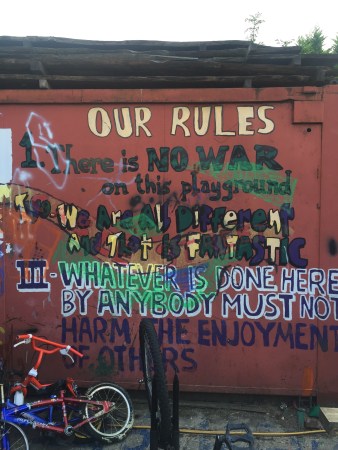
Photos: Eran at Glamis Adventure Playground in 2016, and Glamis’ rules, by Adrian Voce

*this article’s final two paragraphs were edited for clarity on 23 February.

Sharing memories of ‘endangered’ adventure playgrounds

The University of Gloucestershire has launched the report, and a short film, of its Sharing Memories of Adventure Playgrounds (SMAP) research project. The project worked with adventure playgrounds in the cities of Bristol and Gloucester to gather memories of those involved – as children, staff, families and communities – over their history, in order to explore their value; but the project also shines a spotlight on the decline in the number of UK adventure playgrounds, and their ongoing insecurity.

Adventure playgrounds are a specific form of play provision generally catering for children aged 5-15 years of age, with local variations. Their received history tells how they were first introduced into the UK in the late 1940s by Lady Allen of Hurtwood after her visit to the junk playground in Emdrup, Copenhagen. These facilities sprung up in urban spaces left by wartime bombs, using waste materials, tools and the permissive supervision of a playworker to create spaces where children could build play structures, make dens, use tools, have fires and generally engage in outdoor play. Largely developed and run by voluntary organisations, such seemingly anarchic and chaotic spaces were welcomed by the authorities as an effective response to the rise in delinquency amongst working-class boys.

Over the last 70 or so years, these playgrounds have had a chequered history. At times adventure playgrounds have been well funded because of their perceived social and economic benefits (instrumental value), at others less so. Alongside this, the ethos and practices of adventure playgrounds in the UK have both affected and been affected by the zeitgeist, theory and social policy paradigms. From an estimated 500 in operation across the UK in the 1970s, their decline to less than 150 today (many of which no longer operate wholeheartedly according to the original principles) has been attributed to a number of socio-legal changes, including the Health and Safety at Work Act 1975, the Children Act 1989, the introduction of out of school childcare and now unprecedented public expenditure cuts.

‘Critical cartography’

This trans-disciplinary project held events at each of the playgrounds and recorded these using video, audio and the work of artists. It was funded by both the Being Human and Sport, Exercise, Health and Wellbeing Research Priority Areas at the University of Gloucestershire. It drew on concepts from post-qualitative research methodologies, memory studies, geography, philosophy and policy. It aimed to develop a ‘critical cartography’ as a different way of articulating the value of adventure playgrounds that can be used to inform future policy.

There is plenty of evidence showing the benefits of play for children, but less showing the benefits of play provision. What does exist tends to show the instrumental value of adventure playgrounds and playwork in terms of its capacity to address social policy concerns such as reducing physical inactivity and obesity, crime reduction, or community cohesion. These are important, and at the same time the desire to show measurable benefits in this way obscures other ways of expressing value. The creative methods we used looked to show how much these spaces mattered to those involved.

“Adventure playgrounds are an endangered species”

Dr. Wendy Russell

At the launch of the SMAP project, with an exhibition at the University’s Oxstalls campus on 27 January, the Mayor of Gloucester, Councillor Neil Hampson highlighted the huge value of the city’s adventure playgrounds to successive generations of local communities and decried the austerity policies that was placing them at risk. Dr. Wendy Russell, for the research team, said they were an ‘endangered species’, which needed to be documented while they were still in existence.

Adrian Voce

Illustration: Mick Conway (from original artwork produced for the project)
Photo: Bristol Daily News

As well as the exhibition, the project has produced a film, which can be viewed here and a short report, available here. If you would like to host the exhibition, please contact the research team at smap@glos.ac.uk.


Tags: 

Back to the (possible) Futures of Playwork

In 2007-8 there was an ambitious project to engage the playwork field in a dialogue about its possible future, and the structures it might need to get there. Here, Adrian Voce, who, as Play England’s director, initiated the project, and Dr. Pete King, who has researched it, introduce Dr. King’s 2015 paper about the initiative, which we are making available free of charge for the first time today[1].

The idea of a practitioner body for playwork is not a new one. After its origins in the adventure playground movement of the 60s, 70s and 80s, playwork during the 1990s and especially the 2000s saw some significant developments towards what might be called professionalisation.

The growth of out-of-school childcare in the 90s had led to increased numbers entering the field, and increasing interest from government. The establishment of national occupational standards, training and qualifications frameworks and workforce development strategies – all underpinned by specific definitions, assumptions and values (now articulated in the Playwork Principles) – were a response in part to a government challenge, famously laid down by culture secretary Chris Smith; but they were also indicative of the growing need for playwork to adopt the kind of structures that would enable it to become a recognised profession. How to manage this growth – in numbers and recognition – whilst protecting the integrity of the field and its practice within a world dominated by measurable (primarily educational) outcomes, was the big question.

‘How to manage growth, whilst protecting the integrity of the field and its practice within a world dominated by measurable (primarily educational) outcomes, was the big question’.

Aiming for the voice of the playworker to be central to these developments, the Association of Playworkers (England), formed in the early 00s, was short-lived. With terms and conditions for a perennially undervalued workforce proving to be the top priority, the association closed around 2004, recommending that its members join the Community and Youth Workers Union[2].

Without its own practitioner organisation, the role of advocating for and representing playwork beyond union activity fell largely[3] to organisations with broader agendas. Thus, in England, the Children’s Play Council, and then (after 2006) Play England, was a champion for playwork services, but only as part of its wider remit to campaign for children’s right to play in general. Even this was subject to the constraints of being dependent upon a larger ‘umbrella’ charity, the National Children’s Bureau (NCB), with its primary interest in the more established children’s services. Similarly, the sector skills council, SkillsActive’s remit was for a much wider sector than playwork, representing employers from the outdoor sports and leisure industries.

‘The idea was to provide a number of platforms for the field to explore questions of its own identity, purpose, values and aspirations; providing a framework … for the field to conceive its own model for a professional body’.

Perceiving professionalisation in general, and the question of a potential independent practitioner body in particular, to be crucial issues for the field at a time when public investment in it was on the rise, Play England, with the support of SkillsActive and the JNCTP (Joint National Council for Training in Playwork) initiated the ‘The Possible Futures for Playwork’ project and asked the late Professor Perry Else to lead it for us. The idea was to provide a number of platforms, beginning with a large ‘world café’ event, for the field to explore questions of its own identity, purpose, values and aspirations; providing a framework, or so we thought, for the field to conceive its own model for a professional body.

Pete King takes up the story….

In 2007, like many others, I was combining play and playwork practice with my own academic interests. At that time I was developing play both operationally and strategically in a West Wales Local Authority and, having finished a Research Masters in Play and Playwork, was developing a PhD proposal. So when Perry Else sent out a call for some ‘ideas papers’ to contribute to the ‘The Possible Futures for Playwork’ project, it seemed like a good opportunity. A total of 23 papers were submitted and made available to a dedicated on-line discussion forum. My own paper (no. 2) did contribute to my PhD, but, as with most research studies, by the time my thesis was completed in 2013, my interests had developed into new areas.

The original Possible Future project had included plans for at least one more World Café event but for a number of reasons (Voce, 2015) this did not take place. I had always wondered what happened to the 23 ‘ideas papers’ and had a niggling sense of incompletion about the project, which had seemed to finish without closure. As I started to re-read them, along with the work that Perry had done to introduce the project, I wondered whether or not the kinds of futures we imagined for playwork in 2007 and 2008 would still be relevant. As I read them, It dawned on me that I was engaged in research. Although they were only 8 years old, I decided to treat the papers as historical texts, representing contemporary perspectives of playwork at that time. I began to undertake a thematic analysis of the papers, considering the contextual factors pertaining when they were written.

The result was a paper published in the Journal of Playwork Practice in November 2015. The Possible Futures for Playwork project: a thematic analysis, concluded with some provocations aimed at stimulating a new discussion about playwork’s future.

A free version of the paper is available here. The discussion is over to you.

Adrian Voce and Dr. Pete King

With thanks to Eddie Nuttall, for keeping the idea alive and showing us where the original papers were to be found, and to Shelly Newstead, for agreeing to make Pete King’s paper available here.

[1] With thanks to the Journal of Playwork Practice, who first published the paper.

[2] There were exceptions, such as the Joint National Council for Training in Playwork and Bob Hughes’ Play Education, for example, who each in their different way had important roles in advancing the playwork approach.

[3] This move led to playwork becoming a distinct part of the union’s membership, with its own convenor. CYPW, as it became known, is now part of Unite, the Union.

References

Voce, A (2015) Policy for play: responding to children’s forgotten right, Bristol: Policy Press.

How to start an adventure playground

(Reblogged from https://playeverything.wordpress.com)


playeverything's avatarPlay Everything

There are some questions about adventure playgrounds that we at Pop-Up Adventure Play get asked a lot.

“What about liability insurance?”

“Who pays for these places?”

“Are they really safe?”

And, our favorite:

“How do I open one??”

When people ask this, flushed with new excitement, it’s worth taking a moment to step back and rethink the question.  On the one hand, we want to see as many adventure playgrounds as possible.  We’re thrilled to be part of this new wave of interest in adventure playgrounds, and to be helping those new sites with their staff training.  But more importantly, we want all adventure playgrounds to be great adventure playgrounds.

And that comes down to staffing.

Great playworkers can make the most of a site that is frankly crap, while uptight or apathetic playworkers can ruin the richest of environments.  We all share a burden of anti-child, anti-play education…

View original post 423 more words

Play Wales calls for sector response to proposed changes to playwork qualifications

The national body, Play Wales is calling for a strong response from the playwork sector to proposed new qualifications in Health and Social Care, which includes playwork.

Qualifications Wales, which published its review of the qualifications framework in July, is proposing to restrict the number of qualifications approved for funded training programmes in Wales, a move that would, according to Play Wales, weaken playwork training.

Play Wales isconcerned that … the Playwork Principles would be diluted by incorporation into a single suite of qualifications’.

In its draft response to the proposals Play Wales states that the proposed changes will ‘impact negatively on the current strategic direction in which playwork qualifications are being developed’. The draft response goes on to say that Play Wales is ‘concerned that the underpinning ethos of the National Occupational Standards (NOS), namely the Playwork Principles, would be diluted by incorporation into a single suite of qualifications’.

Play Wales believes that whatever decision is taken in Wales ‘could, in the longer term, have an impact on the playwork sector throughout the UK’ and urges the playwork community to respond.

Play Wales’ draft consultation response can be read here and the organisation welcomes comments, to help inform its final response, by email to workforce@playwales.org.uk by 28th September 2016.

Play Wales has also invited others to use its draft and final response, when published, as a basis for submitting their own response to the Qualifications Wales consultation, which closes at 6.00pm on 5th October 2016.