Nominations sought for Annual Playwork Awards

A message from the National Playwork Conference

It is all go for nominations to the

Annual Playwork Awards 2018

These awards set out to celebrate all that is good about the playwork sector. We aim to praise the work we do by identifying people and organisations who have made a noticeable contribution and difference to the lives of those they work with.

The 2018 Awards ceremony will take place at the National Playwork Conference in Eastbourne on Tuesday 6th March 2018.

There are six award categories for 2018:

  • Paul Bonel Memorial Award
  • Training Award
  • Playwork in other contexts
  • Frontline Playwork Award
  • Development and Support Award
  • Raising the Profile Award

WHO WOULD YOU LIKE TO NOMINATE?

Full information about how to nominate and links to the nomination form can be found on the Awards website: www.playworkawards.org.uk

Further details of the award criteria and the judging panels will also be on the website

Contact information for the Annual Playwork Awards:

c/ Meynell Games: 11 Beachy Head Road, Eastbourne BN20 7QN

Tel: 01323 730500

email: info@playworkconferences.org

Second edition of ‘Reflective Playwork’ published

Reflective playwork

Bloomsbury has published the second edition of the popular Reflective Playwork, by Ali Wood and Jacky Kilvington.

The authors say that the extensive new content means the book is now aimed at anyone – parent or professional – who wants to better understand play from a child’s perspective, and how to support it using the playwork approach.

The publisher says the second edition is ‘full of anecdotes, practical examples and real-life stories of children playing wherever they find themselves, making it a fascinating as well as informative read.

‘It also gives links to new on-line case-studies that enable other professionals to rethink and reflect on using a supportive rather than a supervisory role in their own settings’.

Ali Wood*, co-author of Reflective Playwork, describes the second edition

In a world where we are ever seeking to protect our children and to encourage their educational progress, it is often overlooked that the need for play is as important as the need for food and sleep. Drawing on playwork methodology, theory and practice, this extensively revised new edition of Reflective Playwork recognises that play is a need for all, and seeks to encourage the provision of time and space for all children to freely enjoy its benefits.

This edition has a greater focus on putting playwork theory into practice to address the needs of all those who work with children and play. Using more stories and case studies from real life situations and a wider range of settings including schools, children’s centres, voluntary organisations and play therapy, Jacky Kilvington and Ali Wood help readers identify how to use the playwork approach and engage in reflective practice whoever and wherever they are.

New and updated for this edition

  • Key questions, reflection opportunities and further reading suggestions have been updated to include the latest research, terminology and current concerns for children and young people;
  • An updated glossary highlighting key playwork terminology;
  • A new chapter on playable spaces;
  • A new chapter on applying the playwork approach in other professions in the children’s workforce, and within continuing professional development
  • A wider look at play and playwork across the Western world;
  • A renewed focus on showing links between playwork practice and other types of practice.

*Ali Wood is a trustee of the Playwork Foundation. This article is written in her personal capacity.


Reflective playwork

Reflective Playwork – For all who work with children,  by Ali Wood and Jacky Kilvington, is published by Bloomsbury.


To order a discounted copy visit Meynell Games Books


Reviews for Reflective Playwork

“This new edition strongly validates both children’s play and the reflective practices of adults who support children’s play. But perhaps more importantly, this text is a treasure trove of resources and examples that should resonate with those who teach playwork, those who are students in a field of childhood studies, and just about anyone interested in improving their effectiveness in working with children.”

–  Sue Marie Wright, Professor of Children’s Studies, Eastern Washington University, USA

“This much revised second edition is full of beautiful observations about the daily reality of children’s play, and the challenges facing those who work with children. The authors manage to make difficult concepts accessible, and I especially enjoyed their many reflections all firmly rooted in personal experience.”

–  Fraser Brown, Professor of Playwork, Leeds Beckett University, UK

“If you work with playing children or spend time with them you will be in no doubt that playing is important to children but often bemusing to adults. This book presents a comprehensive range of accessible information on the subjects of play, how we might better understand it, and work with it. If you care about children, you care about play and you should read this book.”

–  Ben Tawil, Senior Lecturer in Playwork, Leeds Beckett University, UK


Fraser Brown’s ‘unique characteristics of playwork’ – a response from Gordon Sturrock

685x400_gordon_sturrock

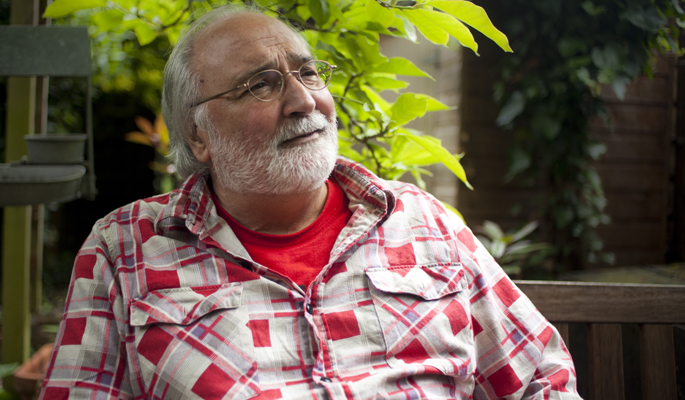
Gordon Sturrock here responds to Professor Fraser Brown’s paper, ‘What is unique about playwork?’, which was based on the latter’s presentation to the launch of the Playwork Foundation in November 2017.

These unique characteristics for our work require some considerable evaluation. For the sake of brevity, I’ll take the final proposition and use it as a focal point for all the statements.

To recap: the final characteristic identified in Brown’s commentary states that playwork requires ‘a continuous commitment to deep personal reflection that manages the internal relationship of the playworker’s present and child-self and the effects of that relationship on their current practice.’

To approach my interpretation I will use, not ‘unconditional positive regard’ (UPR) – a proposed method in Brown’s original piece – but ‘conditional, unconditional positive regard’.

Here lies the difference: the primary usage of UPR is drawn from a context of counselling. It is a therapeutic method from within a broader application and practice. This ensures that the 45-minute, one-to-one encounter of therapist and client can invoke UPR stances, due to the fact that it is set into a supportive framework of reflection, and significant supervisory containment. This operational capacity to reflect is not conditional to practice but obligatory. None of this background has congruence with the demands of our work.

To dislocate the UPR idea by its wholesale adoption as a practice application requires major rethinking of the playwork task. Elsewhere in his piece Brown advances the notion of the ‘selfless’ playworker. This requirement is a behavioural absurdity. Our work should be peopled, and the practice enshrined in the complete immersion of the growth and self-development of the playworker in the interactions with the children in the playspace.

“The absolute uniqueness of our work rests in our reflection”

Throughout these statements there appears to be recourse to reflection as being a concomitant but adjacent responsibility of the playwork task. The absolute uniqueness of our work rests in our reflection, seen as not simply a post-session meditation, but the essential source of our working method. Our reflection is directly active in our encounters with the playing child. Our work is in our consequential but passive interrogation of responses and reactions.

The best motivation for ‘continuous commitment’ in playwork is to ensure that self-development, through insights into the meaning of the children’s play – their interpretive derivations – are seen as allowing similar excursions into the psyches and well-being of the playworker. Without departing into an adjacent argument this is an essentially hermeneutic operational modality.

I find it difficult to accept the need to separate the overall construct of ‘being and becoming’. How do we, in practice, approach this distinction? Wilber insists that ‘the past and future exfoliate out of the present’. What psychic surgery is required to arrive at the offered accommodation?

“we can only approach our encounters with play and playing through our interpretations of meaning”

There is a positional, scopic perspective here, which underlies the statements. This deserves some comments. In some ways it might be most useful to look at it by means of a reversal of the lens. Playwork is entirely participatory. There is immersion in incalculable complexities of operation. This material is abundantly in advance of the therapies more generally. Absent neurological analysis, we can only approach our encounters with play and playing through our interpretations of meaning. It is from the scrutiny of that meaning, its sourcing and our derived translations – the precise overlapping of the self-development of the child and the playworker – that our unique method arises.

As an exercise, were we able to describe our affective analysis of the field’s present state, and apply the same exercise to the plight of the children we are dealing with, we would find considerable consistency and congruence.

There is a further context requiring explication. I believe we have a political obligation that arises from and should be included in our uniqueness of practice. Playwork and its benefits are most actively needed in what we might usefully acknowledge as the precariat.

“we may be the first precariat profession…and should be proud of it”

We work predominantly in precariat environments and habitats. We may be the first precariat profession – irrespective of the major rethinking necessary to a stepping out of traditional career structures and status considerations – and should be proud of it. It is perfectly possible to locate and propagate self-development agendas for the child and playworker as a statement of post-work, political intent.

I believe that the great debate lying at the heart of our practice and its continuance may require us to transcend current interpretations of the task. There is a narrative that could move the field in entirely new directions and dimensions of practice. This may demand of us crucial and farsighted meditations of a deeply personal nature. We have created praxis norms that centre on ‘what does the child get out of playing.’ That coda should now include ‘what do we get’ out of that contact.

Gordon Sturrock

Gordon Sturrock is a playwork theorist and writer. He is co-author, with the late Perry Else, of The Play Cycle: An Introduction to Psycholudics and The Therapeutic Playwork Reader.

Fraser Brown’s paper What is Unique about Playwork? can be read here


Playwork apprenticeship group surveys employers for evidence of demand

The Playwork Apprenticeship Trailblazer Group has issued a survey to assess the demand for the new qualifications it is developing. The group has put out a statement asking employers to respond, which we publish here in full.


ATTENTION PLAYWORK EMPLOYERS

We Need Your Help in developing the Playwork Apprenticeship Standards

The purpose of a Trailblazer Group is to identify the demand and to create an Apprenticeship standard that fulfils the requirements of the sector. The Playwork Trailblazer Group is looking to develop a standard for a Level 2 Playworker qualification in the first instance, followed by a Level 3 Playwork Co-ordinator Apprenticeship Standard.  The Level 2 will be designed for people new to Playwork and who interact with children on a daily basis, and the Level 3 will be designed for those who manage the daily running of a single setting.

These standards are employer-led, meaning we can ensure the qualification is fit for purpose and fully meets our needs. This is our chance to really make a difference to the way Playworkers are trained and to ensure that the training is fully conversant with the Playwork Principles and children and young people’s rights to play.

‘CACHE, the leading sector specialist, are supporting a group of 10 employers with their proposal to develop the Apprenticeship standard for Playwork frameworks.’

The Institute for Apprenticeships will only approve the proposal if there is evidence of sector demand and that the occupation of a Playworker is sufficiently different to other apprenticeship standards such as Early Years or Youth Worker.

We need to gather the views of as many Playwork employers as possible to identify interest in the new qualification and how many apprentices each organization would be likely to employ each year.

We have created a short survey which should only take 5-10 minutes to complete. By doing so, you will be helping to secure the future of Playwork for everyone, so please share your thoughts here

Completing the questionnaire will help us assess demand for the new qualification, shaping the future of Playwork Apprenticeships. Your input is greatly valued and will be vital in securing government funding, so please take a few minutes to complete the survey today.

All completed questionnaires must be in by February 12th 2018.

Thank you!


Playwork Foundation Trustee, Ali Wood, is a member of the Playwork Apprenticeship Trailblazer Group.

For more information about the group and its work please email the joint chairperson Carole Theyer here


Hughes and Sturrock announce Play Ed 2018 

The playwork pioneers Bob Hughes and Gordon Sturrock have invited applications for a new Play Ed event on 2-3 May 2018, at the University Centre in Cambridge. We publish their announcement here

Play Ed 2018
2nd and 3rd May 2018
Where are we now? Is playwork passing into myth?

Dear Colleague,

If, like us, you are concerned about the future of playwork – its philosophical direction, political identity and practical applications, then you may be interested in applying for one of a limited number of places at this event being organised at the University Centre in Cambridge and designed to provide interested parties with an opportunity to discuss and plan for these issues.

The two-day event is free, but travel, accommodation and subsistence will be the sole responsibility of those attending.

Places are open to all with a genuine interest and concern about playwork, but sadly because space is limited, not everyone who applies will be able to participate.

We would be grateful if you would consider applying yourself and if you would also distribute this invitation as widely as you can.

To register your interest, just e-mail Bob Hughes at PlayEd and he will send out further information as it becomes available.

Sincerely,

Bob Hughes and Gordon Sturrock

playeducation@ntlworld.com

What is unique about playwork?

eran-marshmallow-e1513346778660.jpg

At the launch of the Playwork Foundation in November 2017, Professor Fraser Brown described the elements of playwork practice that he identifies as unique within the children’s workforce, using playwork stories to illustrate each point.

He has now followed up his presentation with an expanded paper, which can be downloaded below, while the list of unique elements is set out here:

The Unique Elements of Playwork

A conceptualisation of the child that actively resists dominant and subordinating narratives and practices.

A belief that, while playing, the ‘being’ child is far more important than the ‘becoming’ child.

An adherence to the principle that the vital outcomes of playing are derived by children in inverse proportion to the degree of adult involvement in the process.

A non-judgemental acceptance of the children as they really are, running hand in hand with an attitude, when relating to the children, of ‘unconditional positive regard’.

An approach to practice that involves a willingness to relinquish adult power, suspend any preconceptions, and work to the children’s agenda.

The provision of environments that are characterised by flexibility, so that the children are able to create (and possibly destroy and recreate) their own play environments according to their own needs.

A general acceptance that risky play can be beneficial, and that intervention is not necessary unless a safety or safeguarding issue arises.

A continuous commitment to deep personal reflection that manages the internal relationship between the playworker’s present and former child-self, and the effects of that relationship on their current practice.

Fraser Brown

Read Professor Brown’s full paper: What Is Unique About Playwork

Photo: Adrian Voce


fraser-brown Inaugural

Fraser Brown is the world’s first Professor of Playwork and the author of numerous papers, chapters and books on play and playwork.

He and the playwork team at Leeds Beckett University have contributed a chapter to the forthcoming Cambridge Handbook of Play (Roopnarine & Smith 2018), which will include  a discussion of these unique elements of playwork.


Last chance to complete ‘play cycle’ survey

179974_10151043886721609_215244782_n

There are only three days left before the online survey on the play cycle closes.

All those working in the playwork field are encouraged to complete the survey and contribute to a valuable research project.

Take the survey here.

Thank you!

On behalf of Dr. Pete King and Shelly Newstead

An organisation that reflects who we are

dscf1578

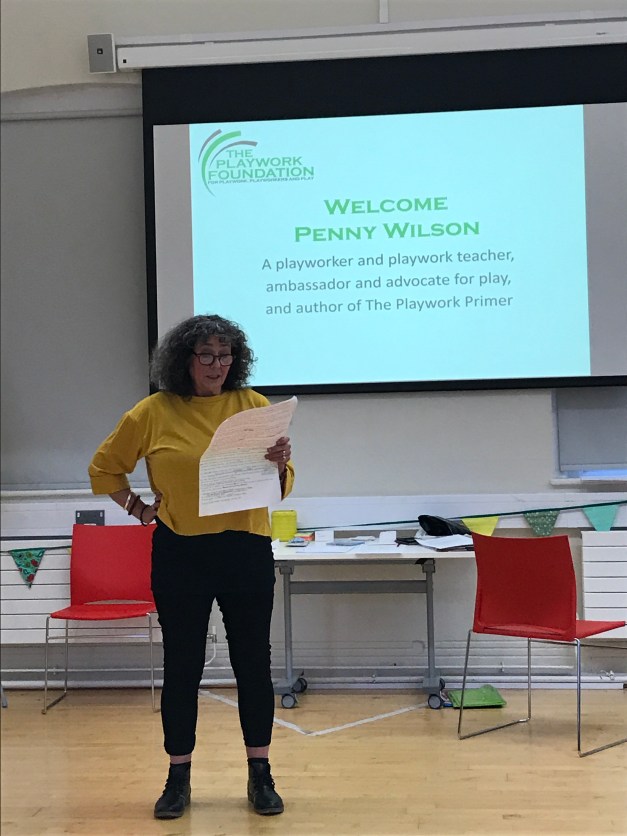
When Penny Wilson was asked to speak at the recent Playwork Foundation launch event, she took her brief seriously; consulting with colleagues and deeply reflecting, both on her practice and on the chequered history of playwork representation. The result was this impassioned entreaty for an organisation that can do justice to the extraordinary work that playworkers do, and live up to the principles by which they stand.


As I was thinking about what I wanted to say today, I did two things.

I talked to fellow playworkers who had been at the recent Felix Road Adventure Playground conference in Bristol and asked what they would like to take from that extraordinary event to share with you. The conversations at Felix Road were some of the best I have ever heard about Playwork and deserve to be repeated here. It was reflective analytic practice at its best. We learned a lot from each other.

The second thing I did was to spend time on the adventure playground where I work, Glamis, just watching the playing of the children and thinking about what I was absorbing as I watched. What I saw there reminded me of the life changing moment when I first met adventure play – what Lady Allen refers to as ‘a flash of understanding’ of the essence of why we do what we do, how we should conduct ourselves … and what we need from the Playwork Foundation.

What follows is a collection of thoughts and quotations drawn from these two experiences.

IMG_2217

We have watched many clips, shared by academics and on Facebook, showing other species at play. We have seen baby fishes playing with an air bubble and through that playing, expanding its experience to discover how this fish body can become a fish being – finding it’s fish world.

We see infant gorillas playing and through the course of that playing reaching a state of complete gorilla-ness. A human child has to play because through the process of playing we become human.

What we do as playworkers is really important.

We are the only people whose work is to pay attention to children’s freely chosen play. And it is magnificent. It is more amazing than anything the adult world has achieved by a billion miles. It is the process by which the universe of the child becomes self aware.

We are the only people with responsibility to hold in trust this unbelievable spectacle – this awesome phenomenon.

We are witnesses to something extraordinary.

A professional child-minder helped me out with this at Glamis yesterday. She said:

‘you would think that I spend all day in play with children, but I can’t. The professional demands put upon me are such that I have to photograph, to evidence everything the child does. Children now automatically stop and pose for a photo to be taken every time they do anything. We are building self-surveillance into them. They live in a panopticon of their own minds. Poor policies are directly harming children.’

What we try for is the lightest of light touches in whichever way we need to intervene in the play of the child. Like a snail recoils and retreats at the salty heat of touch from our fingertips, so can play clench up if we get our approach wrong.

We can’t adulterate, misappropriate, hijack or sell play. We will not use it to teach, to interpret, or to make children fit.

Play is the opposite of sport, which demands a competition to decide the elevation of the fittest, the elimination of the weakest and a strict unquestioning obedience to The Rules (unless of course you are the governing body).

We cannot improve upon it, but playhoods are short and we do have to advocate for it to happen, to improve the microclimate for play, wherever possible. Children cannot do this advocacy for themselves because they don’t know what they have never had and because they are considered to be less than adults, so they remain unheard. To do this we have to be rooted in the community of children. Play is social glue. It is a common heritage.

So we need to be humble, delicate and robust in the service of play – and as bold as Ripley fighting an alien in the advocacy, campaigning and defending of it. 

People have a passion for stargazing, exploring space, watching amazing documentaries about animal life on our planet, hearing about the 100 objects that changed the world. They visit galleries, cathedrals and museums to be in the presence of incredible creations or spine-tingling antiquities, yet nobody, nobody but us sees, everyday, things “more amazing than those by a billion miles.”

We create the time and space in which “children create their own universes in play”.

We are curators of play.

We have seen organisations come and go, ebb and flow. Some thrived and were beautiful and then withered. Some changed, from nurturing parents to cuckoos inhabiting a space which had once supported playworkers, then throwing them out of the nest in order to promote their own agendas.

Some have used play as a commodity to be bought and sold. Others have watered their play provision down to homeopathic levels of dilution. Some have treated playworkers like a glove-puppet, with their hands stuck up our arses, manipulating our mouths so we appear to be saying the words they are speaking.

Some have underpaid us, undermined us, undervalued us. Some have been used by parasite career opportunists for their own advancement. Some have bitched, some have fought duels, some are haters.

Some have just been bullshitters, dickwibbling, asset-stripping cockwombles.

We have become weary and wary. 

We have become Groucho Marxists, not wanting to be a member of any club that would have us as a member. We do not want to be identified under a ‘One Ring To Rule Them All’ set of qualifications which misrepresents play, lobotomises our thinking, neuters our practice, and castrates our passion for our work.

We don’t want play treated like an infantilised mediocrity, reduced to a pulp through the sieve of child development.

We do not want to be identified by a qualification that has no sense of the child as an equal being to an adult (yet capable of far greater creations).

We do not want to be identified by an organisation that deliberately creates a play dependency, when we know deep in our hearts that we are longing for a time when we are no longer necessary because children will be able to play freely without our intervention.

We want …

… an organisation that is tailor-made, as playwork is – a bespoke design, with enough strength in its warp and weft to be responsive and resilient; to be able to meet and greet the unpredicted.

… an organisation that is play-literate and which promotes play-literacy.

Playwork practice can be adapted to almost any situation. A good play organisation – a play foundation – must therefore have play at its core, be founded upon continual Reflective Analytic Practice, be flexible and nimble enough to respond to the unexpected.

It must be rooted in the Playwork Principles.

It must have integrity and honesty.

It must include us all and not lord it over us.

It must be a place where playworkers who are also artists, poets, engineers, scientists, dancers and Grouchos are all at home. ‘We are all different and that is fantastic.’ We are bigger than the sum of our parts.

It should speak our language, our brain language.

It should be a wily, quirky and tenacious advocate for play, sharing our words and images in most excellent ways. It must find fellow organisations with common ground, with similar purpose and nurture a community of like-minders. At a time of new barriers, it should forge new links.

It should be an identity that we are all proud to share.

It should be both a place to find current information, and a safe home for our history.

It should let us question and challenge – and be robust enough to withstand this and treat us the same way. It must be courteous and honourable.

We must trust it.

Its touchstone must be play.

It should support the fiercely proud and determinedly humble curators of play.

It should be our mirror.

It should reflect who we are.


Penny Wilson
Speech to the Playwork Foundation launch event on 8 November 2017.

With thanks to Eddie Nuttall, Ben Tawill, Simon Rix, Amica Dall, Arthur Battram, Sarah the child-minder, and the children of Glamis adventure playground.


JOIN THE PLAYWORK FOUNDATION HERE

cropped-playwork-foundaion-logo.jpg

Playwork foundation launches at London event

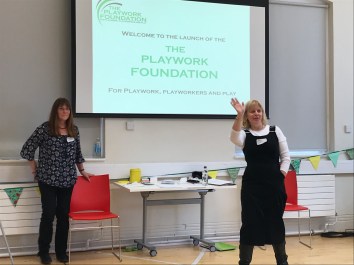
The Playwork Foundation was launched as a membership organisation at a special event in London last week.

The Playwork Foundation finally opened for business last week at a special launch event in London.

Board members Ali Wood and Karen Benjamin, experienced playwork trainers, writers and consultants, introduced the event with a review of the foundation’s development, which began at a meeting called by Bob Hughes and the late Professor Perry Else at the University of Sheffield Hallam, in 2013.

Wood and Benjamin said that an extensive consultation with the field had found overwhelming support for a new vehicle for playwork and had established some clear aims and principles.

Development

They said that, although slow because of the lack of resources, the development work had been proceeding steadily to this point. The new body has a charitable constitution, adopted by a board of trustees, and is awaiting registration. It has a website, a list of potential members and has developed a dialogue with national bodies in each of the four UK nations. The time was ripe, they said, to launch a membership scheme as the next significant milestone.

UNIQUE

Among the guest speakers at the launch event, held at Goldsmiths University of London, was Professor Fraser Brown of Leeds Becket University, who welcomed the launch and spoke about what makes playwork unique, illustrating each quality with a story in his inimitable style. Professor Brown said the playwork approach ‘actively resists dominant and subordinating narratives and practices’. Playworkers, he said, practice non-judgmental acceptance of children, holding them in ‘unconditional positive regard’, akin to the approach of person-centred counselling as developed by Carl Rogers. He said playwork offers children flexible environments, in which to afford them opportunities for the fullest possible range of play types.

entreaty

Penny Wilson, the London-based playworker and author of The Playwork Primer greeted the launch of the new body with a lyrical and impassioned entreaty from the field, reflecting the discourse at the recent adventure playground conference in Bristol.  Wilson said the field wants ‘an organisation that is tailor made – like playwork is  – a bespoke design with enough strength in its warp and weft to be responsive and resilient, to be able to meet and greet the unpredicted; an organisation that is play literate and promotes play literacy’.

INDEPENDENT

Adrian Voce, author of Policy for Play, and a member of the foundation’s board, spoke about the need for the playwork field to create its own vehicle, after previously seeing its support structures hosted or controlled by organisations with wider remits – and for whom play would only ever be a priority when it was in favour with government or brought in extra funding.

Quoting Labour Party leader Jeremy Corbyn, Voce said it was a mistake to believe that the decline in playwork opportunities was long-term. He said the period of austerity should be seen as an opportunity to re-group, stronger and wiser than before, ready to take the case for play and playwork into the next election campaign. He suggested that we need to now move quickly given the volatility of the political situation.

Meynell spoke about the longer-term history of playwork development, and previous incarnations of the national movement. He hoped the new organisation would help to revive the field after the decline of the austerity years.

Although modest in scale, many of those attending said the event – and the new body – felt like something they could identify with and belong to. Others said it was a significant moment in playwork’s history.

Time will tell.

More details of the different presentations, including a full transcript of Penny Wilson’s speech, will be made available soon.

WITH THANKS TO GOLDSMITHS UNIVERSITY OF LONDON, WHO HOSTED THE EVENT FREE OF CHARGE

JOIN THE PLAYWORK FOUNDATION HERE

The Playwork Foundation Board is

Simon Bazley (pictured, top)
Karen Benjamin (inset, right)
Barbara McIlwrath
Tanny Stobart
Debbie Willett
Ali Wood (pictured, top and inset left)
Adrian Voce

Playwork Foundation membership launch – 8 November

Wednesday, 8 November 2017
1.00 – 4.30 pm
Goldsmiths, University of London, SE14

Free, with refreshments

Room number RHB 300
Goldsmiths College
New Cross
London, SE14 6NW

 Speakers include

Professor Fraser Brown, Penny Wilson, Adrian Voce and Meynell

The Playwork Foundation is launching a membership scheme. To mark the occasion, this event is an opportunity to hear different perspectives on the playwork field and its challenges. There will be round-table discussions about the importance of the profession, its future and what is most needed from a new membership body.

The Playwork Foundation is being created as a membership body for the playwork community, offering playwork practitioners, trainers, students, researchers and others:

  • A collective voice to raise awareness about the value of play and playwork
  • A platform to promote and debate issues that affect playwork
  • A strong, credible representative vehicle to make the argument for playwork to policy-makers, the media and the world at large
  • A network for mutual support, dissemination of research, and sharing good practice.

 Please join us! To reserve a place email kbenjamin@glos.ac.uk