The consultation on the draft National Occupational Standards (NOS) for Playwork is now open – and with the deadline approaching, The Playwork Foundation will be hosting a final “catch‑all” webinar on 1st May, 10am – 12pm, to support a final surge of responses from across the sector.
Whether you’ve already skimmed the documents, haven’t yet had time to engage, or simply want clarity before submitting your response, this webinar is your opportunity to get up to speed before the consultation closes.
If you would like to submit feedback in some other way (e.g., audio, video) contact nosreview@play.wales let us know and we’ll do what we can to help.
The Consortium is encouraging responses from across the sector, including practitioners, managers, trainers, employers, awarding bodies, local authorities and community organisations.
What Happens Next…
After the consultation closes:
The UK Playwork NOS Consortium and Writing Group will review all feedback
A consultation report will be drafted and published
The final NOS will be released around June 2026, in both Welsh and English
Awarding Bodies and Awarding Organisations will begin re‑mapping or re‑developing their playwork qualifications
This marks the beginning of a new phase for the playwork workforce, with updated standards that reflect contemporary practice, international alignment and the core principles of a playwork approach.
A significant milestone for the play sector in Yorkshire has just been announced: the inaugural Sheffield Play Conference will take place on Tuesday 19th May 2026 at the Adventures Hub (formerly known as Highfields Adventure Playground) in Sharrow.
The organisers describe it as “a vibrant celebration of all things play” bringing together volunteers, students, professionals, decision-makers and community members for a full day dedicated to strengthening play across the city and region.
The conference is a welcome and timely development, as Sheffield has been steadily building a movement for child-friendly neighbourhoods, and this event marks the first formal gathering of that growing community.
The Conference is broad in scope – designed to bring together people working across:
Students in child development, youth work, teaching and social care
Anyone responsible for children’s play spaces, from parks to housing
The event has emerged from the work of the Sheffield Play Partnership, a collaboration focused on reversing the decline in community play provision and strengthening the city’s capacity to deliver high‑quality, inclusive play opportunities.
Their work includes:
Mapping citywide play provision
Identifying gaps and inequalities
Developing new community-led play projects
Supporting collaborative models that connect voluntary groups, families and local authorities
A Vision for a Regional Play Movement
The organisers are clear that this is not a one‑off event. They describe the conference as “the first step in an ambition to gather the region’s play community in one place”, with the hope that it will become an annual fixture and eventually a truly regional gathering.
Playing Out CIC formally closed on 31 March 2026, bringing seventeen years of activism, community organising and policy influence to a dignified close.
In their final message to supporters, the team wrote that they were contacting “one last time to say thank you and goodbye” while emphasising that “the movement for children’s freedom and right to play out is alive, well and growing.”
Co-founders Alice Ferguson and Ingrid Skeels offered a powerful reflection as they “prepare to turn out the lights at Playing Out CIC”, expressing gratitude for the activism, collaboration and policy change driven by thousands of residents, practitioners and allies.
One of Playing Out’s final major contributions is the publication of Streets for Play, Streets for Freedom, authored by Alice Ferguson and Tim Gill. The report argues for a radical reframing of transport and street policy in England through a “child lens”, prioritising those most affected yet least considered in planning.
The email summarises the case succinctly: creating streets safe for children to “play, walk and wheel would save children’s lives, restore children’s freedom and transform children’s wellbeing”.
The report includes Ten Good Reasons for adopting this approach and is intended as a tool for influencing local and national decision-makers.
A Refreshed Website for the Future
Although the CIC has closed, the Playing Out website has been rebuilt to serve as a long-term resource hub. The team describe the original site as “aged about 100 in website years” and note that the new platform is designed to support the next generation of change-makers.
The site remains familiar but clearer, more navigable and future-proofed.
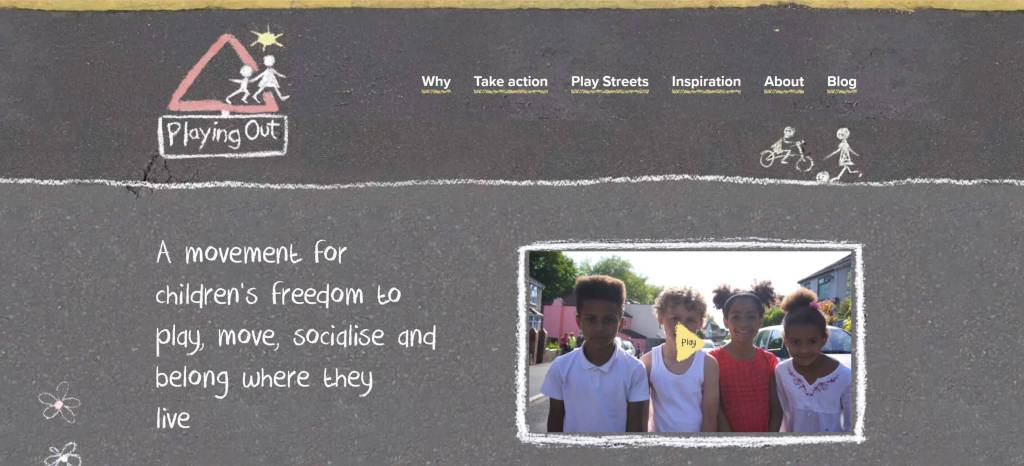
The refreshed Playing Out homepage
Beyond the CIC
Two important networks will continue independently:
1. The Play Streets Network
Hosted by Lucy Colbeck and Alison Stenning, this network offers:
A long-standing, friendly space for parents and residents to connect around play streets and playing out.
You can find the group on Facebook by clicking here.
Not The End
The email closes with a reminder from international allies: “We’re just at the beginning – things will grow and grow – as a system, we all have a role to support children’s right to get outside and play”.
The UK Playwork National Occupational Standards (NOS) Consortium has opened the sector‑wide consultation on the draft Playwork NOS. This consultation marks a major milestone in the long‑term effort to strengthen and modernise the standards that underpin playwork qualifications, training and professional expectations across Great Britain and Northern Ireland.
As a member of the Consortium, The Playwork Foundation strongly encourages practitioners, managers, trainers, organisations and partners to take part. See the latest information sheet below:
The formal review process began in early 2025. Since then, the Consortium has:
RAG‑rated all existing NOS
Identified standards requiring revision or replacement
Drafted new standards across three job roles
Developed a new Functional Map
Produced a comprehensive Glossary to support clarity and consistency
This work has been shaped by research, scoping exercises and conversations with playworkers and playwork organisations. Key themes emerging from this engagement include:
a focus on playwork as an approach – playworking
recognition that playwork happens in many places and spaces
the need for streamlined, clearer standards
reaffirmation that the Playwork Principles remain intrinsic to all NOS
Alongside the draft NOS, the Consortium has produced a glossary to support shared understanding across Great Britain and Northern Ireland. It includes definitions for key concepts like:
Accessible play spaces – “barrier‑free… offering participation opportunities for a range of differing abilities”
Additional support needs – recognising that needs may be short-term, long-term or intermittent, and do not require a diagnosis.
Inclusive playwork practice – removing physical, social, cultural and organisational barriers so all children can shape their own play.
Playwork approach – “supporting and facilitating play as described by the Playwork Principles”
Observation, reflection and reflective practice – central processes for understanding and supporting children’s play.
The Glossary also acknowledges variations in terminology across Great Britain and Northern Ireland and provides clarity where multiple terms are in use.
The Playwork Foundation will host a catch-all session in April based on the feedback and participation at each of the national play organisations’ events, and to take a multi-national perspective.
Then what?
After the consultation closes, the Consortium and Writing Group will:
review all feedback
refine and finalise the NOS
publish a consultation report
release the final NOS in June 2026, in Welsh and English
Awarding Bodies and Awarding Organisations will then begin re‑mapping or redeveloping playwork qualifications.
Why Your Voice Matters
National Occupational Standards shape:
qualification frameworks
training and CPD
job descriptions
organisational policies
workforce development strategies
This review is a rare opportunity for the sector to shape the standards that will define playwork practice across Great Britain and Northern Ireland. The Playwork Foundation encourages all practitioners, organisations and partners to take part.
Your insight, experience and expertise are essential.
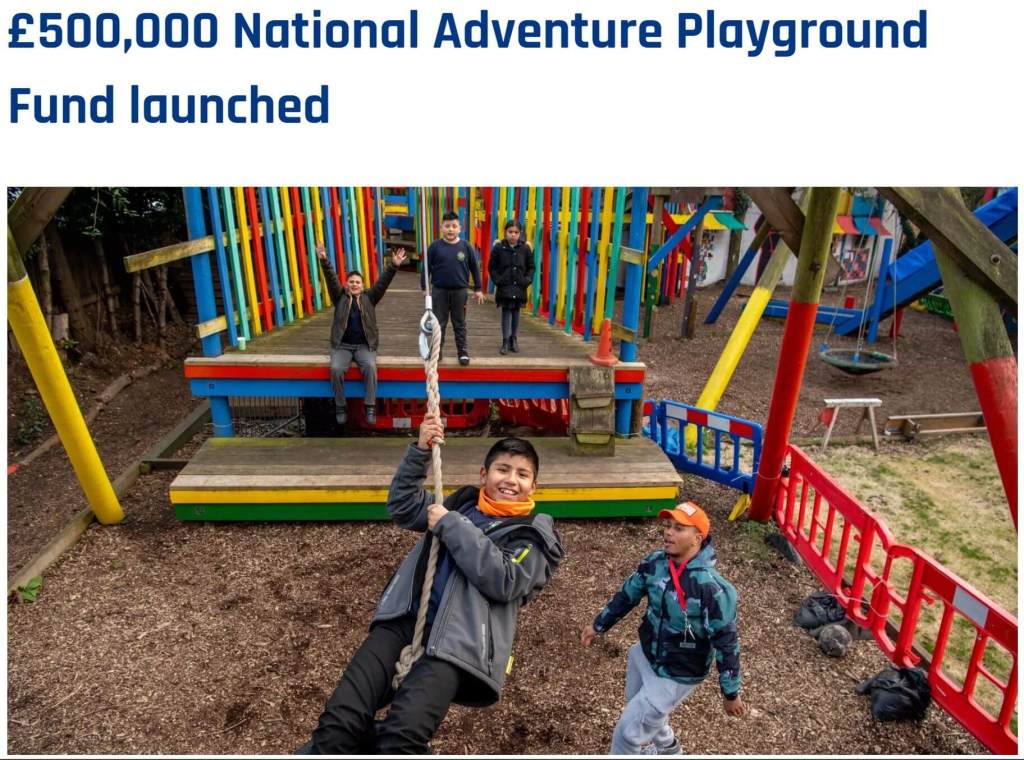
A new £500,000 fund has been established to support staffed adventure playgrounds in England, offering grants of £20,000 – £50,000 to enhance child-led play in low-income communities. Applications close 20/03/26.
A new £500,000 philanthropic fund has been announced to support staffed adventure playgrounds in England. The fund is made possible through a personal donation from philanthropist Alex Gerko, founder of XTX Markets, whose charitable work spans education, science, and community initiatives.
The focus on staffed adventure playgrounds reflects a growing recognition of the unique role these spaces play in children’s lives.
What the fund offers
The fund provides unrestricted grants of £20,000–£50,000, alongside sustainability support for successful applicants. To be eligible, playgrounds must be:
staffed by skilled playworkers
free‑of‑charge
places where children can come and go as they wish
committed to child‑led play
Successful applicants will also take part in four one‑hour sessions designed to strengthen long‑term resilience.
The application asks for information about opening hours, attendance, land or site arrangements, reserves, and the main challenges they face.
Play England announced the fund as a national programme aimed at protecting, restoring and growing staffed adventure playgrounds – highlighting that the fund will prioritise playgrounds in low-income communities and those experiencing financial pressure.
They emphasised that staffed adventure playgrounds are not discretionary amenities but distinct, staffed spaces where children shape their own play with the support of skilled playworkers. They highlighted the contribution these spaces make to independence, inclusion and year-round community connection.
At the same time, Play England noted that many adventure playgrounds have faced sustained financial pressure as local authority budgets have tightened. Provision has reduced in some areas, and several sites remain at risk.
Play England framed the fund as a welcome step within a broader picture: a contribution toward restoring and protecting staffed adventure playgrounds, and a sign that national recognition and investment may be beginning to align with long-standing sector advocacy.
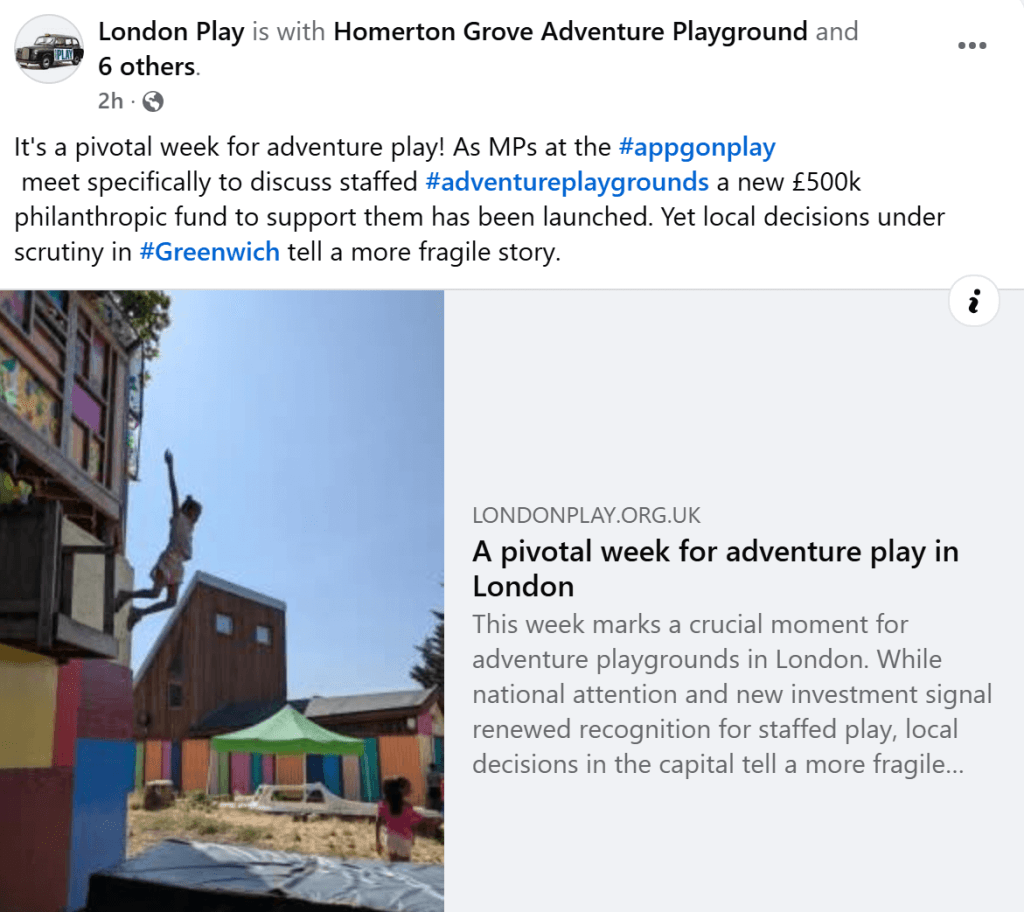
“A Pivotal Week for Adventure Play…”
London Play also welcomed the national attention and investment while similarly highlighting the fragility of local provision in the English capital – in particular the recent proposals to close or downgrade several staffed playgrounds in Greenwich.
This cautious optimism is echoed in the comments sections, with some expressing appreciation for the fund whilst also stating that £500,000 wouldn’t solve the long‑term structural pressures facing the sector.
Nevertheless, the hope is that this donation – in tandem with the parliamentary attention at this week’s All-Party Parliamentary Group on Play meeting on adventure playgrounds and playwork – will help build a broader recognition and attract future investment.
Any funding directed specifically toward staffed provision is a positive development, particularly at a time when many adventure playgrounds and other community-based playwork providers face uncertainty.
As ever, we will continue to support where we can by sharing information and evidence, and helping ensure that the value of staffed playwork provision – guided by the Playwork Principles – remains visible in national, inter-national and local decision-making.
This post was written by Siôn Edwards – current Chair of The Playwork Foundation – and represents his personal views and not necessarily those of The Playwork Foundation itself, or its Board of Trustees.
The book captures stories, reflections, and lessons from play spaces that continue to inspire practitioners and advocates across the sector. Hear about the development of the book – from pen to print – and about how adventure playgrounds are shaping up down under.
How to Join
The meeting will run from 11:30am to 1:30pm GMT and is open to all adventure playgrounds, playworkers, and advocates. You do not need to be a member of The Playwork Foundation to attend.
No pre‑registration is required, so please feel free to share the details with colleagues, volunteers, or anyone with an interest in playwork and adventure playgrounds.
Why Attend?
Hear directly from Angus Gorrie about the themes and stories behind Tales from the Playground.
Connect with fellow advocates and practitioners in the adventure playground community.
Contribute to ongoing conversations about the role of adventure playgrounds and playwork in shaping children’s experiences and opportunities.
We look forward to seeing many of you online today and to continuing the dialogue that strengthens our collective voice for play.
This autumn saw the publication of the Play in Ireland Summary Report 2025, a collaboration between PlayBoard NI and the National Childhood Network.
Drawing on the views of 144 children and young people across the Republic, the report paints a familiar picture: play is cherished, but time and space are in short supply.
93% said play is important in their lives.
Nearly half felt they didn’t have enough time to play.
Four in ten said there were very few places to play locally.
Traffic, safety concerns, and the absence of peers nearby were recurring barriers. The message is clear: children want more time, more spaces, and safer environments to play.
What Children Say About Play in Wales
Seren in the Community playscheme in Adamsdown, Cardiff
Just a few weeks later, Play Wales released its third national analysis of the Play Satisfaction Survey, capturing the voices of almost 8,000 children and teenagers. The findings echo those from the Republic of Ireland, but on a much larger scale.
Children in Wales told us that while most are satisfied with their opportunities, a significant minority are not. Almost a quarter said they don’t have enough time to play, and disabled children in particular reported much lower satisfaction with the spaces available to them.
The parallels between the two reports are striking: whether in Dinbych or Dublin, children are asking for the same things – more time, more freedom, and more inclusive spaces.
Meanwhile, the House of Commons Library published a substantial briefing on children, young people and the built environment. It highlights the decline in unaccompanied play, the rise of an “anti‑play culture”, and the need for planning reforms that put children’s rights at the centre of design.
October was certainly conference season. In Northern Ireland, PlayBoard NI hosted a regional gathering on the future of school‑age childcare. The event celebrated progress, shared best practice, and reaffirmed the role of play as central to quality provision. Feedback was unanimous: participants found it both relevant and inspiring.
Just days later, Play Wales held its national conference in Cardiff under the banner Getting it Right for Children. The Playwork Foundation was there, alongside policymakers, practitioners, and international voices. Keynotes included Professor Philip Jaffé of the UN Committee on the Rights of the Child, who reminded us that play is not a luxury but a right.
Both conferences emphasised the similar themes: the need for inclusive spaces, the importance of listening to children’s voices, and the urgency of embedding play in wider policy agendas. A reminder that across these islands, the challenges and the solutions are shared.
Play Scotland’s AGM
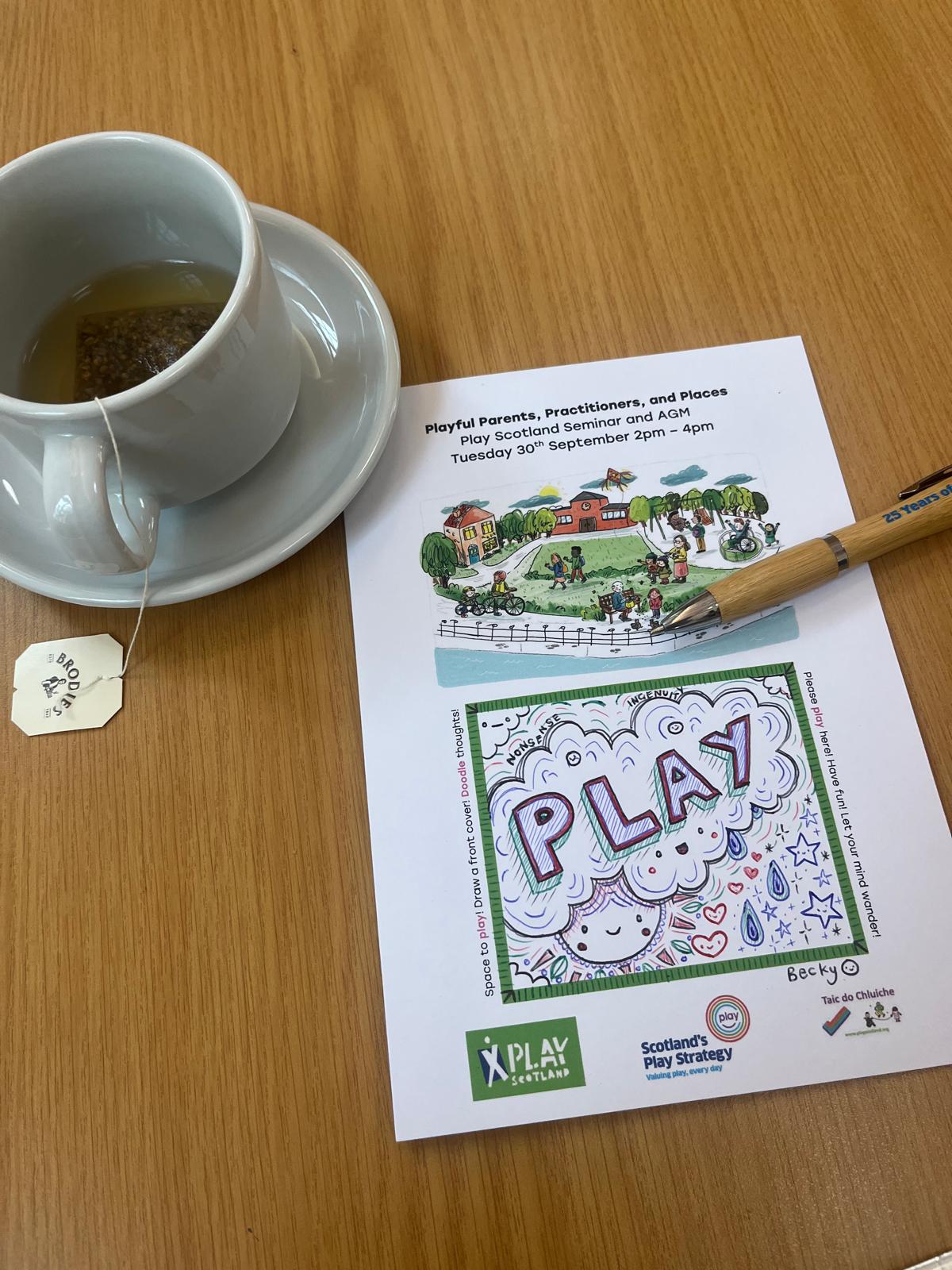
Not to be outdone, Play Scotland’s AGM brought together parents, practitioners, and policymakers under the theme Playful Parents, Practitioners, and Places. The event launched Scotland’s new Play Vision Statement and Action Plan, while celebrating champions of inclusive practice.
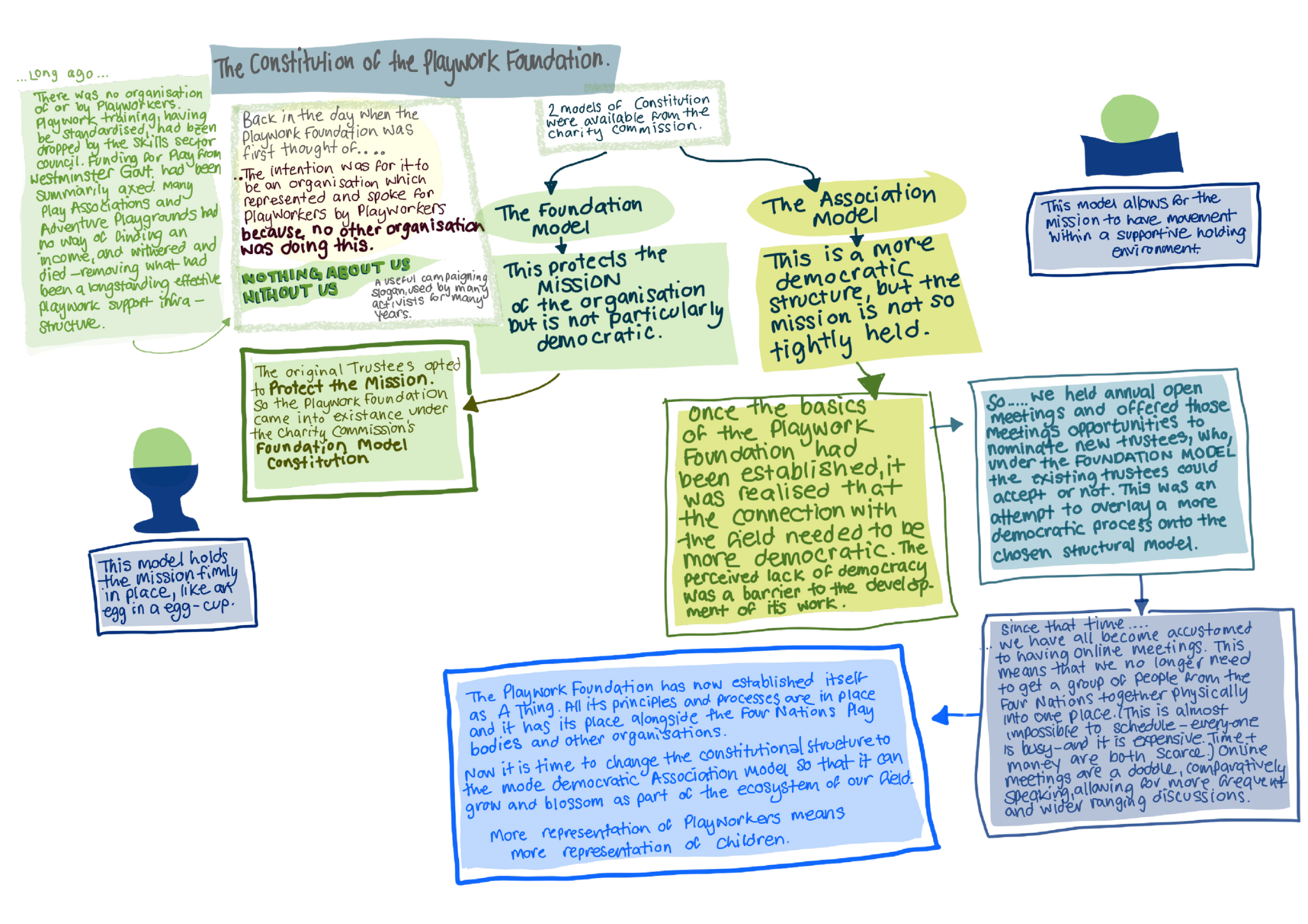
One change is that, from next year (2026), we will now host an Annual General Meeting (AGM) – just like other charities – which will formally replace the Annual Open Meetings we’ve hosted in recent years.
We’ll walk through the rest of the changes tomorrow, and explore what this means for playworkers in the wild. But in the meantime, Trustees Simon Rix and Penny Wilson have created this infographic to help explain the essentials:
September 5th marks the UN International Day of Charity – an opportunity to recognise the power of generosity, solidarity and volunteering create more inclusive and resilient societies.
For playwork, this is far from an abstract idea. Many playwork providers are run by charities or community groups, powered by volunteers and sustained by the goodwill of local people. Though it shouldn’t be that way, communities step in where public services are thin, creating opportunities for children to play and communities to come together.
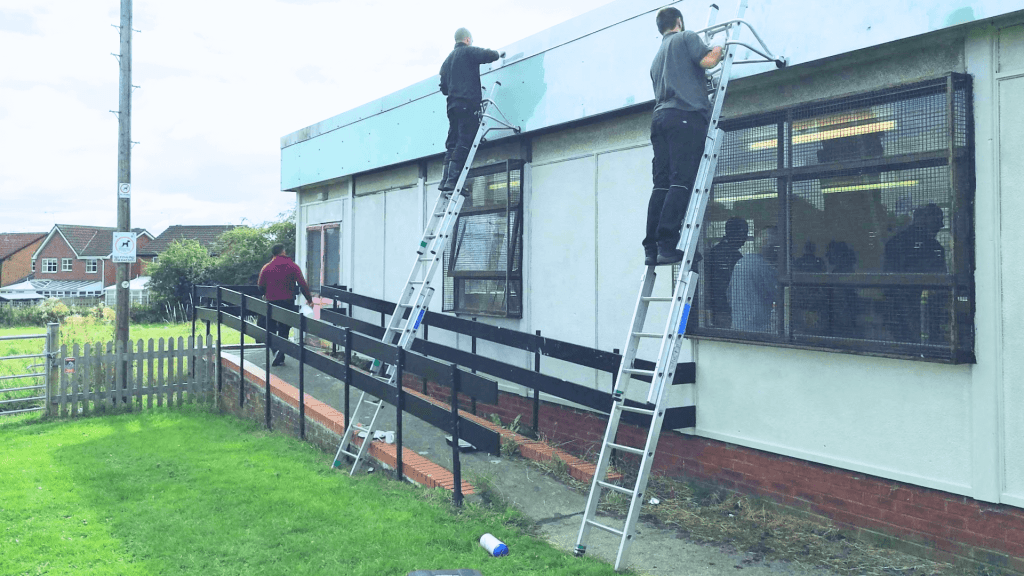
Volunteers renovating Pentre Gwyn Community Centre, Wrecsam
But the charitable and voluntary foundations of our sector are not just about filling gaps. They are about changing the system itself – ensuring play is recognised, resourced, and protected as a right for children and young people.
Here’s just some of the great work that’s been taking place across these islands over the last few weeks to affect such change:
UK Playwork NOS Consortium
In work that will impact playwork training and qualifications across the four nations, an update has been published on work to review the Playwork National Occupational Standards are undergoing a comprehensive, review led by the UK Playwork NOS Consortium. The Playwork Foundation are proud to be a part of this process, which has so far produced a draft functional map, started redrafting the standards with clearer, more consistent language, and strengthened links to related sectors such as childcare and social services. Wider sector consultation on the draft NOS is expected in late 2025 / early 2026, so be sure to take part when the time comes.
In Wales, a new Focus on Play in Healthcare briefing from Play Wales highlights the vital role of play in hospitals, hospices, and other healthcare settings, both as a children’s right under Article 31 of the UNCRC and as a proven contributor to health, wellbeing, and recovery. Drawing on research, case studies, and national guidance, it shows how play can reduce anxiety and pain, speed recovery, improve trust between children and healthcare staff, and even save costs for the NHS.
In Scotland, Getting it Right for Play: A New Chapter updates Play Scotland’s national toolkit for assessing and improving outdoor play opportunities. Grounded in children’s right to play under the UNCRC and aligned with legal duties on Play Sufficiency Assessments introduced in 2023, it gives local authorities and communities practical tools to measure quality, accessibility, and inclusion – and to plan improvements informed by children’s voices. It’s a practical example of policy, legislation, and community engagement working together to make play a lived reality for every child.
A chance to celebrate in Northern Ireland
In Northern Ireland, School‑Age Childcare: The Journey – The Future is set to bring together practitioners, managers, and setting owners later this month for a morning of celebration and practical inspiration. The event will explore themes such as supporting children’s mental health and wellbeing through play, making inclusive practice playful, and unlocking the “magic” of outdoor play. It will also focus on building stronger links with further education to grow the workforce, reflecting the sector’s dual role in delivering quality provision now and shaping its sustainability for the future.
The most recent advancement in systemic change came in England this week as the inaugural meeting of the All‑Party Parliamentary Group (APPG) on Play convened just this Tuesday. Bringing together MPs, peers, and sector leaders, the meeting set out the group’s mission: to champion every child’s right to play, protect play spaces, and ensure play is embedded in public life.
This follows headway in Westminster Parliament with the Play Sufficiency Amendment – a proposal that would, for the first time, establish a Play Sufficiency Duty in England. Modelled on existing legislation in Wales and Scotland, the amendment would embed Play Sufficiency Assessments into local planning, require developers to deliver high-quality, inclusive play spaces, and prevent the net loss of play provision through development. It’s a practical, no‑cost change in law that could transform the way play is valued and protected – but only if it’s backed with the resources and political will to make it real.
This UN International Day of Charity, we’re reminded that generosity – whether in time, resources, or spirit – is a powerful force. But in playwork, it’s also a lever for wholesale change for children of this generation and the next. Every hour volunteered, every community volunteer, and every act of advocacy builds towards a future where play is not a luxury, but a guaranteed right.
Share your stories of advocacy, community action and volunteering by joining us for Playwork in Progress – every Friday from 3pm.
Playworkers across these islands are in the thrust of arguably the busiest times of the year, and usually the warmest.
Whether you chalk it up to global warming or chalkier theories, hotter summers are no longer anomalies – they’re becoming part of the seasonal rhythm. As heat becomes less exceptional and more expected, the clickbait tips will fade – but the need for thoughtful, place-based guidance will only grow.
So, with the help of Stockholm-based playworker Suzanne Axelsson, we’ve compiled some facts, figures, and field-tested strategies to help you not only respond to high temperatures, but anticipate them – in your budgets, your resources, and your site design.
Children are at risk of burns when surface temperatures exceed 50℃, or when skin is exposed to 45℃ for long periods. Surface temperatures above 50℃ can cause severe burns in seconds – especially on young skin.
Playground surfaces and equipment (particularly plastic) can reach these high temperatures on bright, dry days in the high twenties. Slides, poles, guardrails, swing seats, barriers, tabletops, decking and slabs are just some examples of the surfaces that can pose a burn risk when exposed to direct sunlight in these temperatures.
Top tips:
Test surface temperatures before each play session, including flooring.
If you don’t have a thermometer, use a hand test: if you can’t keep your hand comfortably on the surface for 5 seconds, it’s too hot for play!
Recheck temperatures throughout the day. Using a timed checklist can help monitoring during hot spells.
Prevention
Avoid south-facing equipment (especially slides) to limit sun exposure during peak heat.
Offer natural shade – trees can cool surrounding areas by up to 8℃ – and consider cooling surfaces down with water.
Use natural materials. Synthetic grass and rubber surfacing can burn children’s feet, especially darker colours.
On hot days, encourage children to keep shoes on and avoid prolonged contact with hot surfaces, including when kneeling or sitting.
Heat hacks
Keep hydrated:
Make sure there is access to drinking water.
Sweating is the body’s way of keeping cool (and it’s pretty effective), but water lost through sweating needs to be replaced, which is why keeping hydrated is so important.
Some children won’t realise they’re dehydrated, so reminders will help.
Add a little fruit juice or cordial to encourage those who “don’t like” water to stay hydrated.
Cucumbers, tomatoes, oranges and watermelon are all good ways to keep hydrated.
Electrolytes help to stay hydrated – these are found naturally in coconut water, milk, fruit juices, and smoothies.
Ice-lollies are better than ice-cream for cooling off – the milk and creamy fats of the ice cream use energy to digest, increasing your body temperature.
Keep cool:
If you have a choice, play outside early in the day and late in the afternoon to avoid the worst UV radiation at midday.
Lots of locomotor play going on? It’s not the playworker way, but try encouraging breaks in the shade to bring down core temperature and rehydrate.
Fans can bring immediate relief to sweaty faces, but they also speed-up dehydration(!), so make sure there’s plenty of drinking water. Misting sprays are a good choice.
Water fight! Nothing cools better than water, but do consider the environmental impact of excessive water use (and your water bill!).
Cool-rags (wet cloth), wet towels and bandannas help cool hot bodies down.
Encourage children to wear loose, light-weight, light-coloured clothes. Caps and hats can protect from harmful UV rays, but they can also increase body temperature, so encourage time in the shade to take them off.
Encourage everyone to sun cream for UV protection.
Heat, humidity & health
Humidity is how much water vapour in the air.
Low humidity means surfaces will feel hotter. But high humidity makes it harder to regulate body heat increasing the risk of heat-related illnesses, like heat exhaustion and heat stroke.
These heat-related illnesses can be serious and potentially life-threatening. They can also be brought on or intensified by physical activity.
Hydration and cooling down the body are the key to treatment and recovery from such illnesses. Recognising the signs and symptoms early will help avoid serious illness.
Below is a unified checklist drawing on NHS (England), nidirect (Northern Ireland), NHS Inform (Scotland) and Public Health Wales guidance:
Heat Exhaustion (early stage)
Excessive sweating
Pale, clammy skin or development of heat rash
Muscle cramps in arms, legs or abdomen
Intense thirst and dry mouth
Weakness or fatigue
Headache or throbbing headache
Nausea, vomiting or feeling sick
Dizziness or light-headedness
Rapid heartbeat (tachycardia) and fast breathing (tachypnea)
Dark or reduced urine output (sign of dehydration)
Heatstroke (advanced stage; medical emergency)
Core body temperature above 40 ℃ (104 ℉)
Skin that may feel hot and dry—or paradoxically cold/clammy—despite high temperature
Children will react to heat in different ways. Some are more susceptible to heat than others.
Children with excess body weight, who have congenital conditions, or who are taking medication could be at increased risk of negative effects.
Even age can have an impact. For example, children under four years of age are at an increased risk because younger children produce more metabolic heat, are less able to sweat, and have core temperatures that rise faster during dehydration.
Disabilities and health needs may also play a role in the impact of heat extremes.
Having Fun in the Heat
Instead of gathering around the campfire, congregate around the camp-pool – find some shade and have a shared pamper-sesh with you feet in soothing, cooling waters. Maybe offer some slower activities to encourage rest (e.g., art & craft, finger string games or board games) or set-up some hammocks.
Murder She Soaked – swap chalk and crime scene tape for the cooling spray of a hose-pipe. Lie on the floor or sit against a wall, and use your body create a dry silhouette. Wet clothes will help cool off.
Jur-ICE-ic Park – submerge dinosaurs or other “artifacts” in water and place in the freezer overnight. Once frozen, give your budding paleontologists toffee hammers or other suitable utensils to slowly chip away at these cold (and cooling) time capsules – watch out for ice burn by holding for too long.
Curate a cool art exhibit – add non-toxic paint to water and freeze overnight Now you’ve got a frozen paintbrush! Again, watch out for ice burns.
Put your cooking on ice, and make home-made ice-lollies with fresh fruit and juices.
To create cooler outdoor spaces for play during hot days, prioritise shade, utilise water features, and select appropriate materials.
Shade
Natural Shade: Plant shade trees to strategically to block direct sunlight and create cool microclimates. Deciduous trees allow sunlight to filter through during winter when it is needed.
Shade Structures: Install pergolas, gazebos, or shade sails to offer focused areas of shade over seating or play areas.
Adjustable Shade: Consider using umbrellas or retractable canopies on pergolas for flexibility in adjusting to the sun’s position.
Water Features
Misting Systems: Misting systems can create a refreshing cool mist, especially effective in warmer climates.
Water Play: Incorporate features like water tables, sprinklers, or even a small splash pad/paddling pool to offer cooling and fun.
Materials
Light-Coloured Surfaces: Use lighter-coloured surfacing materials (e.g., light-coloured concrete, pavers, or mulch) as they reflect more sunlight and absorb less heat than dark surfaces.
Reflective Materials: Consider using materials with solar reflective properties for roofs to deflect solar radiation.
Natural Materials: Choose materials like wood or bamboo, which tend to absorb less heat than synthetic materials.
Ground Cover: Use materials like sand or bark for soft fall areas, which can reduce surface temperatures.
Other Considerations
Ventilation: Ensure good airflow through the space by incorporating design elements that allow for natural ventilation.
Hydration: Provide access to cool drinking water and encourage frequent hydration, as sweating is the body’s natural cooling mechanism.
Time of Day: Schedule outdoor activities during cooler parts of the day, like early mornings or evenings when possible.
Strategy: Create an extreme heat and hot weather strategy, so that everyone is aware of measuring temperature routines, when to limit high intensity play and games, when and where to create cool-down and hydration areas, what symptoms to keep an eye out for etc.
Check air and WBGT temperatures. If too hot consider play limits or cancelling/postponing.
Check surface temperatures of ground and equipment (regularly throughout the day). If too hot cordon off the area/equipment that is too hot to be safe. If the entire area is too hot for play – cancel/postpone or offer a small area with calm activities where children can hang out and keep cool.
Check accessibility to shade and the ability to cool down. If there is nowhere to cool down then play sessions in weather of 26℃ and over should be evaluated from a safety aspect. Invest in flexible shade if you can, so that it makes it possible for children to hang out together.
Create a cool down area.
Encourage children engaging in high intensity physical play to take breaks and cool down regularly.
Ensure there is easy access to drinking water or other sources of rehydration.
Stock your first aid kit with electrolytes suitable for children, as well as burns treatment. Medicinal manuka honey is an excellent way to naturally treat minor burns.
Ensure you have a plan to support staff, children and parents in case of a medical emergency concerning heat stroke and serious burns.












 The Playwork Foundation