The consultation on the draft National Occupational Standards (NOS) for Playwork is now open – and with the deadline approaching, The Playwork Foundation will be hosting a final “catch‑all” webinar on 1st May, 10am – 12pm, to support a final surge of responses from across the sector.
Whether you’ve already skimmed the documents, haven’t yet had time to engage, or simply want clarity before submitting your response, this webinar is your opportunity to get up to speed before the consultation closes.
If you would like to submit feedback in some other way (e.g., audio, video) contact nosreview@play.wales let us know and we’ll do what we can to help.
The Consortium is encouraging responses from across the sector, including practitioners, managers, trainers, employers, awarding bodies, local authorities and community organisations.
What Happens Next…
After the consultation closes:
The UK Playwork NOS Consortium and Writing Group will review all feedback
A consultation report will be drafted and published
The final NOS will be released around June 2026, in both Welsh and English
Awarding Bodies and Awarding Organisations will begin re‑mapping or re‑developing their playwork qualifications
This marks the beginning of a new phase for the playwork workforce, with updated standards that reflect contemporary practice, international alignment and the core principles of a playwork approach.
A significant milestone for the play sector in Yorkshire has just been announced: the inaugural Sheffield Play Conference will take place on Tuesday 19th May 2026 at the Adventures Hub (formerly known as Highfields Adventure Playground) in Sharrow.
The organisers describe it as “a vibrant celebration of all things play” bringing together volunteers, students, professionals, decision-makers and community members for a full day dedicated to strengthening play across the city and region.
The conference is a welcome and timely development, as Sheffield has been steadily building a movement for child-friendly neighbourhoods, and this event marks the first formal gathering of that growing community.
The Conference is broad in scope – designed to bring together people working across:
Students in child development, youth work, teaching and social care
Anyone responsible for children’s play spaces, from parks to housing
The event has emerged from the work of the Sheffield Play Partnership, a collaboration focused on reversing the decline in community play provision and strengthening the city’s capacity to deliver high‑quality, inclusive play opportunities.
Their work includes:
Mapping citywide play provision
Identifying gaps and inequalities
Developing new community-led play projects
Supporting collaborative models that connect voluntary groups, families and local authorities
A Vision for a Regional Play Movement
The organisers are clear that this is not a one‑off event. They describe the conference as “the first step in an ambition to gather the region’s play community in one place”, with the hope that it will become an annual fixture and eventually a truly regional gathering.
Playing Out CIC formally closed on 31 March 2026, bringing seventeen years of activism, community organising and policy influence to a dignified close.
In their final message to supporters, the team wrote that they were contacting “one last time to say thank you and goodbye” while emphasising that “the movement for children’s freedom and right to play out is alive, well and growing.”
Co-founders Alice Ferguson and Ingrid Skeels offered a powerful reflection as they “prepare to turn out the lights at Playing Out CIC”, expressing gratitude for the activism, collaboration and policy change driven by thousands of residents, practitioners and allies.
One of Playing Out’s final major contributions is the publication of Streets for Play, Streets for Freedom, authored by Alice Ferguson and Tim Gill. The report argues for a radical reframing of transport and street policy in England through a “child lens”, prioritising those most affected yet least considered in planning.
The email summarises the case succinctly: creating streets safe for children to “play, walk and wheel would save children’s lives, restore children’s freedom and transform children’s wellbeing”.
The report includes Ten Good Reasons for adopting this approach and is intended as a tool for influencing local and national decision-makers.
A Refreshed Website for the Future
Although the CIC has closed, the Playing Out website has been rebuilt to serve as a long-term resource hub. The team describe the original site as “aged about 100 in website years” and note that the new platform is designed to support the next generation of change-makers.
The site remains familiar but clearer, more navigable and future-proofed.
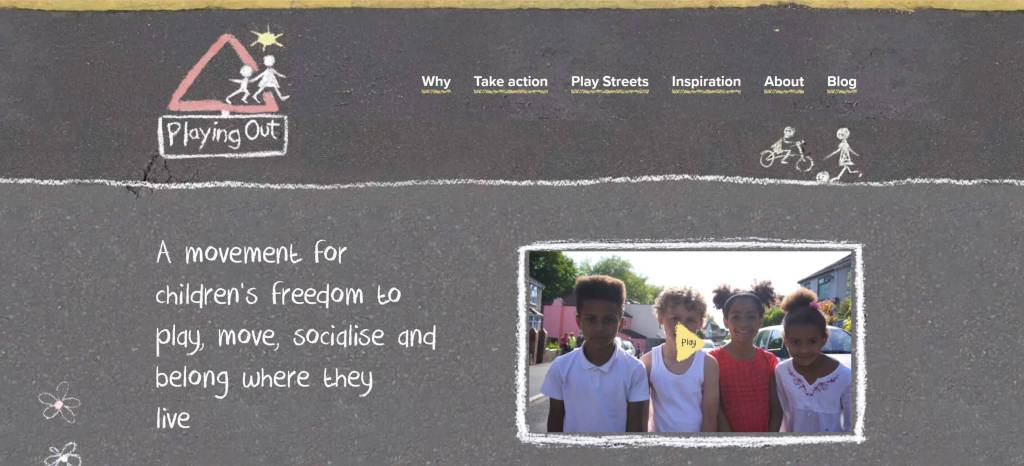
The refreshed Playing Out homepage
Beyond the CIC
Two important networks will continue independently:
1. The Play Streets Network
Hosted by Lucy Colbeck and Alison Stenning, this network offers:
A long-standing, friendly space for parents and residents to connect around play streets and playing out.
You can find the group on Facebook by clicking here.
Not The End
The email closes with a reminder from international allies: “We’re just at the beginning – things will grow and grow – as a system, we all have a role to support children’s right to get outside and play”.
The UK Playwork National Occupational Standards (NOS) Consortium has opened the sector‑wide consultation on the draft Playwork NOS. This consultation marks a major milestone in the long‑term effort to strengthen and modernise the standards that underpin playwork qualifications, training and professional expectations across Great Britain and Northern Ireland.
As a member of the Consortium, The Playwork Foundation strongly encourages practitioners, managers, trainers, organisations and partners to take part. See the latest information sheet below:
The formal review process began in early 2025. Since then, the Consortium has:
RAG‑rated all existing NOS
Identified standards requiring revision or replacement
Drafted new standards across three job roles
Developed a new Functional Map
Produced a comprehensive Glossary to support clarity and consistency
This work has been shaped by research, scoping exercises and conversations with playworkers and playwork organisations. Key themes emerging from this engagement include:
a focus on playwork as an approach – playworking
recognition that playwork happens in many places and spaces
the need for streamlined, clearer standards
reaffirmation that the Playwork Principles remain intrinsic to all NOS
Alongside the draft NOS, the Consortium has produced a glossary to support shared understanding across Great Britain and Northern Ireland. It includes definitions for key concepts like:
Accessible play spaces – “barrier‑free… offering participation opportunities for a range of differing abilities”
Additional support needs – recognising that needs may be short-term, long-term or intermittent, and do not require a diagnosis.
Inclusive playwork practice – removing physical, social, cultural and organisational barriers so all children can shape their own play.
Playwork approach – “supporting and facilitating play as described by the Playwork Principles”
Observation, reflection and reflective practice – central processes for understanding and supporting children’s play.
The Glossary also acknowledges variations in terminology across Great Britain and Northern Ireland and provides clarity where multiple terms are in use.
The Playwork Foundation will host a catch-all session in April based on the feedback and participation at each of the national play organisations’ events, and to take a multi-national perspective.
Then what?
After the consultation closes, the Consortium and Writing Group will:
review all feedback
refine and finalise the NOS
publish a consultation report
release the final NOS in June 2026, in Welsh and English
Awarding Bodies and Awarding Organisations will then begin re‑mapping or redeveloping playwork qualifications.
Why Your Voice Matters
National Occupational Standards shape:
qualification frameworks
training and CPD
job descriptions
organisational policies
workforce development strategies
This review is a rare opportunity for the sector to shape the standards that will define playwork practice across Great Britain and Northern Ireland. The Playwork Foundation encourages all practitioners, organisations and partners to take part.
Your insight, experience and expertise are essential.
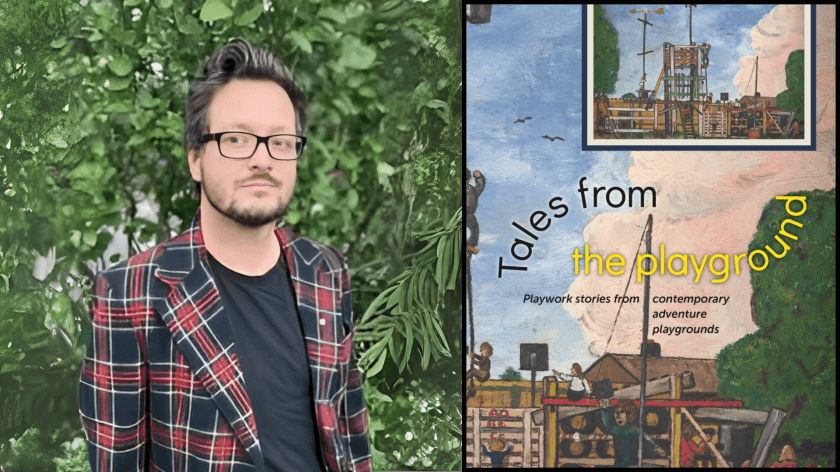
The book captures stories, reflections, and lessons from play spaces that continue to inspire practitioners and advocates across the sector. Hear about the development of the book – from pen to print – and about how adventure playgrounds are shaping up down under.
How to Join
The meeting will run from 11:30am to 1:30pm GMT and is open to all adventure playgrounds, playworkers, and advocates. You do not need to be a member of The Playwork Foundation to attend.
No pre‑registration is required, so please feel free to share the details with colleagues, volunteers, or anyone with an interest in playwork and adventure playgrounds.
Why Attend?
Hear directly from Angus Gorrie about the themes and stories behind Tales from the Playground.
Connect with fellow advocates and practitioners in the adventure playground community.
Contribute to ongoing conversations about the role of adventure playgrounds and playwork in shaping children’s experiences and opportunities.
We look forward to seeing many of you online today and to continuing the dialogue that strengthens our collective voice for play.
This autumn saw the publication of the Play in Ireland Summary Report 2025, a collaboration between PlayBoard NI and the National Childhood Network.
Drawing on the views of 144 children and young people across the Republic, the report paints a familiar picture: play is cherished, but time and space are in short supply.
93% said play is important in their lives.
Nearly half felt they didn’t have enough time to play.
Four in ten said there were very few places to play locally.
Traffic, safety concerns, and the absence of peers nearby were recurring barriers. The message is clear: children want more time, more spaces, and safer environments to play.
What Children Say About Play in Wales
Seren in the Community playscheme in Adamsdown, Cardiff
Just a few weeks later, Play Wales released its third national analysis of the Play Satisfaction Survey, capturing the voices of almost 8,000 children and teenagers. The findings echo those from the Republic of Ireland, but on a much larger scale.
Children in Wales told us that while most are satisfied with their opportunities, a significant minority are not. Almost a quarter said they don’t have enough time to play, and disabled children in particular reported much lower satisfaction with the spaces available to them.
The parallels between the two reports are striking: whether in Dinbych or Dublin, children are asking for the same things – more time, more freedom, and more inclusive spaces.
Meanwhile, the House of Commons Library published a substantial briefing on children, young people and the built environment. It highlights the decline in unaccompanied play, the rise of an “anti‑play culture”, and the need for planning reforms that put children’s rights at the centre of design.
October was certainly conference season. In Northern Ireland, PlayBoard NI hosted a regional gathering on the future of school‑age childcare. The event celebrated progress, shared best practice, and reaffirmed the role of play as central to quality provision. Feedback was unanimous: participants found it both relevant and inspiring.
Just days later, Play Wales held its national conference in Cardiff under the banner Getting it Right for Children. The Playwork Foundation was there, alongside policymakers, practitioners, and international voices. Keynotes included Professor Philip Jaffé of the UN Committee on the Rights of the Child, who reminded us that play is not a luxury but a right.
Both conferences emphasised the similar themes: the need for inclusive spaces, the importance of listening to children’s voices, and the urgency of embedding play in wider policy agendas. A reminder that across these islands, the challenges and the solutions are shared.
Play Scotland’s AGM
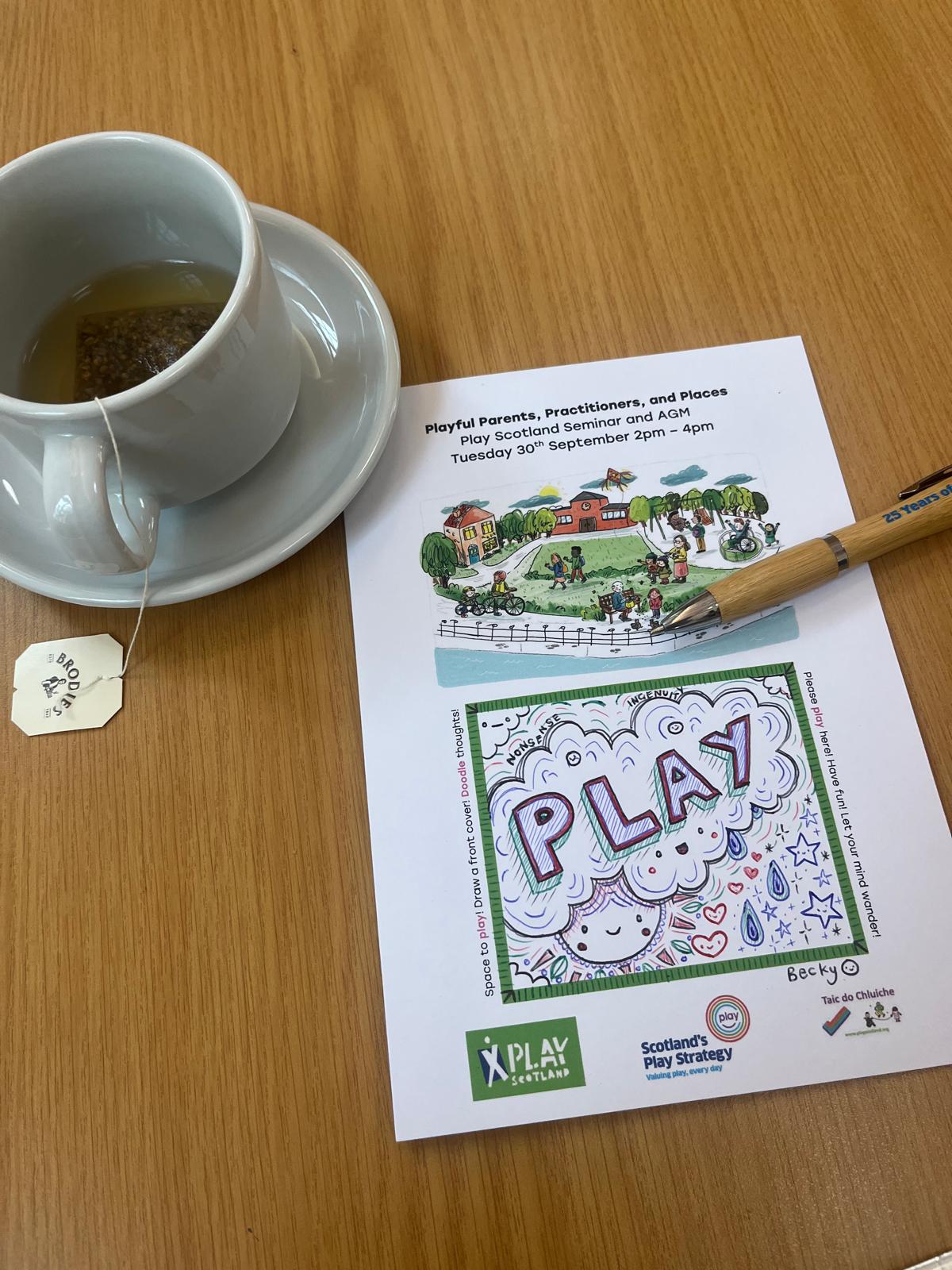
Not to be outdone, Play Scotland’s AGM brought together parents, practitioners, and policymakers under the theme Playful Parents, Practitioners, and Places. The event launched Scotland’s new Play Vision Statement and Action Plan, while celebrating champions of inclusive practice.
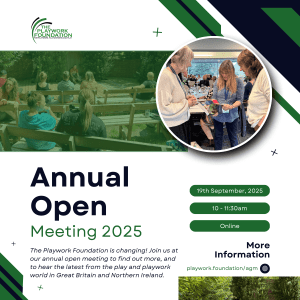
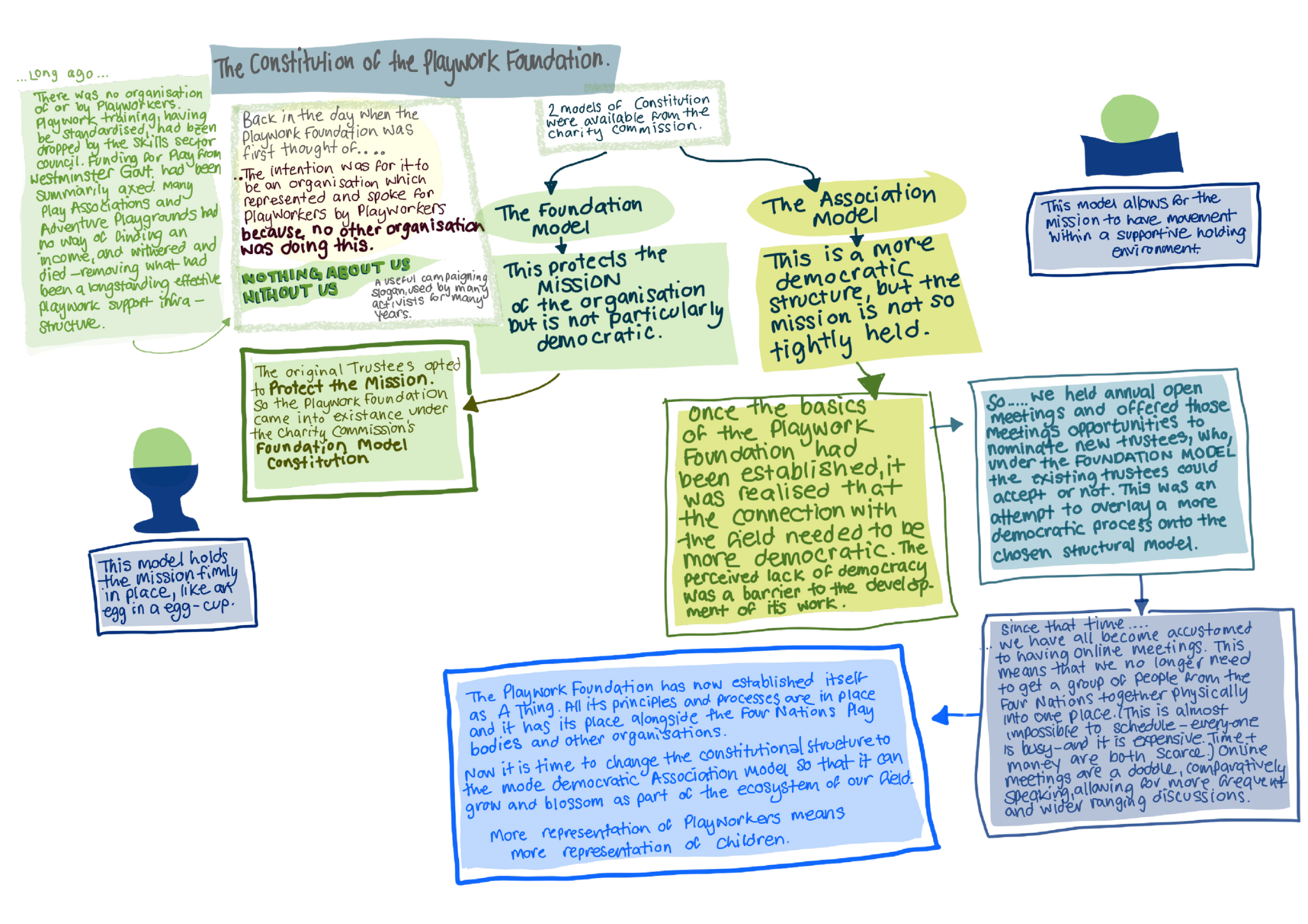
One change is that, from next year (2026), we will now host an Annual General Meeting (AGM) – just like other charities – which will formally replace the Annual Open Meetings we’ve hosted in recent years.
We’ll walk through the rest of the changes tomorrow, and explore what this means for playworkers in the wild. But in the meantime, Trustees Simon Rix and Penny Wilson have created this infographic to help explain the essentials:
September 5th marks the UN International Day of Charity – an opportunity to recognise the power of generosity, solidarity and volunteering create more inclusive and resilient societies.
For playwork, this is far from an abstract idea. Many playwork providers are run by charities or community groups, powered by volunteers and sustained by the goodwill of local people. Though it shouldn’t be that way, communities step in where public services are thin, creating opportunities for children to play and communities to come together.
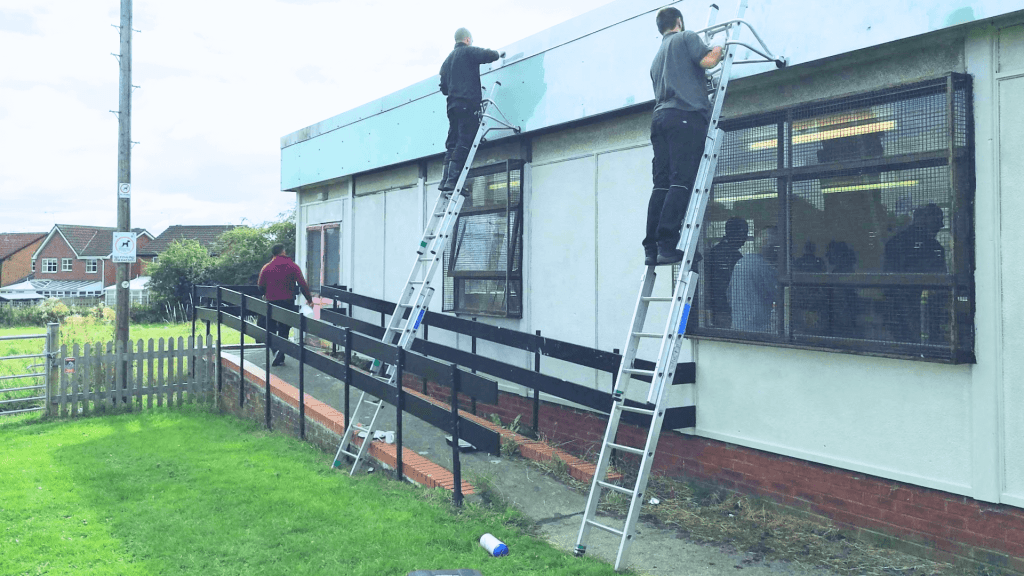
Volunteers renovating Pentre Gwyn Community Centre, Wrecsam
But the charitable and voluntary foundations of our sector are not just about filling gaps. They are about changing the system itself – ensuring play is recognised, resourced, and protected as a right for children and young people.
Here’s just some of the great work that’s been taking place across these islands over the last few weeks to affect such change:
UK Playwork NOS Consortium
In work that will impact playwork training and qualifications across the four nations, an update has been published on work to review the Playwork National Occupational Standards are undergoing a comprehensive, review led by the UK Playwork NOS Consortium. The Playwork Foundation are proud to be a part of this process, which has so far produced a draft functional map, started redrafting the standards with clearer, more consistent language, and strengthened links to related sectors such as childcare and social services. Wider sector consultation on the draft NOS is expected in late 2025 / early 2026, so be sure to take part when the time comes.
In Wales, a new Focus on Play in Healthcare briefing from Play Wales highlights the vital role of play in hospitals, hospices, and other healthcare settings, both as a children’s right under Article 31 of the UNCRC and as a proven contributor to health, wellbeing, and recovery. Drawing on research, case studies, and national guidance, it shows how play can reduce anxiety and pain, speed recovery, improve trust between children and healthcare staff, and even save costs for the NHS.
In Scotland, Getting it Right for Play: A New Chapter updates Play Scotland’s national toolkit for assessing and improving outdoor play opportunities. Grounded in children’s right to play under the UNCRC and aligned with legal duties on Play Sufficiency Assessments introduced in 2023, it gives local authorities and communities practical tools to measure quality, accessibility, and inclusion – and to plan improvements informed by children’s voices. It’s a practical example of policy, legislation, and community engagement working together to make play a lived reality for every child.
A chance to celebrate in Northern Ireland
In Northern Ireland, School‑Age Childcare: The Journey – The Future is set to bring together practitioners, managers, and setting owners later this month for a morning of celebration and practical inspiration. The event will explore themes such as supporting children’s mental health and wellbeing through play, making inclusive practice playful, and unlocking the “magic” of outdoor play. It will also focus on building stronger links with further education to grow the workforce, reflecting the sector’s dual role in delivering quality provision now and shaping its sustainability for the future.
The most recent advancement in systemic change came in England this week as the inaugural meeting of the All‑Party Parliamentary Group (APPG) on Play convened just this Tuesday. Bringing together MPs, peers, and sector leaders, the meeting set out the group’s mission: to champion every child’s right to play, protect play spaces, and ensure play is embedded in public life.
This follows headway in Westminster Parliament with the Play Sufficiency Amendment – a proposal that would, for the first time, establish a Play Sufficiency Duty in England. Modelled on existing legislation in Wales and Scotland, the amendment would embed Play Sufficiency Assessments into local planning, require developers to deliver high-quality, inclusive play spaces, and prevent the net loss of play provision through development. It’s a practical, no‑cost change in law that could transform the way play is valued and protected – but only if it’s backed with the resources and political will to make it real.
This UN International Day of Charity, we’re reminded that generosity – whether in time, resources, or spirit – is a powerful force. But in playwork, it’s also a lever for wholesale change for children of this generation and the next. Every hour volunteered, every community volunteer, and every act of advocacy builds towards a future where play is not a luxury, but a guaranteed right.
Share your stories of advocacy, community action and volunteering by joining us for Playwork in Progress – every Friday from 3pm.
In the next week or so, adventure playgrounds in Great Britain should receive an email from our friends and colleagues at Roanoke College, Virginia, USA, inviting them to participate in a survey to support and celebrate adventure playgrounds across Great Britain.
Roanoke College’s Data, Communities, and Playgrounds (DCPg) Project has developed a new interactive map based on data collated by London Play, Play England, The Playwork Foundation and individual volunteers including Jackie Boldon and Mick Conway. For more information about the origins of our list, visit playwork.foundation/apliststory.
This new combined list formed the foundation of Roanoke College’s subsequent desktop research, which gathered publicly available information to create a unique profile for each adventure playground to be featured on the StoryMap.
Now, we need the help of adventure playgrounds to validate and improve the information about their sites. There will also be the opportunity to add extra details and resources to enrich each adventure playground’s profile.
Why get involved?
💸 Participation is completely free – Roanoke College will host and update the map annually 📍 Put your adventure playground on the map (literally!) 🌍 Be part of the “live” picture of adventure playgrounds across Great Britain 🤝 Connect and collaborate with other adventure playgrounds 📣 Share your listing with your communities, funders, supporters, and boards ⏱ The survey only takes about 10 minutes to complete
The StoryMap is expected to go live this Autumn 2025. Once it’s launched, we’ll share the link with the Adventure Playground Network and post it on our website – and from there, it’s free to share far and wide!
If you’re an adventure playground and don’t receive an email within the next week, please contact PCRGroup@roanoke.edu to request it again.
The child wearing is was confident and chatty. She was laughing and climbing and joking with her mates. And all the while, she was talking to us, a group of visiting adults, showing us how the site works and what children do there.
She really belonged there on that Playground. Really belonged. She was in her element. She was like sunshine bouncing off rippling water. She was happy with who she was.
I told her I liked her hoodie and asked if I could take a picture. She was happy with that, very happy. I said I wanted to have a picture without her face in it, so I could share it with random people and tell them the story of her hoodie. She laughed and we said goodbye. Then she went on playing.
Join us on Fridays at 3pm for Playwork in Progress – a reflective practice conversation for Playworkers all over the world.
Bring your own story.
Or stories.
We love to hear your stories.
This is how we learn, from our source material. From children.
Penny Wilson is a Trustee of The Playwork Foundation and voluntarily chairs Playwork in Progress – a free weekly online reflective practice session for playworkers anywhere in the world. This usually takes place each week on a Friday afternoon 3-5pm BST (until 26/10/25 when it will revert to GMT).







 The Playwork Foundation
